
A neutral country that has the most nuclear shelters in the world
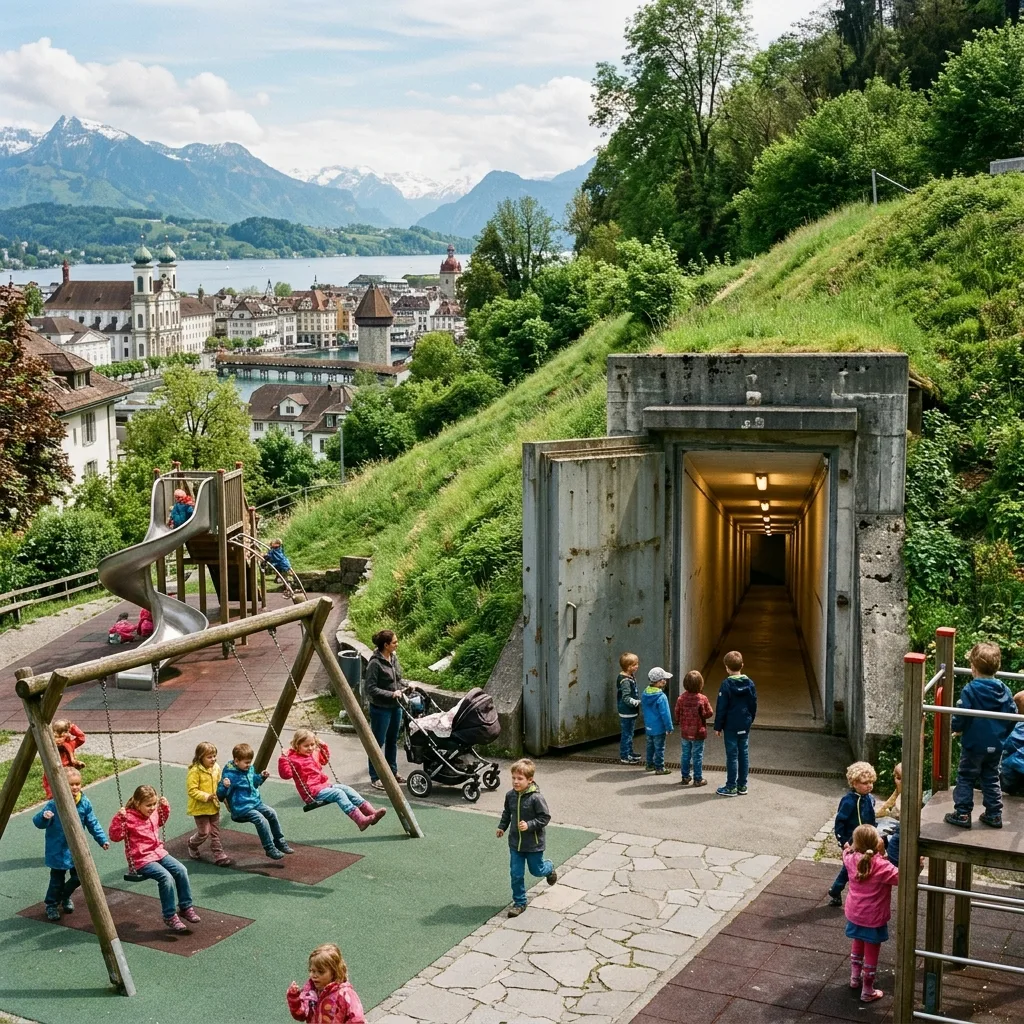
There is a children's playground in the city of Lucerne. Swings, slides, the usual stuff.
In the middle of the playground, dug into the hill, stands a thick, blast-proof door. Behind it is a narrow, well-lit tunnel that gently slopes down, as far as the eye can see.
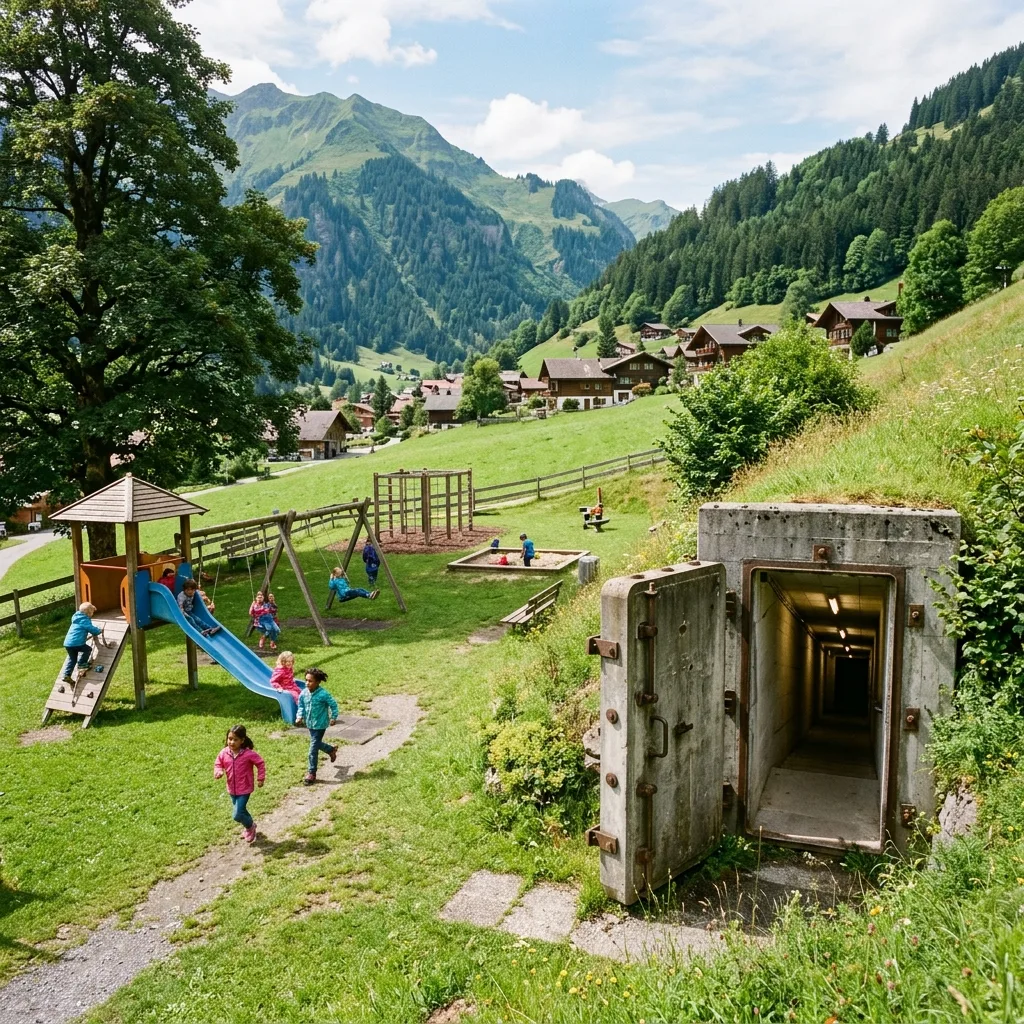
This is Sonnenberg, the world's largest underground nuclear bunker.
The number to start from
Switzerland has more than 370,000 nuclear shelters.
The country's population is 9 million. The number of shelters is sufficient to guarantee a place for every citizen.
For comparison, this is a neutral country that did not fight during the two world wars and was last involved in a foreign war centuries ago.
Why exactly Switzerland
During the Cold War, the logic of Swiss officials was as follows: if a nuclear war broke out between the US and the Soviet Union, Switzerland, as a neutral country, would probably not be directly hit.
But it would find itself in the path of radioactive emissions coming from its non-neutral neighbors.
That is, the defense was built not against the bomb, but against its consequences.
The concept of the "island"
Silvia Berger Ziauddin, a professor of history at the University of Bern who studies the history of the Swiss shelter network, explains that the roots are much older.
According to him, the idea is that this small Alpine country has served as an island of tranquility for more than a century, surrounded by a sea of chaos.
This notion was formed during the First World War, repeated during the Second, and during the Cold War, it was transferred to the atomic shelter itself.
Why didn't they stop after the Cold War?
This is the most interesting part of the article.
In 2010–2011, a serious debate began in the Swiss parliament on whether it was time to completely abandon this system. The Cold War had ended, and the threat was no longer obvious.
Daniel Jordi, deputy director of the country's Federal Office for Civil Protection, recalls that the issue of closing the system was indeed being discussed in parliament.
And at that very moment, in Japan, after a powerful earthquake and tsunami, the accident at the Fukushima-1 nuclear power plant occurred.
The parliament concluded that it is good to keep the shelters as a national reserve to protect people in a real emergency.
In other words, the network of shelters was saved not by the military threat, but by the peaceful atom accident thousands of kilometers away.
Who is paying
The system operates by a very simple but strict rule.
In Switzerland, every residential building is required to either have its own bunker with proper blast-resistant doors and a ventilation system, or the developer must allocate funds for a nearby, state-maintained shelter.
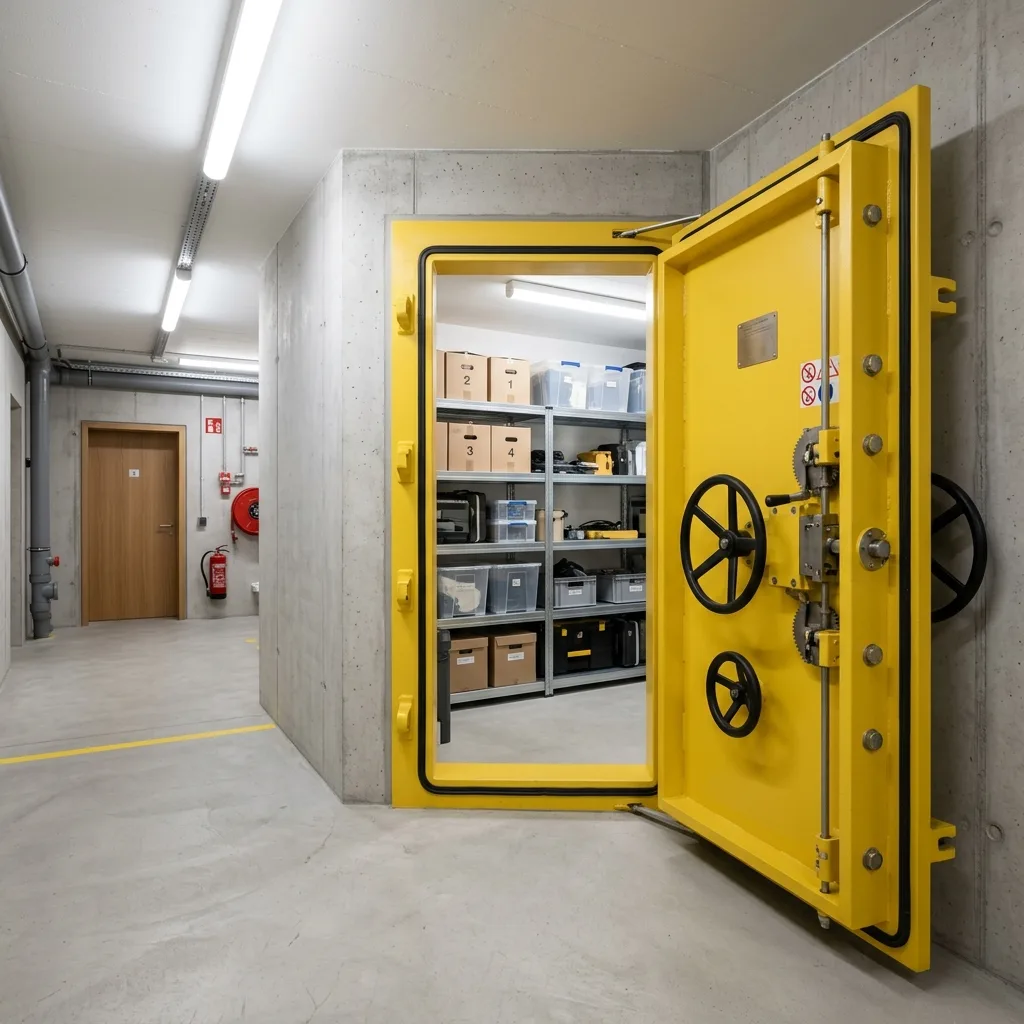
Citizens pay a one-time fee of $1,700 to about $3,500 for the construction and maintenance of those shelters.
The state spends tens of millions of dollars annually on the maintenance of the Sonnenberg and hundreds of thousands of other bunkers.
What are they used for in peacetime?
For Switzerland, peacetime is the norm. Therefore, hundreds of thousands of bunkers do not remain empty.
They turn into:
- wine cellars
- saunas
- repositories (for example, at the University of Bern)
The entrance to the bunker located under the building of Professor Berger Ziauddin's department is closed by a one-foot (about 30 cm) thick door made of reinforced concrete.
Sonnenberg's story: from 20,000 to 2,000
This bunker was built in the 1970s for 20,000 people.
As bunker tour guide Zora Schelbert explains, at that time it was one-third of Lucerne's population. Every third resident of the city was supposed to take shelter right here.
Inside there is:
- hospital: equipped for surgeries and complex medical interventions, with bright green walls (1970s style)
- security department with three cells, painted bright yellow
- sleeping places with bunk beds
- classroom for children
But here is the number that changed everything. There were only 16 spaces in those three prison cells for 20,000 people.
Over the last two decades, doubts arose as to whether it would be sufficient, considering the circumstances that would bring people here. According to Schelbert's assessment, the size of the facility and the social and psychological issues associated with such a large mass of people became one of the factors that led to the reduction in capacity.
In 2002, the Swiss government reduced the capacity of Sonnenberg from 20,000 to 2,000.
Two weeks
There is another limitation that is rarely mentioned.
The bunker was equipped with diesel generators, whose fuel was sufficient to operate for two weeks.
After that, no food, no water, no electricity.
Today, the approach to civil defense is different: the duration of stay depends on what is happening outside. As the guide notes, the examples of Ukraine or Israel show that under conditions of conventional warfare, people take shelter temporarily and then leave.
How children are taught
This part is perhaps the most thought-provoking.
According to Professor Berger Ziauddin, every year many students in Swiss schools spend a week in a civil defense training program.
The program includes:
- draw pictures of shelters
- watch civil defense films
- visit the shelter
- to sleep there for one night
At the end of the week, the children present their drawings to their classmates.
And here is what they draw. At the top: destruction, death, and chaos. At the bottom: warmth and safety, the shelter, the family, the pet, the mother working, the father reading a book.
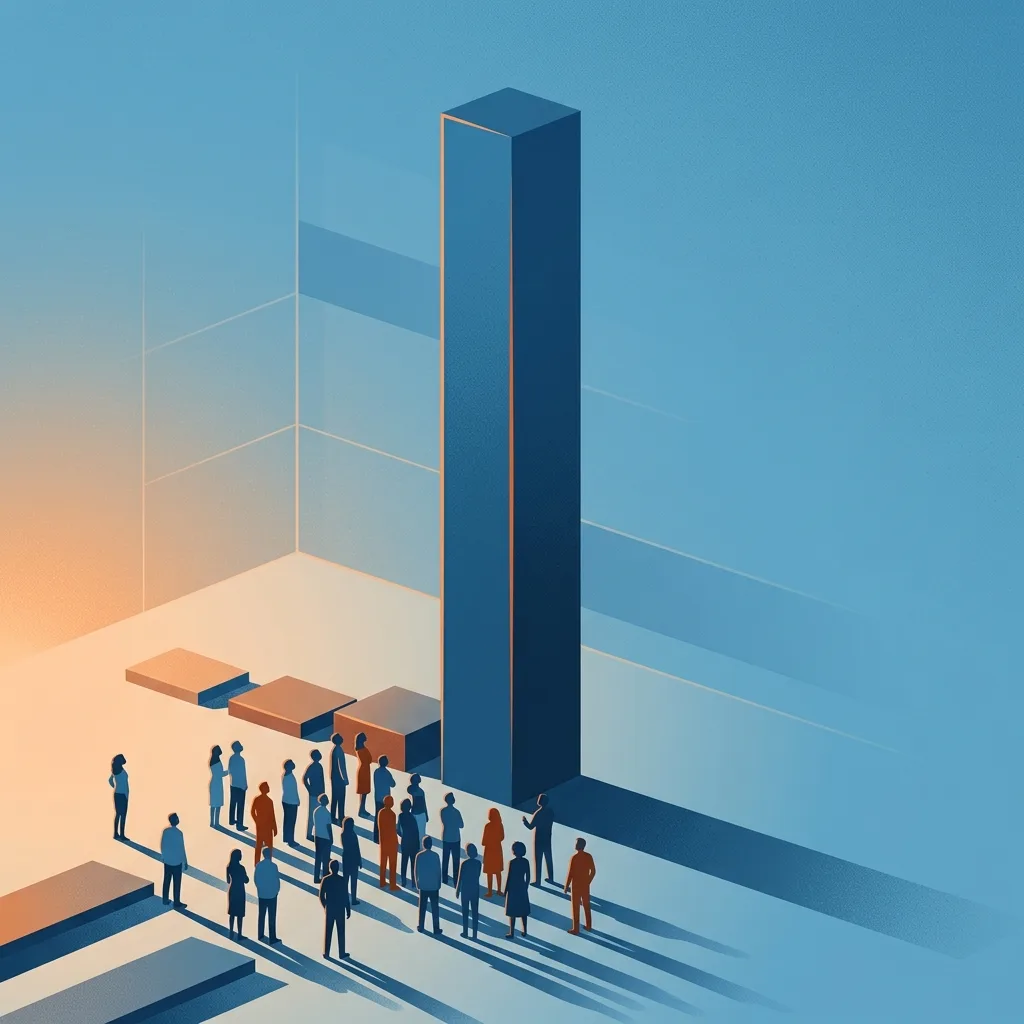
According to the professor's observation, this image remains very stable in children's consciousness.
But he also notes that real life in a nuclear bunker would be very far from how Swiss children imagine it.
Criticism
Sonnenberg's floors, with beds, a prison, and a hospital, have been repurposed over the years as temporary accommodation for refugees, asylum seekers, and the homeless.
This practice has been criticized by organizations assisting these groups. Some asylum seekers have staged protests against being accommodated here.
That which has never been used
The Sonnenberg bunker was never used for its original purpose of protecting people from radioactive fallout.
Not one day, not one hour.
And yet, the Swiss state continues to spend tens of millions of dollars annually on maintaining it and hundreds of thousands of other bunkers. Just in case.
What does this teach?
The logic of the Swiss approach is as follows: the value of a shelter is measured not by how many times it has been used, but by the fact that it exists.
For fifty years, this investment has never "returned". But the country continues to pay, because on the day the shelter is needed, there will be no time to build it.
The condition of the network of shelters remaining from Soviet times in Armenia is a separate topic, about which there is little detailed public data. The Swiss example at least shows what questions are worth asking.
Source
- NPR, Rob Schmitz, "Switzerland is a neutral country, but it has the most nuclear bunkers in the world", 08.08.2026 — https://www.npr.org/2026/08/08/g-s1-137635/switzerland-nuclear-bunkers
- SWI swissinfo.ch (criticism of accommodating asylum seekers in shelters) — https://www.swissinfo.ch/eng/society/is-bunker-housing-for-asylum-seekers-at-tipping-point/41098858
💬CommentsClick to read and leave a comment⌄
No comments yet. Be the first!