
When was the Matenadaran built?
Short answer
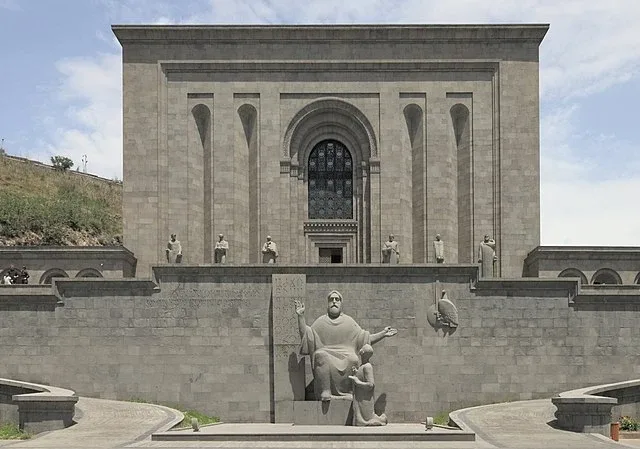
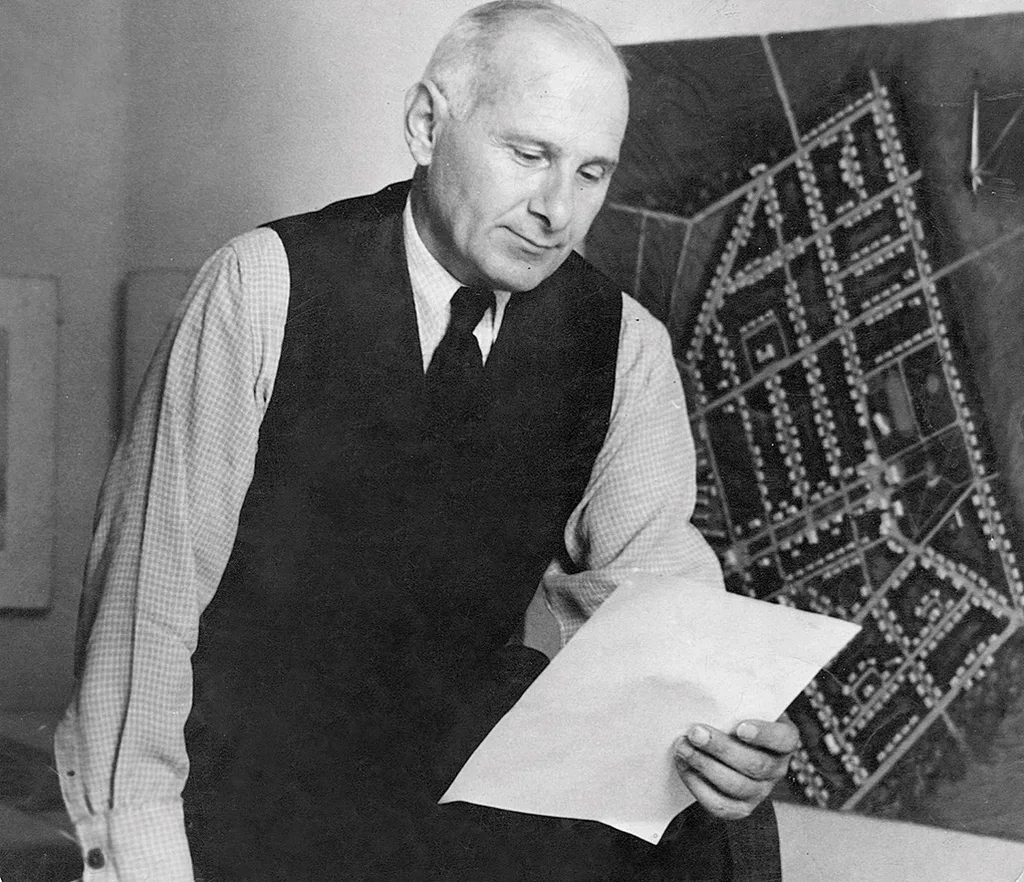
The current building of the Matenadaran in Yerevan, at the end of Mashtots Avenue, was built between 1945 and 1957 according to the design of architect Mark Grigoryan. It opened to visitors in 1957, while as a research institute the Matenadaran has been operating since 1959.
However, the question "when was the Matenadaran built" cannot be answered with a single date: as a manuscript repository, its history begins as early as the 5th century.
The origins: the 5th century
The early history of the Matenadaran is linked to the Mother See of Etchmiadzin. Among Armenian historians, Ghazar Parpetsi mentions at the end of the 5th century a book depository operating in Etchmiadzin, where Greek and Armenian manuscripts were kept.
Over the centuries, this collection was repeatedly destroyed, plundered and restored as a result of Arab, Seljuk, Mongol and Persian invasions. A considerable part of the manuscripts was taken at various times to Crimea, Tabriz, Isfahan, Venice and other places.
The Etchmiadzin Matenadaran: 15th–19th centuries
In 1441 the catholicosal see returned from Sis to Etchmiadzin, and the work of collecting manuscripts gained new momentum.
- In the 17th century, through the efforts of Movses III Tatevatsi and Philipos I Aghbaketsi, the collection was substantially enlarged.
- In 1828, after the annexation of Eastern Armenia to the Russian Empire, the conditions for preserving the manuscripts became relatively stable.
- In 1892 the first printed catalogue was compiled, in which 3,158 manuscripts were registered.
- According to 1913 data, the collection reached about 4,660 items.
1920: nationalization, and 1939: transfer to Yerevan
On December 17, 1920, by a decision of the government of Soviet Armenia, the Etchmiadzin Matenadaran was nationalized and declared state property.
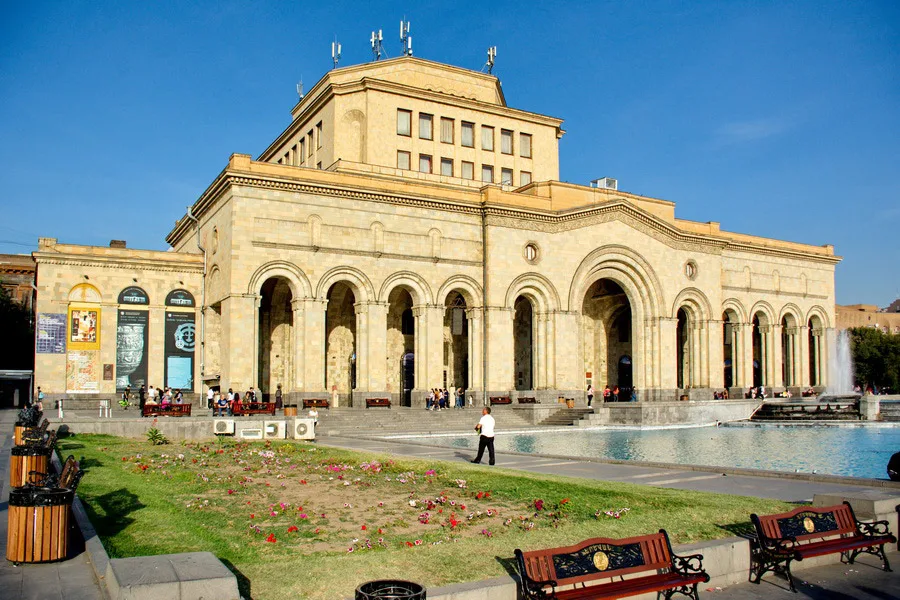
In 1939 the entire collection was moved from Etchmiadzin to Yerevan and was temporarily housed in the building of the Alexander Myasnikyan Public Library. It was precisely in those years that it became evident that the manuscripts required a specially designed, fire- and earthquake-resistant structure.
Construction of the building: 1945–1957
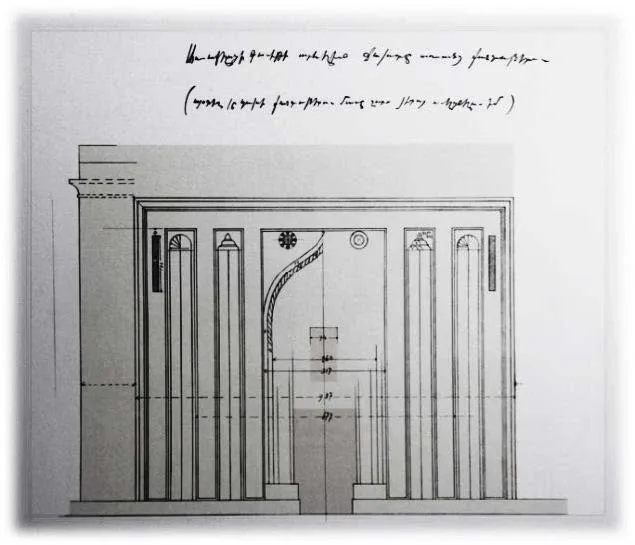
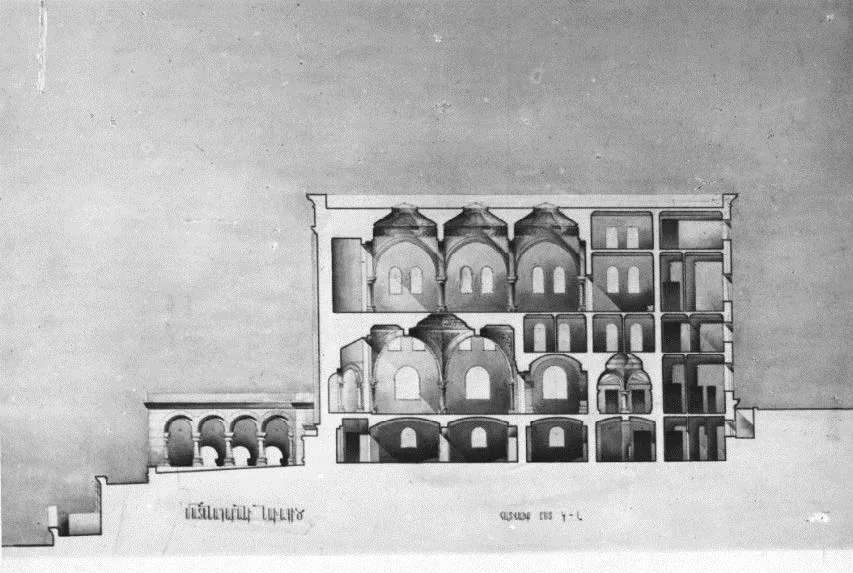
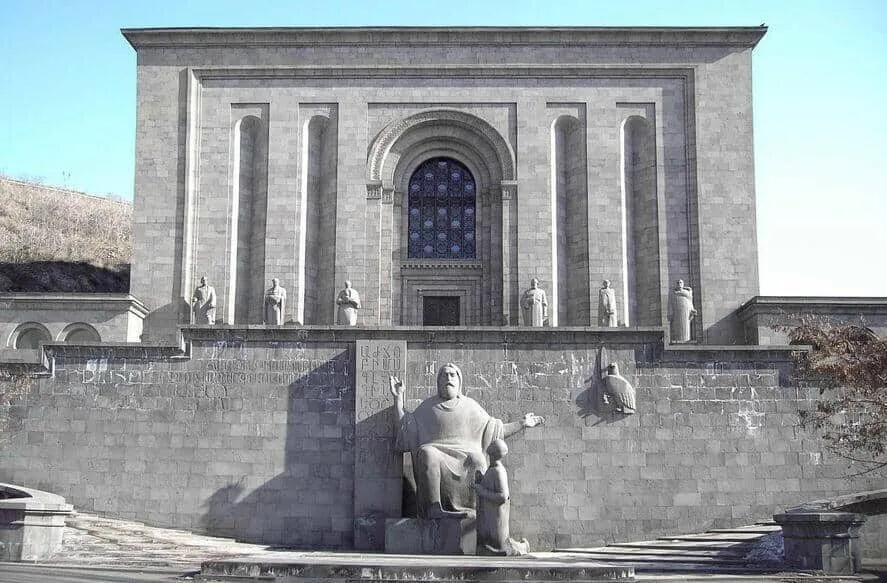
The design of the new building was developed by architect Mark Grigoryan as early as 1944. Construction began in 1945 and was completed in 1957, with interruptions, under the difficult conditions of the postwar period.
- The building stands on the Kond hill, at the end of Mashtots Avenue, in a position dominating the city.
- The main facing material is basalt, symbolizing strength and eternity.
- On the facade stand the statues of six great Armenians: Toros Roslin, Grigor Tatevatsi, Anania Shirakatsi, Movses Khorenatsi, Mkhitar Gosh and Frik (sculptors: A. Shahinyan and others).
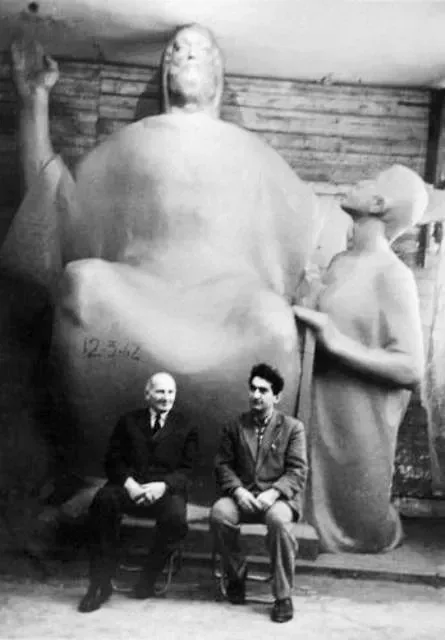
- In front of the entrance, in 1962, a statue of Mesrop Mashtots and his pupil Koryun was erected, the work of sculptor Ghukas Chubaryan.
1959: the status of a research institute
On March 3, 1959, by a decision of the Council of Ministers of the Armenian SSR, the Matenadaran was reorganized into a research institute, acquiring not only preservation functions but also those of study, publication and restoration.
In 1962 the institution was given the name of Mesrop Mashtots. Today it is called the "Mesrop Mashtots Institute of Ancient Manuscripts — Matenadaran".
2011: the new wing
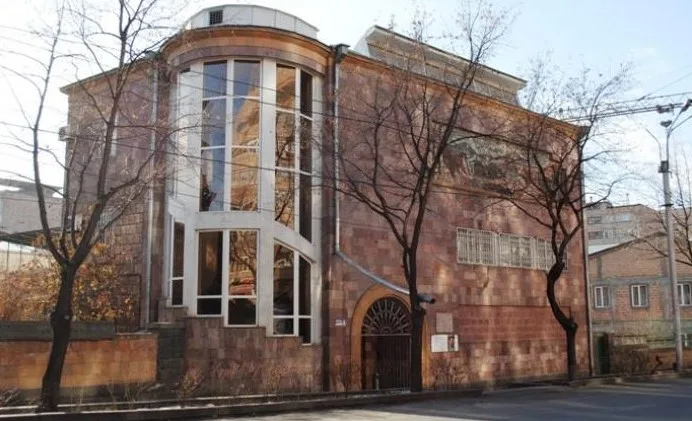
In September 2011, during the days of the 2793rd anniversary of the founding of Yerevan, the new wing of the Matenadaran was opened, designed by architect Artur Meschyan. Built behind the old building, on the slope of the hill, this complex includes modern manuscript repositories, restoration laboratories, scholarly halls and an educational center.
Thus, the architectural complex of the Matenadaran took shape in two stages: in 1945–1957 and in 2009–2011.
The collection today
- About 23,000 complete manuscripts in Armenian, Arabic, Persian, Greek, Latin, Hebrew, Syriac and other languages.
- More than 300,000 archival documents and thousands of fragments.
- Among the oldest complete manuscripts is the "Lazarian Gospel" (887); the largest is the "Homiliary of Mush" (1200–1202), weighing about 28 kg, and the smallest is a 19-gram church calendar.
- In 1997 the manuscript collection of the Matenadaran was included in the list of UNESCO's "Memory of the World" program.
Summary
If we speak of the building, the Matenadaran was built in 1945–1957 and opened in 1957. If we speak of the institution, it was founded as an institute in 1959. And if we speak of the manuscript tradition, the history of the Matenadaran has a depth of more than fifteen centuries.
💬CommentsClick to read and leave a comment⌄
No comments yet. Be the first!