
The Strait of Hormuz crisis: what does it mean for Armenia?
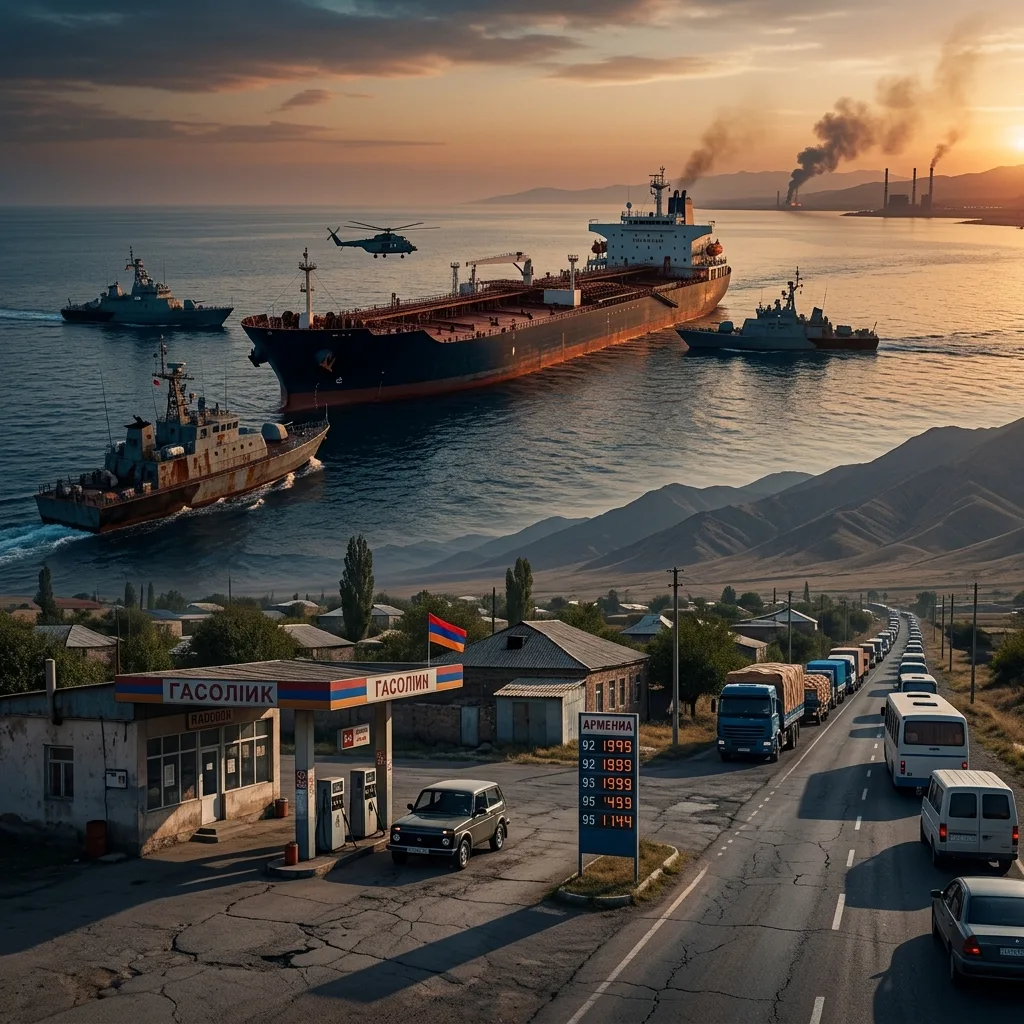
Armenia does not buy oil from the Persian Gulf. Almost the entire volume of gasoline comes from Romania, Egypt, and Russia. From Iran, less than one percent.
And yet, what happens in the Strait of Hormuz directly affects the price that an Armenian driver pays at the gas station.
Here is why.
What is the Strait of Hormuz
It is a narrow passage 21 miles (about 34 kilometers) wide between the Persian Gulf and the Gulf of Oman. At its narrowest point.
Before the war, about 20 percent of the world's oil and large volumes of liquefied natural gas (LNG) passed through it. In 2025, about 20 million barrels of oil and petroleum products per day.
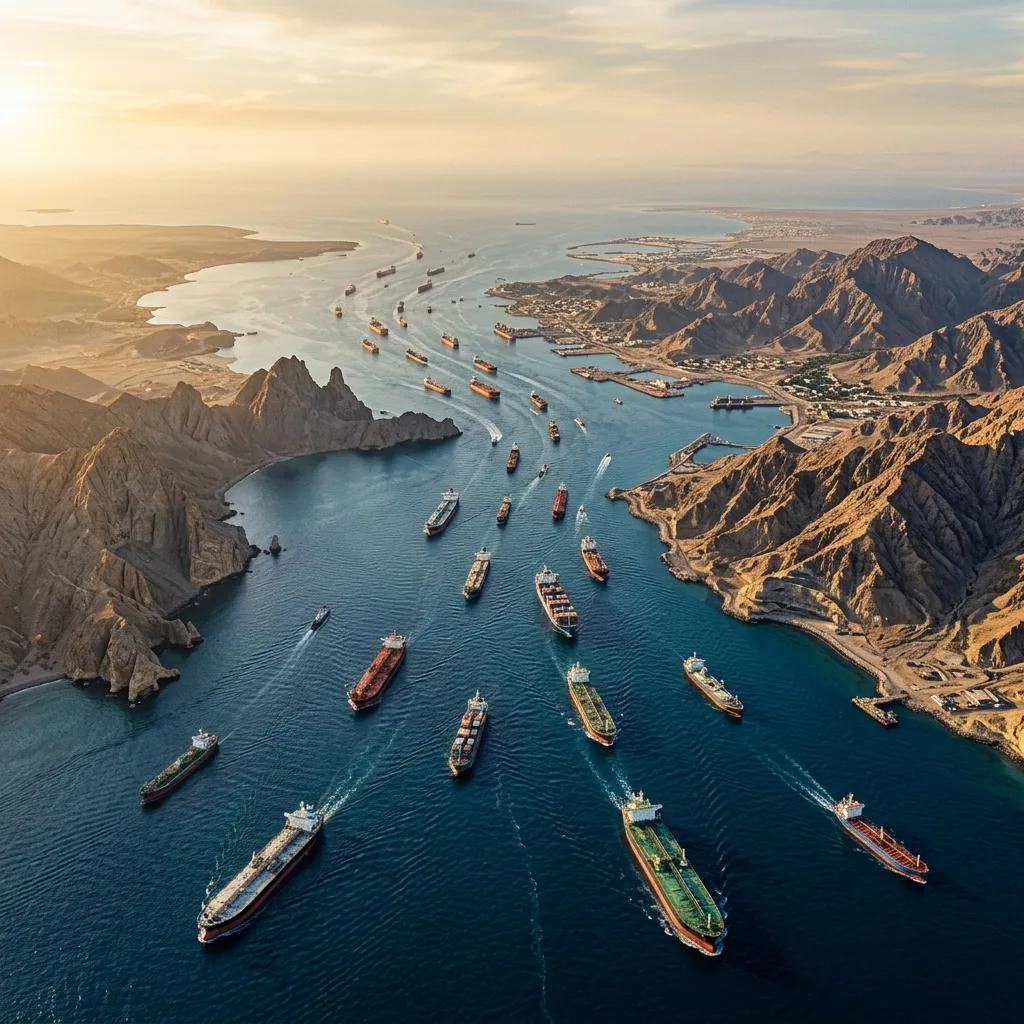
The problem is that this route has almost no alternative. Saudi Arabia and the UAE have limited pipeline capacity, but Iraq, Kuwait, Qatar, and Iran are almost entirely dependent on the strait.
How it started and what happened
February 28, 2026: The US and Israel launched military operations against Iran. The Israeli operation was named 'Roaring Lion', the American one 'Epic Anger'. Iran responded with Operation 'True Promise-4'.
On the same day, major oil companies and trading houses suspended shipments through the strait. Iran's Revolutionary Guard informed ships via radio that no vessel passage was allowed.
March 2: The Revolutionary Guard officially announced the closure of the strait and warned that any ship attempting to pass could be attacked.
Early March: Vessel traffic fell by more than 90 percent. Iraq declared force majeure and cut production by about 1.5 million barrels per day. Hundreds of tankers were stranded in the Gulf.
March 9: The price of Brent reached about $126 per barrel, up from about $72 two weeks prior.
April 8: The US and Iran announced a two-week ceasefire. Vessel movement resumed but remained well below pre-war levels.
June 17: A memorandum of understanding was signed. The number of passages temporarily increased but did not reach the pre-war average.
Late June: The International Maritime Organization (IMO) and Oman organized the 'evacuation' of stranded sailors in the Gulf, through Omani waters, south of Iranian waters and traditional routes.
June 25: Iran attacked a vessel in Omani waters. American airstrikes followed.
July 7–8: New Iranian attacks off the coast of Oman. Again, American airstrikes. Following this, Trump announced that the June 17 memorandum was no longer in effect.
Mid-July: The volume of attacks, both Iranian and American, was the highest since April.
The International Energy Agency (IEA) characterized the event as the largest supply disruption in the history of the global oil market.
Where we are now, as of August 7–8
According to the US Congressional Research Service (CRS) assessment, as of early August, the conflict has eased amid Iran-Oman talks. However, for most of the past five months, traffic through the strait has been seriously disrupted.
What are the negotiations about? Iran and Oman have agreed on a proposed shipping route. However, the terms of the Iranian draft are strict:
- US and Israeli vessels are prohibited from passing through the strait
- Other countries that, according to Tehran, have caused harm to Iran, cannot pass until they pay compensation
- For violators, a fine amounting to 20 percent of the value of the ship's cargo
The US insists on unimpeded passage and a return to pre-war conditions. The positions of the parties remain far apart.
Structural change: In May 2026, Iran established the 'Persian Gulf Strait Authority' (PGSA) and announced that no ship could pass without a valid permit issued by that body. Oman, according to the CRS, did not align with the Iranian position. Iranian Parliament Speaker Mohammad Bagher Ghalibaf said on June 23 that the management of the strait will never return to its pre-war state.
Prices: On August 4, Brent fell below $79 on hopes of a deal prospect. On August 6, following reports of explosions near Qeshm Island and Iran's targeting of 'hostile targets', Brent rose again to around $82, and WTI above $78. On August 7, oil was trading around $77.
Why this matters for Armenia
Armenia does not buy oil from the Persian Gulf. But the impact comes through four channels.
1. Global price without direct connection
In 2025, Romania, Egypt, and Russia provided about 82 percent of Armenia's gasoline imports. From Iran, only 0.4 percent.
But the price of gasoline sold by these countries is determined in the global market based on the Brent rate. Any tension in Hormuz raises Brent, and this reaches Armenian gas stations in two to three weeks.
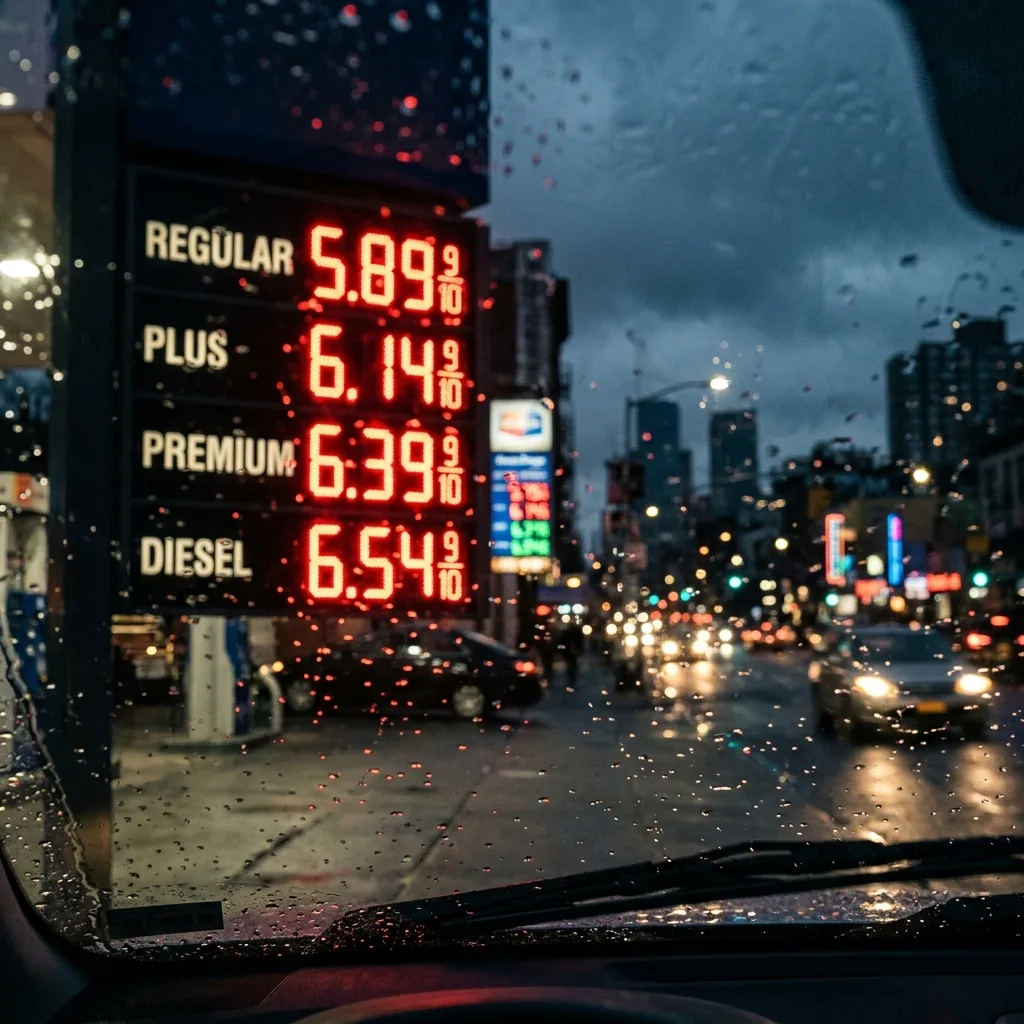
The actual figures according to the Statistical Committee of the Republic of Armenia:
| Product | July 2026 / July 2025 |
|---|---|
| Gasoline | +7.4% |
| Diesel fuel | +14.3% |
| Liquefied hydrocarbons (butane, propane) | +44.6% |
In June, the indicators were higher: gasoline +10.4%, diesel +19%.
2. Food prices
Central Bank Governor Martin Galstyan noted in the National Assembly's Standing Committee on Financial-Credit and Budgetary Affairs that supply disruptions caused by the situation in the Strait of Hormuz affect not only energy carriers but also goods crucial for agriculture. According to his characterization, the risk of food price increases has already partially become a reality.
3. Trade transit
This is the least noticed but most important connection.
According to an analysis by the Applied Policy Research Institute of Armenia (APRI Armenia), in 2025, trade with Iran amounted to $768 million, which is 3.6 percent of Armenia's total trade turnover. In itself, not a critical figure.
But: more than 20 percent of Armenia's foreign trade passes through the territory of Iran.
According to the same analysis, Armenia exports tobacco and livestock to the Middle East, and imports toys, textiles, paper, and furniture from China. These flows rely on Iranian territory.

There are also goods where dependency on Iran is high: bitumen, chalk, cement. Alternative import sources are more expensive.
The Carnegie analysis notes that the most immediate impact for Armenia is the disruption of trade with Iran and partners further east, such as India, and that a prolonged war would lead to higher energy and import costs, reduced trade flows, and rising inflation along Armenia's only open southern route.
4. Direct assessment of inflation
The Central Bank Board assessed that the escalation in the Middle East could have an additional impact on inflation in Armenia within the range of 1.2–1.7 percent.
Galstyan listed the main factors: rising oil prices, increased import costs due to the use of alternative logistical routes, and the potential substitution of food products imported from Iran. He emphasized that this is a risk zone, not an inevitable scenario.
Other risks mentioned include a potential reduction in tourist flows, a drop in demand for Armenian goods in Middle Eastern markets, and export logistical constraints.
What is not Hormuz's 'fault'
For the sake of fairness, we must distinguish.
The largest inflation, the 44.6 percent increase in liquefied hydrocarbons, is not directly related to Hormuz. The overwhelming majority of Armenia's liquefied gas imports come from Russia through Georgia. The price of this commodity is determined by Russian supply and Georgian transit conditions, not by the Persian Gulf.
Similarly, in July 2026, inflation in Armenia was 4.5 percent year-on-year, but a deflation of 1.4 percent was recorded compared to June. This is mainly related to Russian market restrictions that keep goods in the domestic market.
In other words, Armenia's economy is currently affected by at least two different, sometimes opposing, external factors.
What protects Armenia
There is one significant circumstance that is rarely mentioned.
The International Monetary Fund's April 2026 report notes that long-term, fixed-price natural gas contracts provide a partial buffer against energy price shocks, and Armenia is cited precisely as an example.
In other words, as long as the Russian gas contract operates at a fixed price, the main part of Armenia's energy system is insulated from global fluctuations. The impact comes mainly through liquid fuels and transport costs, not gas.
But this also explains why the gas contract issue is so sensitive for Armenia.
What to watch in the coming weeks
- The fate of the Iran-Oman agreement — will the US accept the terms prohibiting the passage of American ships?
- The Brent rate — staying steadily above $80 will mean a new price increase at Armenian gas stations in 2–3 weeks
- The stability of Iranian transit routes — more than 20 percent of Armenia's foreign trade depends on it
- The Central Bank's next monetary policy decision — whether the Hormuz factor will force a rate revision
Summary
The Hormuz crisis is not a direct energy shock for Armenia. The country does not import fuel from the Gulf, and the fixed gas contract provides partial protection.
The impact comes indirectly: through the global price of oil, the cost of food products, and, most importantly, the Iranian transit routes through which more than one-fifth of Armenia's foreign trade passes.
According to the Central Bank's assessment, the potential additional impact on inflation is 1.2–1.7 percent. That is not a large figure, but it adds to Russian restrictions, tensions with the EAEU, and slowing economic growth.
Sources
- US Congressional Research Service (CRS), "Strait of Hormuz: Security Developments and Implications for Oil, Gas, and Other Commodities", August 2026 — https://www.congress.gov/crs-product/R45281
- Reuters, 28.02.2026 — https://www.aol.com/articles/oil-gas-majors-traders-suspend-165524204.html
- Reuters, 30.03.2026 — https://www.aol.com/articles/chinese-container-ships-pass-strait-115917732.html
- Reuters, 08.04.2026 (ceasefire) — https://www.aol.com/articles/trump-says-us-help-traffic-042818560.html
- Bloomberg, 06.08.2026 — https://www.bloomberg.com/news/articles/2026-08-06/latest-oil-market-news-and-analysis-for-aug-7
- Bloomberg, 04.08.2026 — https://www.bloomberg.com/news/articles/2026-08-04/latest-oil-market-news-and-analysis-for-aug-5
- CNBC, 06.08.2026 (Iran's draft) — https://www.cnbc.com/2026/08/06/oil-price-iran-war-strait-hormuz-oman-deal.html
- Trading Economics (current oil price) — https://tradingeconomics.com/commodity/crude-oil
- APRI Armenia, "US-Israel-Iran War: Implications for the South Caucasus", 16.03.2026 — https://apri.institute/us-israel-iran-war-implications-for-the-south-caucasus/
- Carnegie Endowment, "Iran's Northern Neighbors Also Face War Fallout", 03.2026 — https://carnegieendowment.org/emissary/2026/03/armenia-azerbaijan-iran-war-fallout
- IMF, Middle East and Central Asia Regional Economic Outlook, 04.2026 — https://www.imf.org/-/media/files/publications/reo/mcd-cca/2026/english/text.pdf
- ARKA (Armenian Statistical Committee data), 05.08.2026 — https://arka.am/en/news/economy/gasoline-prices-in-armenia-rose-by-7-4-in-july-and-diesel-fuel-by-14-3/
- ARKA (CBA assessment on inflation), 17.03.2026 — https://arka.am/en/news/business/central-bank-assessed-impact-of-escalation-in-middle-east-on-inflation-in-armenia/
- FIP.am (SRC data: fuel import sources) — https://fip.am/en/50512
- Dallas Fed, "Impact of 2026 Iran War on Inflation", 2026 — https://www.dallasfed.org/research/economics/2026/0417

💬CommentsClick to read and leave a comment⌄
No comments yet. Be the first!