
The Church of the Holy Cross of Aghtamar and the Kingdom of Gagik Artsruni
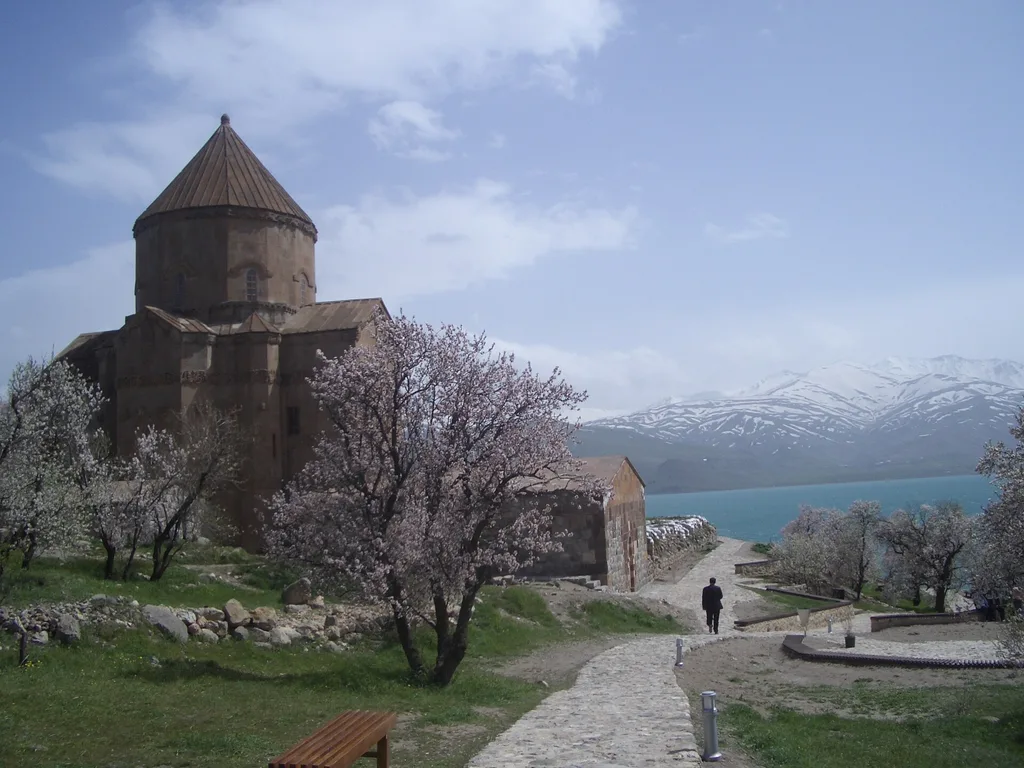
# The Church of the Holy Cross at Aghtamar and the Kingdom of Gagik Artsruni
The Church of the Holy Cross on Aghtamar Island, located in the southern part of Lake Van, is one of the most prominent monuments of medieval Armenian architecture and sculpture. It was built during the heyday of the Kingdom of Vaspurakan and is associated with the name of Gagik Artsruni. The monument is located in Western Armenia.
The Artsrunis of Vaspurakan at the turn of the 9th–10th centuries
The Artsrunis were a powerful nakharar family of Vaspurakan. Their history was set down by Tovma Artsruni in his work "History of the House of Artsruni." The work extends to the beginning of the 10th century, and its continuation was written by an anonymous author. Important information about Gagik's activity has been preserved precisely in that continuation.
At the end of the 9th century and the beginning of the 10th, Vaspurakan had become one of the important political and cultural centers of Armenia. Its territory encompassed a considerable part of the Lake Van basin. The rule of the Artsrunis took shape alongside the Kingdom of the Bagratunis.
Gagik Artsruni and the royal title
At the beginning of the 10th century, Gagik Artsruni received the royal title and became king of Vaspurakan. He established his authority through both political skill and building activity. His proclamation as king is traditionally dated to 908, but this date should be taken as approximate.
The Kingdom of Vaspurakan lasted until 1021. In that year Senekerim Artsruni transferred his domains to the Byzantine Empire and received compensation in the region of Sebastia.
Aghtamar Island: a royal center
On Aghtamar Island Gagik built a palace, a harbor and gardens. The island became a royal residence, and the Church of the Holy Cross became its spiritual and symbolic center. The continuator of Tovma Artsruni tells of this construction and of the consecration of the church. The time of the church's construction is generally taken to be approximately 915–921.
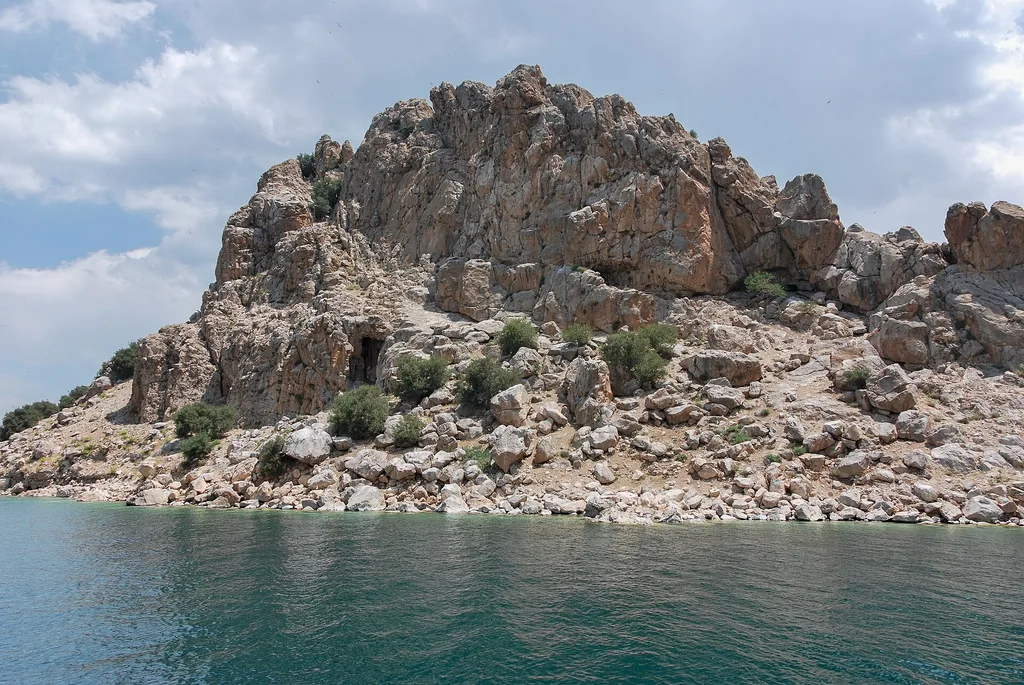
Later the island's monastery became an important ecclesiastical center. The Catholicosate of Aghtamar was founded in 1113.
The architect Manuel
The sources have preserved the name of the church's builder. He is Manuel vardapet. In the history of Armenian architecture, Manuel is known as the author of this monument. No further biographical data about him have been preserved.
Architectural composition
The church is a cruciform domed structure with four apses (tetraconch). It is built of fine-grained stone. Its volumes are well proportioned, and its façades are richly decorated. In this way Manuel created a structure in which architecture and sculpture form a unity.
The sculptural program
The main distinguishing feature of Aghtamar is the bas-reliefs of the exterior façades. They depict scenes from the Old and New Testaments. These include:
- Adam and Eve
- David and Goliath
- The prophet Jonah
- The prophet Daniel in the lions' den
- The sacrifice of Abraham
- The three youths in the fiery furnace
- Samson
A frieze with scenes of grapevines and hunting runs along the upper part of the walls. On the western façade, King Gagik is depicted presenting a model of the church to Christ. This image shows the builder's role and confirms that the church is the king's donation. Art historians note that the program is connected with the ideas of salvation, faith and royal authority. Frescoes have also been preserved inside.
Significance of the monument
The Holy Cross of Aghtamar is an Armenian church, the creation of an Armenian architect and Armenian sculptors. It bears witness to the political power and cultural level of 10th-century Vaspurakan. In the history of Armenian art it is regarded as one of the pinnacles of medieval Armenian sculpture.
Sources
- Tovma Artsruni and Anonymous — History of the House of Artsruni
- Sirarpie Der Nersessian — Aght'amar: Church of the Holy Cross (1965)
💬CommentsClick to read and leave a comment⌄
No comments yet. Be the first!