
The Yererouyk Temple: An Early Christian Basilica of Shirak
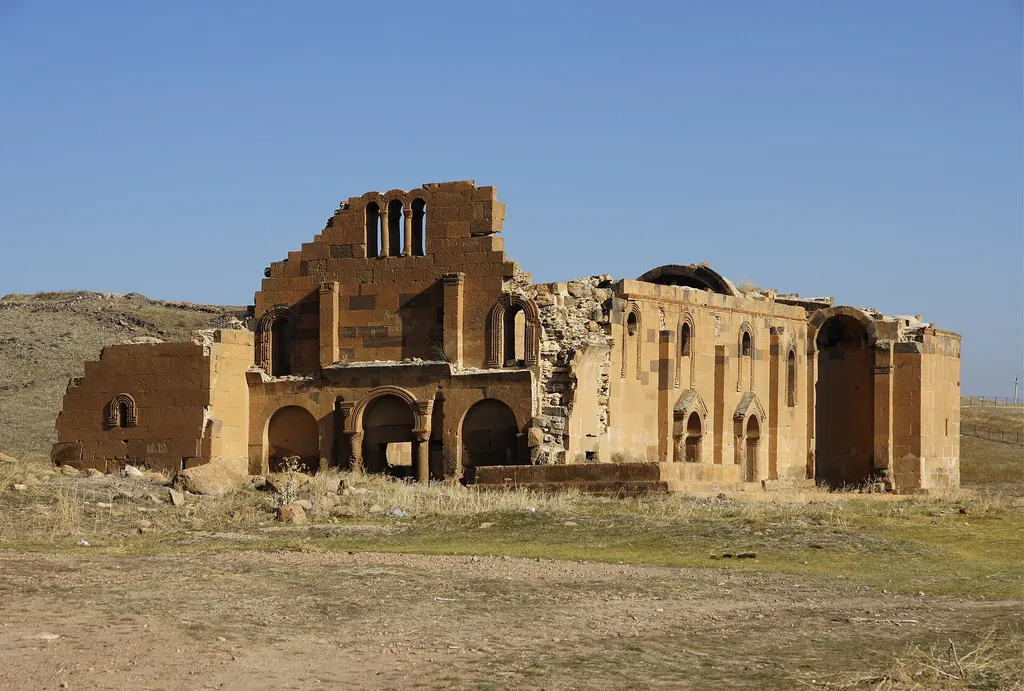
Yererouk in the Shirak Plain
The Yererouk church is located in the Shirak region, near the village of Anipemza. It is one of the oldest surviving monuments of early Christian Armenian architecture. In the history of Armenian architecture it is usually dated to the 4th–5th centuries or approximately the 5th century. The exact date is unknown: there is no surviving inscription or written testimony about its construction. The dating is based on a stylistic comparison of architectural forms and decoration.
The Composition of the Three-Nave Basilica
Yererouk is a three-nave basilica. The interior is divided lengthwise into three naves by colonnades, and the apse is on the eastern side. This composition is one of the typical types of the early Christian period. Later, Armenian architecture gave preference to domed and central-domed churches, so early basilicas are important for understanding the formative stage.
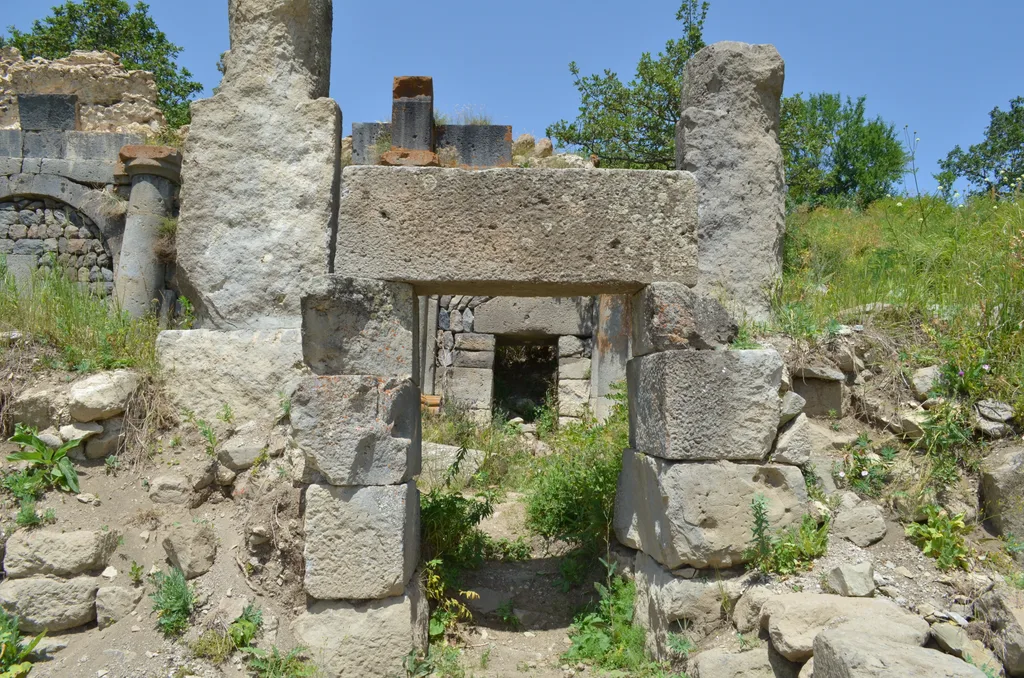
The building is constructed of local stone. Parts of the walls, fragments of columns, bases and capitals have survived to this day. They show how the interior space was organized.
Sculptural Decoration
When speaking of Yererouk, the sculpted details are often mentioned: capitals, cornices and other fragments of decoration. They reveal features of a transitional period: local patterns are combined with forms of late antique traditions. This decoration is valuable material for the study of early Armenian sculpture.
Traces of Decoration
The walls of early Christian churches were often covered with decoration, but at Yererouk its preservation is very limited. It is difficult to say clearly what the interior decoration looked like as a whole. Any claim must be based on scholarly research, not on conjecture.
History of Research
In general works on the history of Armenian architecture, Yererouk is regarded as a typical example of an early basilica. Toros Toramanyan, in his works on the history of Armenian architecture, attached great importance to the analysis of the plans and structure of early monuments.
Conservation Issues
The monument is partially ruined. The condition of the building has been affected by time, weather conditions, the seismic activity of the region and long-term abandonment. Stone details left in the open air, in particular sculpted fragments, are especially vulnerable. The main issues are the reinforcement of the walls, the inventory and documentation of fragments, and the protection of the site. It is also important to include Yererouk in cultural routes. This would help introduce a wider audience to the early Christian heritage of Shirak.
Why Yererouk Matters
Yererouk testifies that Christian church building on the land of Shirak began very early and was based on developed traditions of Armenian construction. The study and preservation of the monument is part of preserving our historical memory and architectural heritage.
Sources
- History of the Armenian People (Institute of History of the Academy of Sciences of Armenia)
💬CommentsClick to read and leave a comment⌄
No comments yet. Be the first!