
Akhtala Monastery and the Wall Paintings of Lori
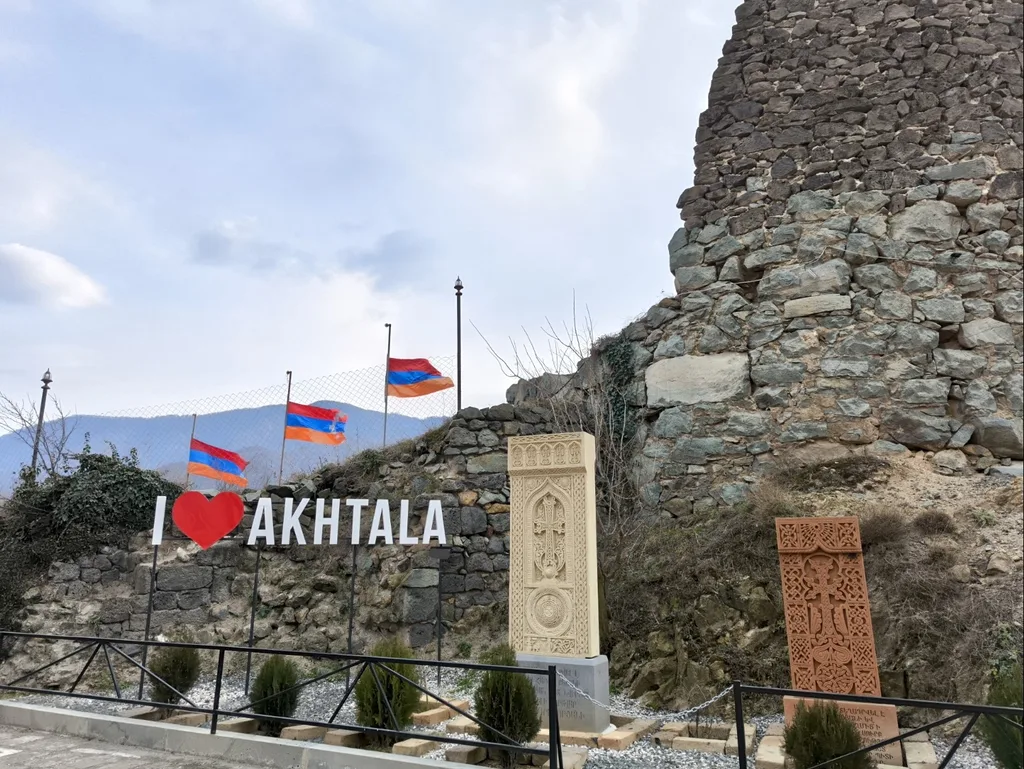
Akhtala Monastery: The Stone Fortress of Lori
Akhtala Monastery is a medieval monastic complex in northern Armenia, near the town of Akhtala in the Lori Province, standing on the upper edge of the Debed River gorge. It is known for its fortified walls and the rich frescoes of the main Astvatsatsin (Holy Mother of God) Church. The complex was formed mainly in the 10th–13th centuries, and today it is one of the important monuments of Armenian medieval art.
The Location and Historical Setting
The monastery is located on the upper edge of the Debed River gorge, on a rocky height that provides natural protection. In the Middle Ages Lori was one of the Armenian royal and princely centers: here stood the Kingdom of Tashir-Dzoraget of the Kyurikians, and later the principality of the Zakarians. In this setting monasteries played not only a spiritual but also a cultural and often a defensive role.
The Fortress Wall
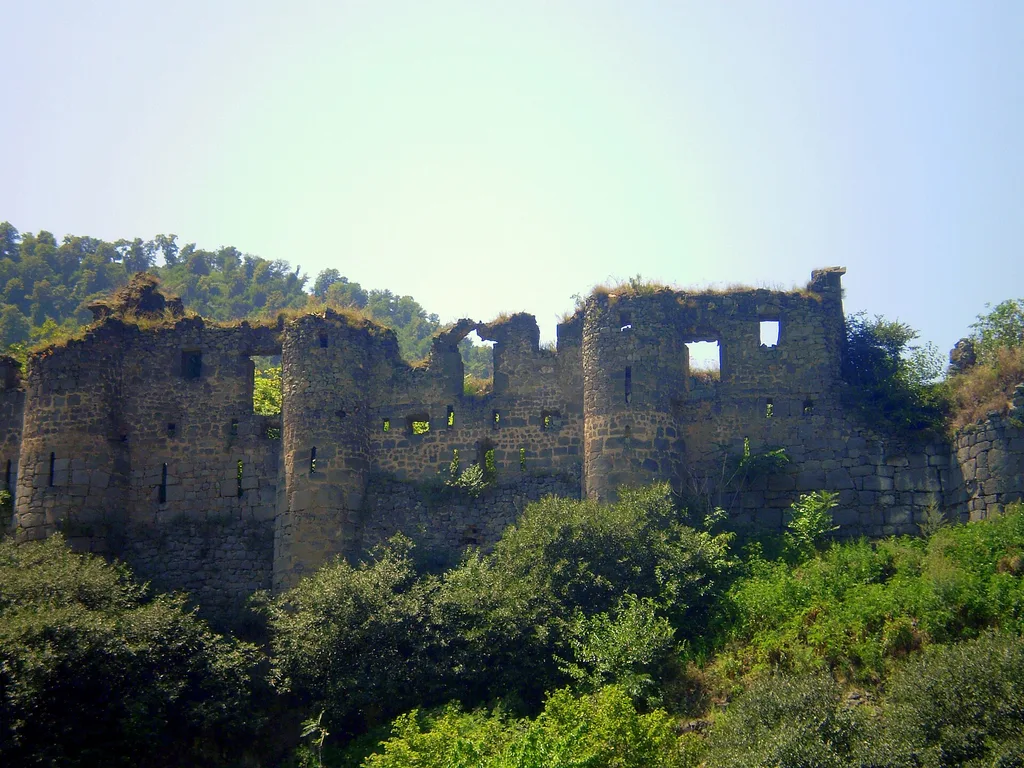
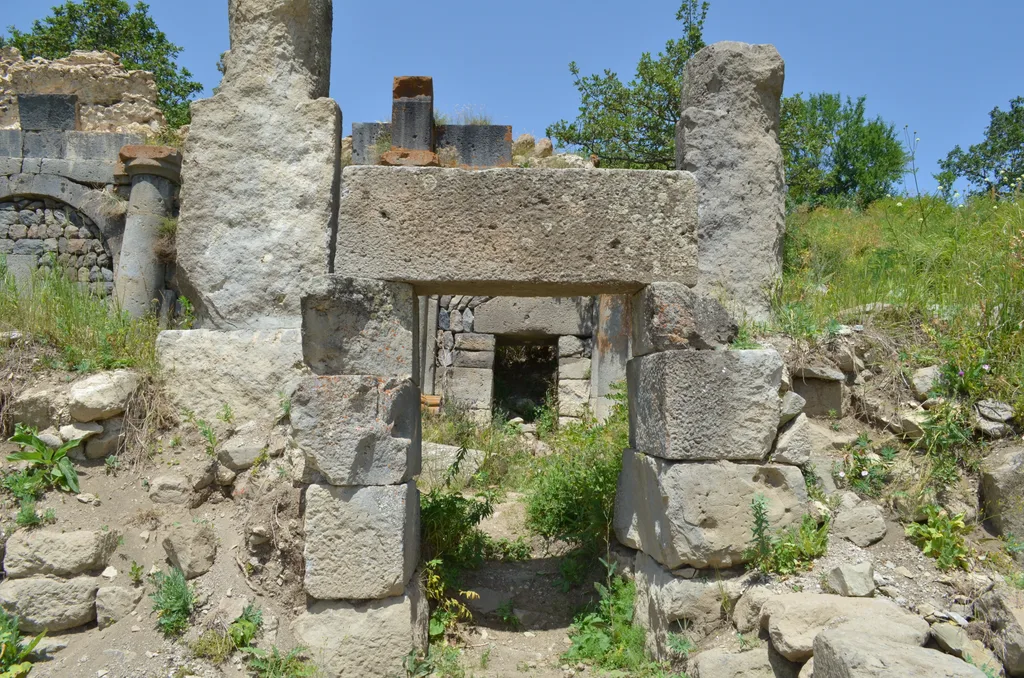
The monastery is surrounded by powerful walls and towers, so it is perceived as a monastery-fortress. The walls were built of local stone, and they give the monastic complex the appearance of a fortress. Researchers' opinions differ on the exact dating of the construction phases and of individual structures, so in general one can speak of a gradual construction in the 10th–13th centuries.
The Astvatsatsin Church
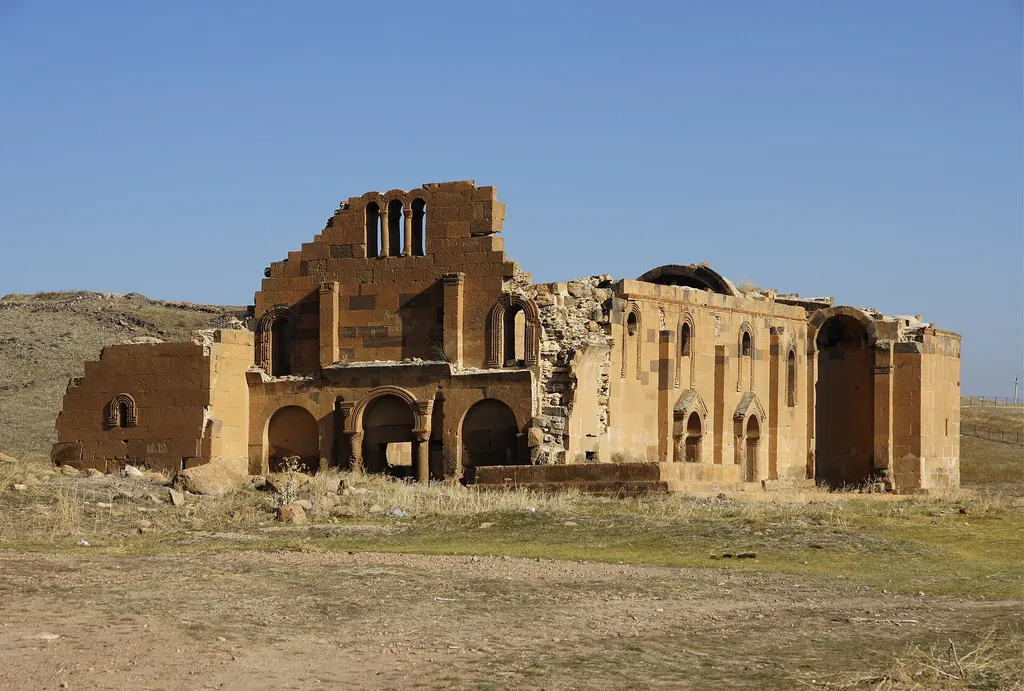
The center of the complex is the Astvatsatsin (Holy Astvatsatsin) Church. It is a cross-domed church, whose construction is usually attributed to the early 13th century, the period of Zakarian rule. The building stands out for its well-worked hewn stone, harmonious proportions and the traditional solutions of Armenian medieval architecture. Next to the church there are other structures: chapels, halls and utility buildings.
The Frescoes
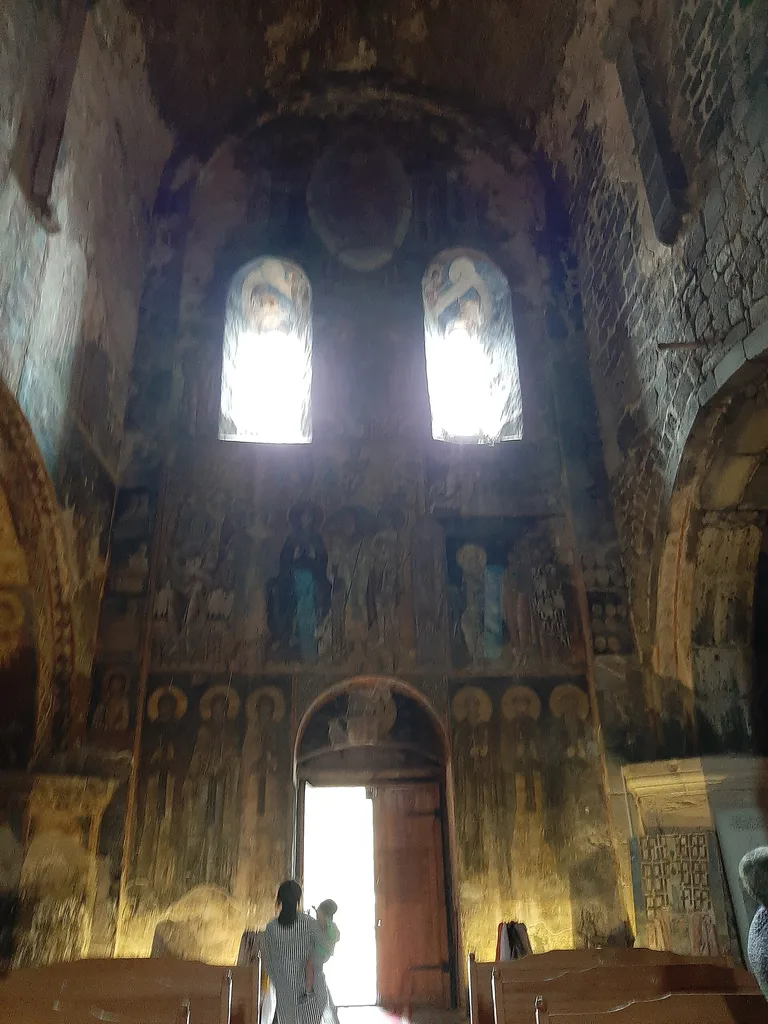
Akhtala's chief treasure is the frescoes of the Astvatsatsin Church, which are considered among the best examples of medieval mural painting preserved in Armenia. They depict scenes from the Bible and the New Testament, and figures of saints. In the apse area the Mother of God with the Child stands out, while on the walls there are Christological cycles. The rich color palette, expressive faces and monumental compositions attest to high art. The frescoes show an echo of contacts with Byzantine and Georgian art, but they preserve the characteristics of the Armenian school.
The Zakarians and the Monastery
The Zakarians are often mentioned in the history of the monastery; in the early 13th century they liberated and governed a significant part of Northern Armenia, supporting the construction of monasteries. This period is regarded as the time of Akhtala's rise. The monastery's connection with the Mamikonian dynasty is not confirmed by clear evidence, so it is not presented as an established fact.
Akhtala Today
Today the monastery is a living witness of Armenian culture, studied by art historians and visited by tourists. Together with the other monuments of Lori, Haghpat and Sanahin, Akhtala forms the larger picture of Armenian medieval architecture and mural painting.
Sources
- History of the Armenian People (multivolume publication, Institute of History of the NAS RA)
- Armenian Soviet Encyclopedia
💬CommentsClick to read and leave a comment⌄
No comments yet. Be the first!