
Next to the pagan temple of Garni: the Roman bath of Garni and its mosaic
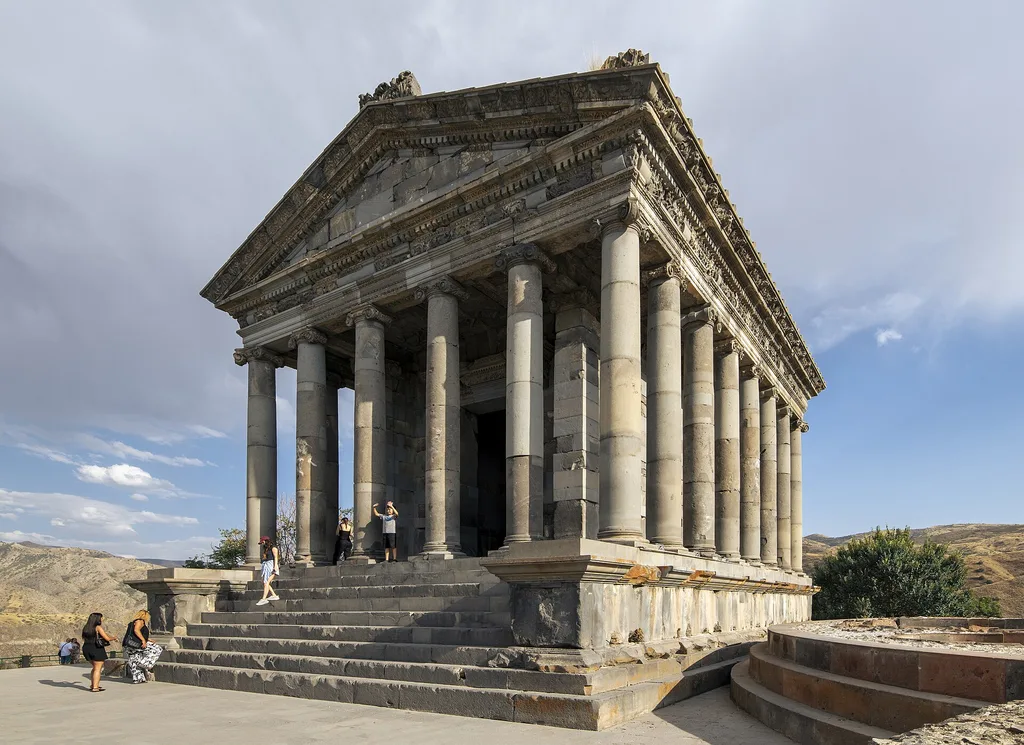
Garni: a Hellenistic-period monument complex of Armenia
The Garni fortress complex is located in the Kotayk Province, on the edge of the Azat River gorge, east of Yerevan. The best-known structure of the complex is the pagan temple, but the remains of a bath have also been preserved next to it, and its mosaic is considered one of the remarkable finds of Armenian archaeology.
Scholarly opinions differ on the dating of the Garni temple. Traditionally it is associated with the name of King Tiridates I and with the 1st century AD, but later dates have also been proposed. This question should not be confused with the dating of the bath.
The discovery of the bath
The remains of the bath were noticed as early as during N. Marr's excavations in 1909, and it was studied comprehensively in the Soviet years, in the mid-20th century, as part of the general excavations of the Garni complex. The work was led by the archaeologist Babken Arakelyan, who studied the Garni monument complex for many years. The bath is located on the territory of the citadel, near the royal buildings.
Architectural structure
The bath is a thermal building of the Roman type. It consists of several separate rooms intended for bathing at different temperatures. A heating system, a hypocaust, was installed under the floor, in which hot air passed between small pillars supporting the floor. This testifies that the Armenian elite had adopted elements of Mediterranean domestic and building culture.
The mosaic and the Greek inscription
The best-known part of the bath is the mosaic preserved on the floor of one room. It is composed of small colored stones. The theme of the mosaic is marine: sea deities are depicted, including Oceanus and Tethys, as well as sea creatures and fish. The mosaic contains a Greek inscription, which is usually interpreted as the words of the craftsmen to the effect that they "received nothing, but worked". The exact reading and interpretation of this wording is a subject of discussion among researchers, so it is presented here with caution.
There is likewise no unified opinion on the dating: the mosaic and the bath are usually attributed to the Roman period, approximately the 3rd century.
Its place in the history of Armenian architecture
The Garni bath testifies that ancient Armenia was not isolated but was in contact with the Hellenistic and Roman world. At the same time, these influences were combined in a distinctive way with local traditions. The temple, the palace buildings and the bath together present the picture of an Armenian royal residence.
Preservation and significance today
The mosaic of the bath is protected by a cover and is accessible to visitors. Together with the Garni temple, it is included among the cultural values that tell about early Armenian statehood and culture. It is an important monument both from the standpoint of scholarly study and from that of heritage preservation.
Sources
- Armenian Soviet Encyclopedia — the article "Garni"
- History of the Armenian People (Institute of History of the Academy of Sciences of Armenia)
💬CommentsClick to read and leave a comment⌄
No comments yet. Be the first!