
Ancient Stone Structures of Gegharkunik: Lchashen and the Vardenis Region
# Ancient Stone Structures of Gegharkunik: Lchashen and the Vardenis Region
Gegharkunik: A Land of Archaeological Monuments
Gegharkunik Province, which extends across the Lake Sevan basin, is one of the richest areas of Armenia in archaeological terms. Fortresses of the Bronze and Iron Ages, burial grounds, vishapakars (dragon stones), medieval monasteries and khachkars have been preserved here. These monuments show that the shores of the lake and the surrounding highlands were inhabited for millennia.
Movses Khorenatsi links the origin of the name with Gegham, a descendant of Hayk. According to the tradition preserved by Khorenatsi, Gegham settled in the mountains near the lake, which were called the Gegham Mountains, and the land was called Gegharkunik. This is a tradition and not historical documentation, but it shows how long this region has been present in Armenian memory.
The Lchashen Burial Ground
Lchashen is on the western shore of Lake Sevan. Its archaeological complex is considered one of the important Late Bronze Age monuments of Armenia. Numerous burials have been excavated here, dating mainly to the Late Bronze and Early Iron Ages.
Among the finds from Lchashen, the wooden carts are well known. They were preserved in Late Bronze Age burials. The carts attest to a high level of craftsmanship in that period in the areas of woodworking, wheel-making and the use of means of transport.
The Lowering of Sevan's Water and New Discoveries
After the lowering of the level of Lake Sevan, the coastal layers were exposed, and archaeologists gained the opportunity to study monuments that had previously been underwater.
Among the finds, models of bronze boats are mentioned. They testify that the inhabitants of the lake shores were familiar with navigation.
The Cyclopean Fortresses
Cyclopean fortresses of the Late Bronze and Early Iron Ages have been preserved in Gegharkunik. They are built of large, roughly worked stones without mortar. The fortresses are usually located on heights and have powerful walls. They testify to the defensive organization of the communities.
The study of such fortresses is important for reconstructing the picture of early statehood and settlement in the Armenian Highland.
Stone Monuments of the Vardenis Region
The Vardenis region and the surroundings of the Gegham Range are known for vishapakars, ancient stone steles with images of animals, mainly a bull or a fish. Armenian archaeologists connect them with ancient cultic beliefs and rituals related to water. Scholarly discussions about the dating and meaning of the vishapakars continue.
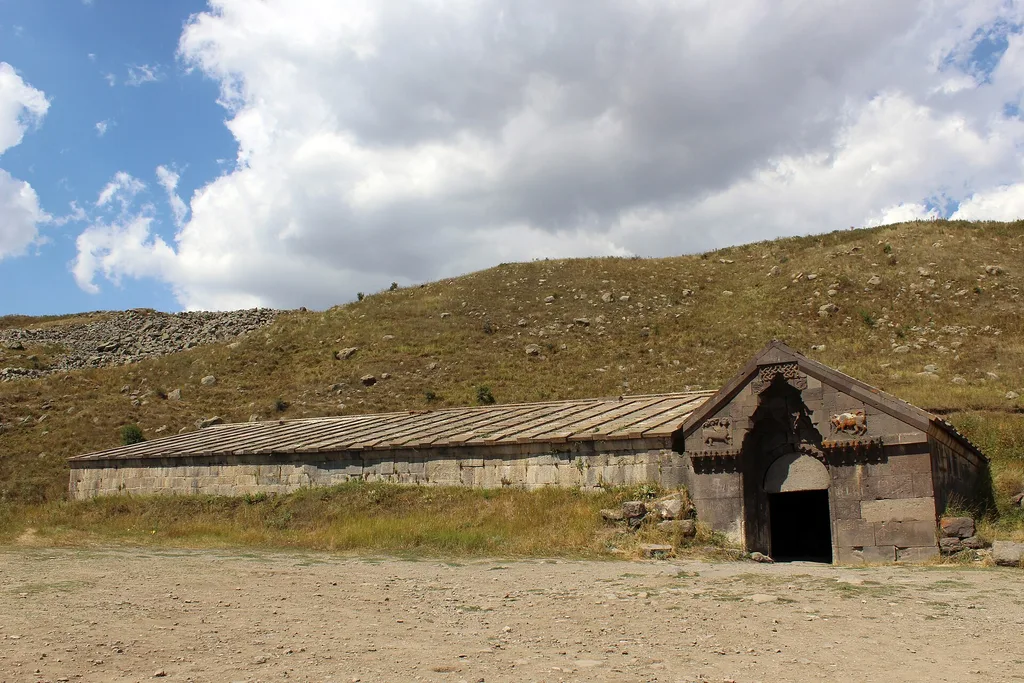
There are also medieval monuments in the region. Among them is the Selim (Orbelian) Caravanserai, built in 1332 at the Vardenyats Pass on the initiative of the Orbelian princely house. An Armenian inscription has been preserved on the building. It is an important structure on the road connecting Syunik and Gegharkunik and a notable example of Armenian medieval architecture.
The Khachkars of Noratus
The Noratus cemetery near Gavar is one of the best-known monuments of Gegharkunik. Hundreds of khachkars, belonging mainly to the Middle Ages, have been preserved here. The ornamentation of the khachkars, the shapes of the crosses and the inscriptions make it possible to trace the development of Armenian stone craftsmanship.
Archaeological Research
The archaeological study of the Sevan basin is one of the important directions of the work of Armenian scholars. The excavations of Lchashen and adjacent monuments were carried out by Armenian archaeologists. The results were included in the multi-volume work "History of the Armenian People" and in Armenian encyclopedic publications.
The monuments of Gegharkunik, with their fortresses, burials, vishapakars and khachkars, show the continuous history of the population of the Armenian Highland, a history with deep roots. Their preservation and further study is an important task for Armenian scholarship and culture.
Sources
- Movses Khorenatsi — History of the Armenians
- Armenian Soviet Encyclopedia
- History of the Armenian People (Institute of History, National Academy of Sciences of the Republic of Armenia)
💬CommentsClick to read and leave a comment⌄
No comments yet. Be the first!