
Goshavank and the Memory of Mkhitar Gosh in Tavush
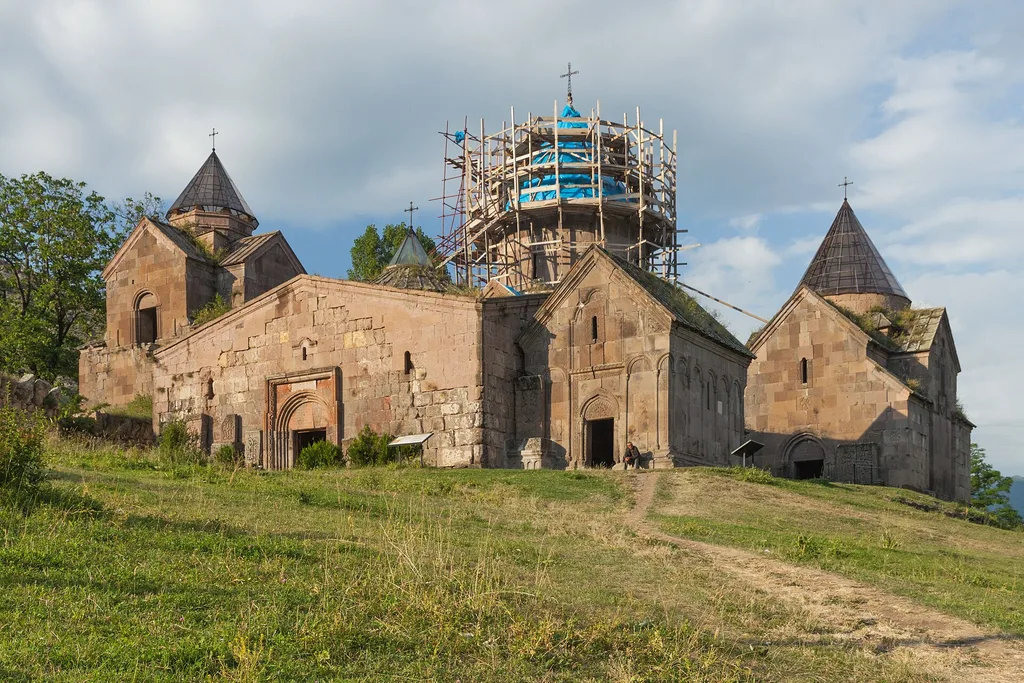
Goshavank: the monastery of stone and thought in Tavush
About fifteen kilometers from the town of Dilijan in the Tavush Province, near the village of Gosh, nestled among forested mountains, stands Goshavank. It is one of the renowned centers of manuscript copying, learning and architecture in medieval Armenia. The main construction period of the complex was the 12th–13th centuries.
The name of the monastery and its historical origins
The monastery was formerly known as Nor Getik. The old Getik monastery was destroyed by an earthquake in the 12th century, and Mkhitar Gosh founded the new monastery nearby. Later it came to be called Goshavank, in memory of its renowned founder and leader. This testifies to how great the significance of his person was in the monastery's fate.
The medieval Armenian historian Kirakos Gandzaketsi tells of Mkhitar Gosh and the circumstances of the monastery's foundation. According to his testimony, Gosh founded the monastery near the ruined Getik. It is also known from the same source that Gosh was a renowned vardapet around whom a large group of students had gathered.
Structure of the complex
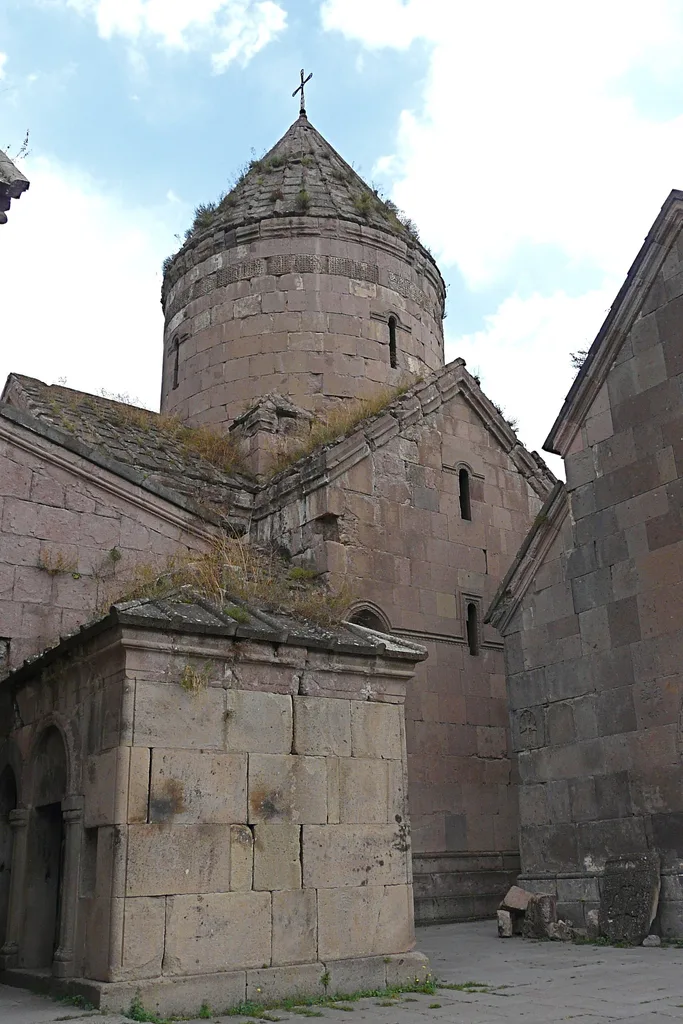
Goshavank consists of several churches, a gavit, chapels and auxiliary buildings. The main church is the Astvatsatsin (Holy Mother of God) Church. It is a cross-shaped domed structure, erected at the end of the 12th century, in 1191–1196. The adjoining gavit, the churches and the other structures form a unified ensemble.
One of the distinctive features of the complex is the density of its construction: the buildings are attached to one another and form a closed, compact whole, adapted to the mountain climate and the forest environment.
The architecture of the Astvatsatsin Church
The Astvatsatsin Church stands out for the harmony of its proportions, precisely hewn stone and restrained ornamentation. The clean surfaces of its walls, its slender volumes and its spatial clarity make it one of the valuable examples of Armenian medieval architecture.
The khachkars
Goshavank is famed for its khachkars. Many khachkars have been preserved on the walls of the complex and in its surroundings. The best known of them is the khachkar made by master Poghos, which is considered one of the masterpieces of Armenian sculpture. It stands out for its fine, lace-like carving, in which delicate interlacing forms multilayered patterns. This khachkar is often mentioned as the symbol of Goshavank.
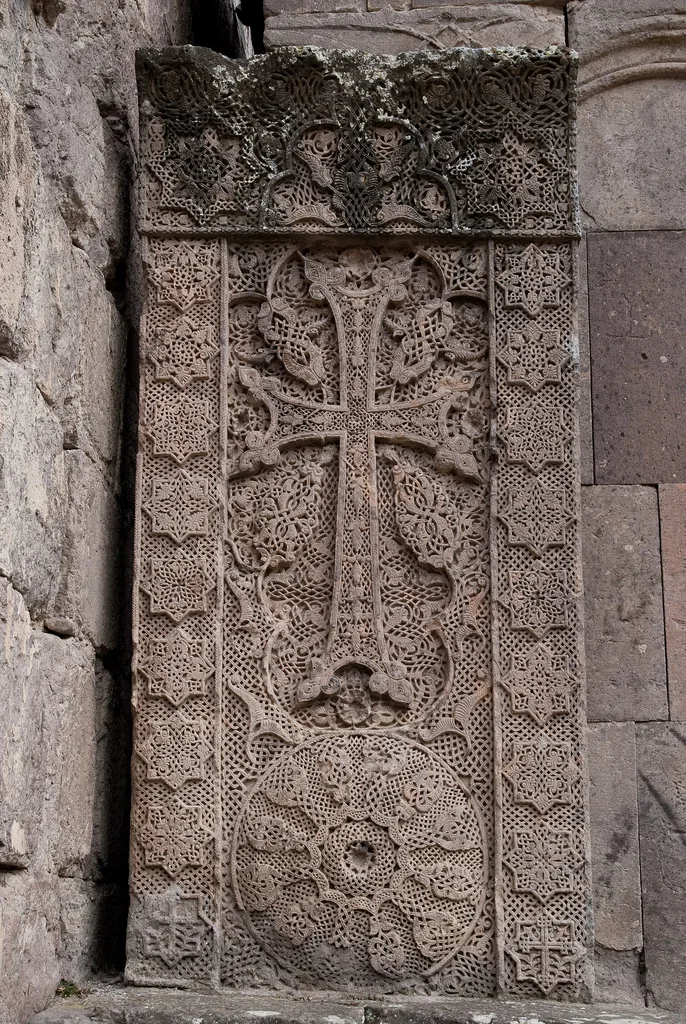
Khachkars were not only religious monuments but also a pinnacle of Armenian art, combining commemoration, prayer and mastery.
Mkhitar Gosh: his memory in the monastery
Mkhitar Gosh is one of the prominent figures of the Armenian intelligentsia of the 12th–13th centuries: a vardapet, jurist and fabulist. He established a school at the monastery where many students studied. That educational center played a major role in the spiritual and cultural life of the region. Among his literary legacy, let us mention the collection of fables “Aghvesagirk” (Book of Fables). Gosh's main work, the legal monument “Datastanagirk” (Lawcode), is not discussed separately in this article.
Gosh died at the beginning of the 13th century (around 1213) and was buried in the monastery he founded. His tomb remains a place of pilgrimage to this day.
Goshavank today
Today Goshavank is one of the most visited monuments in Tavush. It preserves its spiritual significance and receives pilgrims and tourists. The nature surrounding the monastery, the silence of the ancient stones and the delicate carvings of the khachkars create an impressive unity that for centuries has nourished the memory of Armenian culture.
Sources
- Kirakos Gandzaketsi — History of the Armenians
- History of the Armenian People (Institute of History, Academy of Sciences of Armenia)
💬CommentsClick to read and leave a comment⌄
No comments yet. Be the first!