
Haghartsin Monastery in the Forests of Dilijan
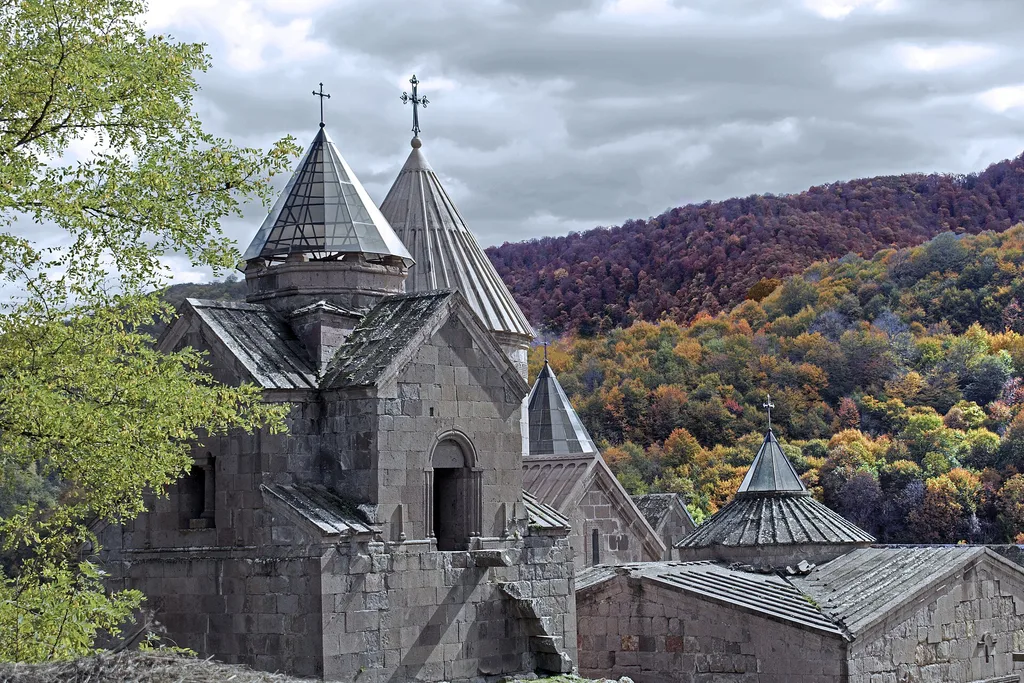
Haghartsin: a monastery hidden in the embrace of the forests
In the Tavush Province, about 18 km from the town of Dilijan, near the village of Haghartsin, on a densely forested slope stands the Haghartsin monastic complex. It is one of the most picturesque monuments of Armenian medieval architecture: the stone walls, the moss and the green of the forest have merged here into a single whole.
History of the complex
The buildings of Haghartsin are mostly dated to the 10th–13th centuries. The monastery flourished after the fall of the Bagratuni Kingdom, during the rule of the Zakarians, when monasteries in Northern Armenia were being restored and built anew. Armenian art historians date the individual structures of the complex differently, so the dates given below are approximate.
The main churches of the monastery were built in the 13th century. At that time a considerable part of Northern Armenia was under the rule of the brothers Zakare and Ivane Zakarian, and monastic centers had become hubs of learning, manuscript copying and art.
St. Grigor Church
St. Grigor Church is one of the oldest structures of the complex and is dated approximately to the 10th–11th centuries. It is a small cross-domed building with simple, well-proportioned volumes. The dome rests on the walls, and the exterior treatment is restrained.
St. Astvatsatsin Church
The main church of the complex is St. Astvatsatsin (Holy Mother of God), dated to the 13th century. It is also cross-domed and decorated with carvings and stone details. Ornamental sculpture has been preserved on the church's façades, while inside there is a high level of architectural craftsmanship.
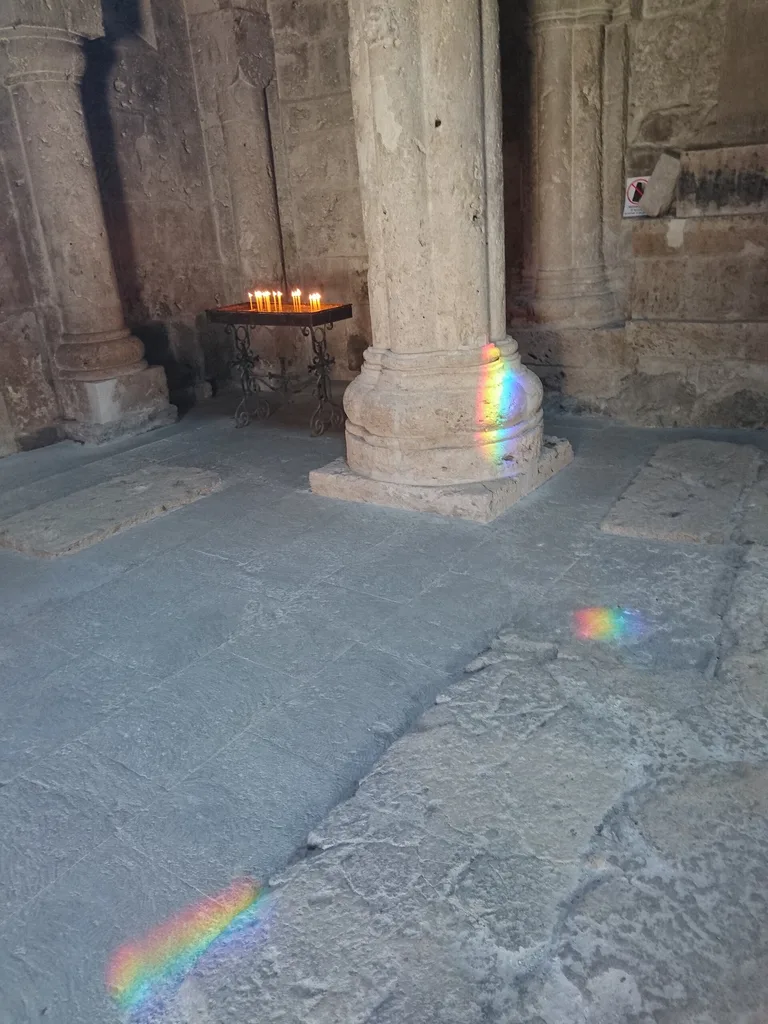
Gavit, chapels and auxiliary buildings
The complex also includes a gavit, chapels, a refectory and other auxiliary buildings. These structures show that Haghartsin was not only a place of worship but also a living monastic community with its own economy, manuscript copying and teaching. The refectory is an interesting example for the study of medieval Armenian monastic life.
The khachkars
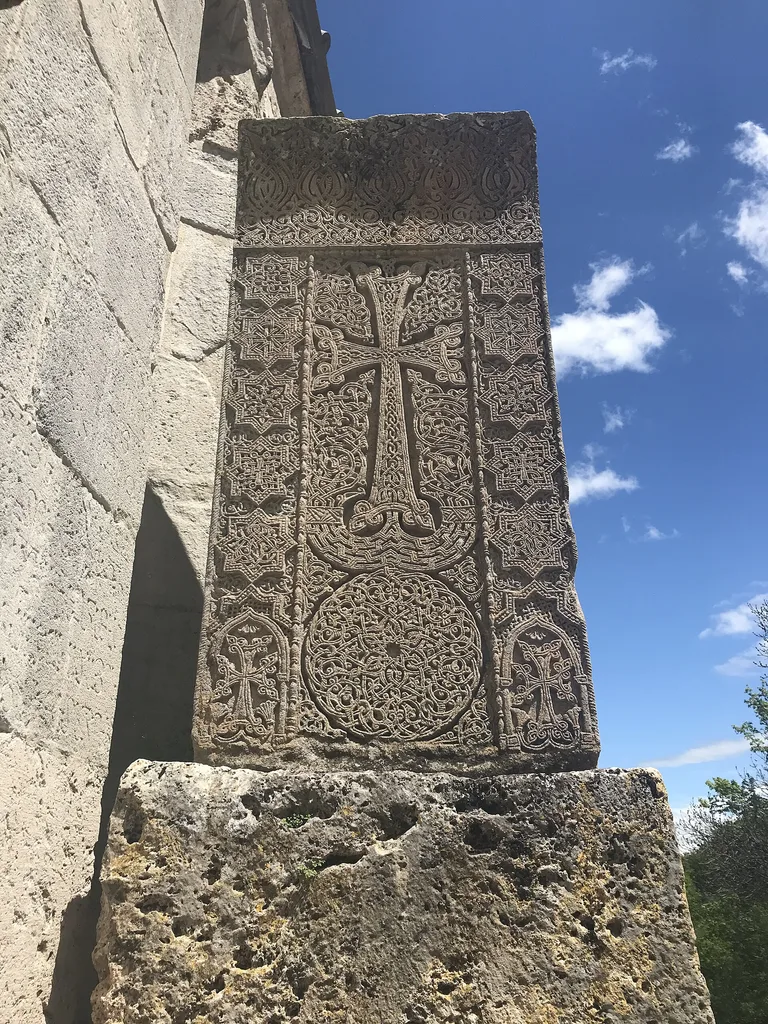
Haghartsin is also known for its khachkars (cross-stones). They are scattered around the complex and stand out for their delicate, lace-like ornamental carving. The khachkar is a unique form of Armenian medieval art; the Armenian art of khachkars is included in the UNESCO Intangible Cultural Heritage list. The khachkars of Haghartsin testify to the high skill of the local masters.
The forest setting of Dilijan
The complex is located in the forests of Dilijan National Park, on a slope surrounded by oak, hornbeam and elm trees. One of the characteristics of the architecture of Armenian monasteries is the harmonious integration of the structure into the landscape. At Haghartsin this principle is expressed especially vividly: the color and volumes of the stone are in harmony with the surrounding nature.
Today the monastery is well known to both believers and tourists. It is an integral part of a visit to Dilijan and an important example of Armenian architectural heritage.
Sources
- Armenian Soviet Encyclopedia
- History of the Armenian People (Institute of History, Academy of Sciences of Armenia)
💬CommentsClick to read and leave a comment⌄
No comments yet. Be the first!