
Khor Virap Monastery and the view of Ararat: the place where Gregory the Illuminator was imprisoned
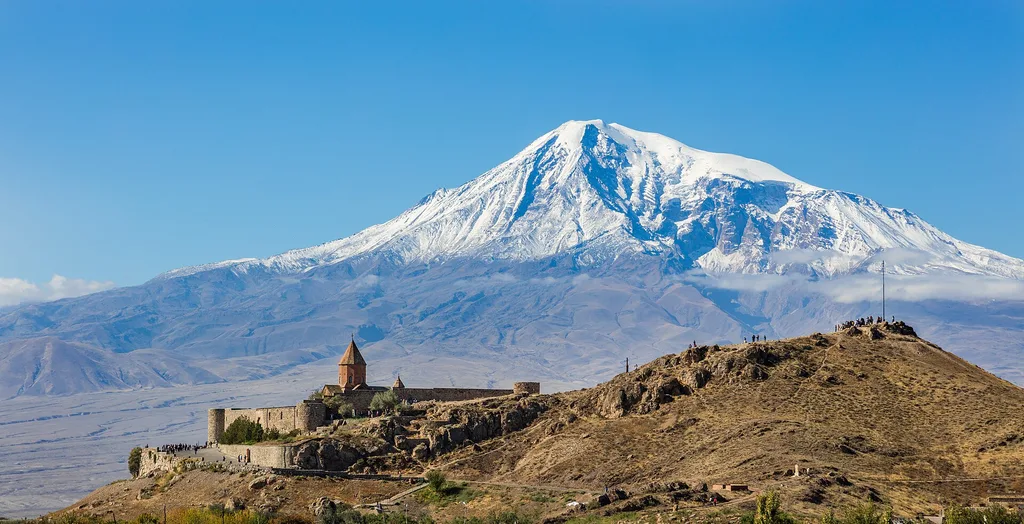
Khor Virap: a place where history meets Ararat
In the Ararat plain, near the town of Artashat, Khor Virap Monastery stands on a small hill. From here opens one of the closest and most majestic views of Masis and Sis. For Armenian pilgrims this is at once a place of national memory and of faith: here, according to Agathangelos, Gregory the Illuminator was imprisoned.
The site and the name
"Khor Virap" means "deep pit" or "deep dungeon." The monastery is located near ancient Artashat. According to Armenian historiographical tradition, Artashat was founded by Artashes I, and in ancient times it was one of the capitals of Armenia. For this reason the place is linked with important episodes of Armenia's political and spiritual history.
What Agathangelos tells
The story of the conversion of the Armenians has come down to us mainly through the work of Agathangelos. In his account, Gregory, who preached Christianity, refused to honor the pagan goddess Anahit and, by order of King Trdat, was thrown into the pit of Artashat. Agathangelos reports that he remained there for fifteen years, and that a widow who brought him bread helped him stay alive.
Later, according to the same account, Trdat fell gravely ill, and his sister Khosrovidukht received instructions in a dream to bring Gregory out. Gregory was freed, healed the king, and Armenia accepted Christianity.
History and tradition
One must distinguish established facts from the details of legend. In Armenian historiography, Christianity becoming the state religion in Armenia is traditionally dated to 301, the beginning of the 4th century. There are scholarly discussions about this date, and some researchers place the conversion a few years later. The details of the fifteen-year imprisonment, the feeding by the widow and the king's illness rest on Agathangelos's account and have the character of tradition. We present them as a tradition reported by Agathangelos.
The Church of St. George
Above the pit stands the Chapel of St. George, whose first structure is traditionally associated with the name of Nerses III the Builder (642). The main church, St. Astvatsatsin (Holy Mother of God), was built in 1662. The church has a cross-shaped domed composition, and around it is a walled monastic complex.
The pit
Through the St. George chapel one descends to the underground pit, a narrow and deep cell where, according to tradition, Gregory was held. Visitors go down by a ladder, where the atmosphere is especially introspective. The pit is the main center of pilgrimage.
Pilgrimage and the view of Ararat
Khor Virap has been a place of pilgrimage for centuries. Baptisms and liturgies are held here, and pilgrims come both from Armenia and from the Diaspora. From the monastery courtyard Ararat appears almost within arm's reach. Historically, Ararat is the symbol of the Armenian homeland, although it is now located in Western Armenia, outside the borders of the Republic of Armenia. This combination of faith, memory and a view of lost lands makes the place unique and moving.
Sources
- Agathangelos — History of the Armenians
- Movses Khorenatsi — History of the Armenians
💬CommentsClick to read and leave a comment⌄
No comments yet. Be the first!