
The Archaeological Complex of Teishebaini (Karmir Blur)
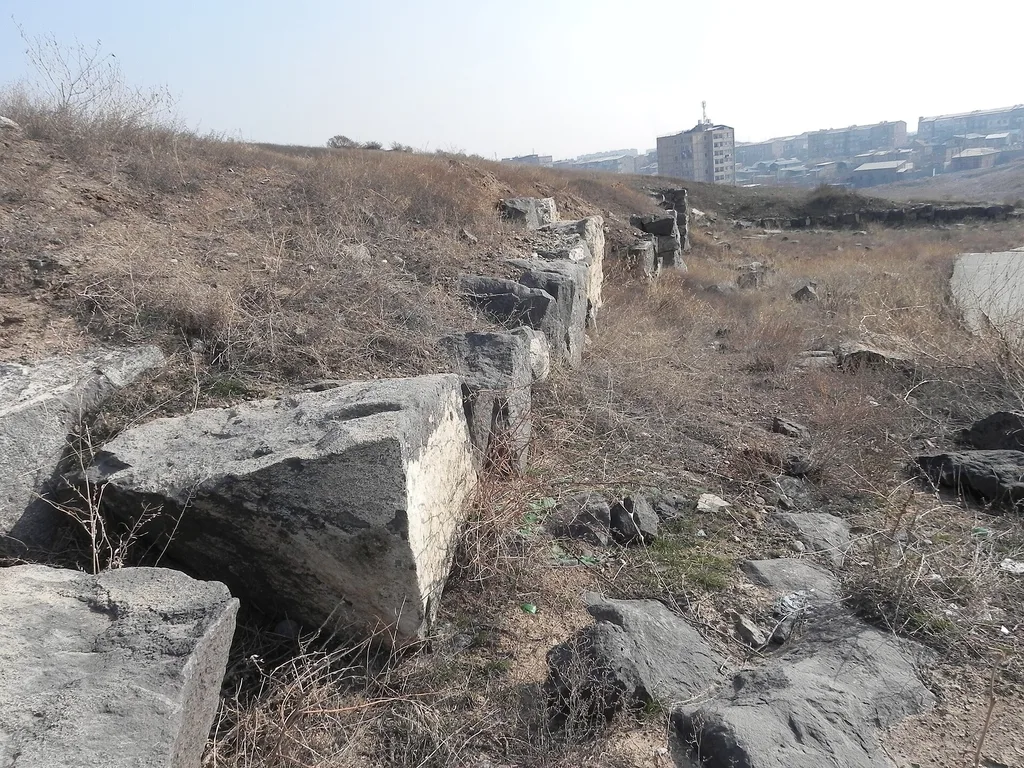
Karmir Blur: Yerevan's Urartian Heritage
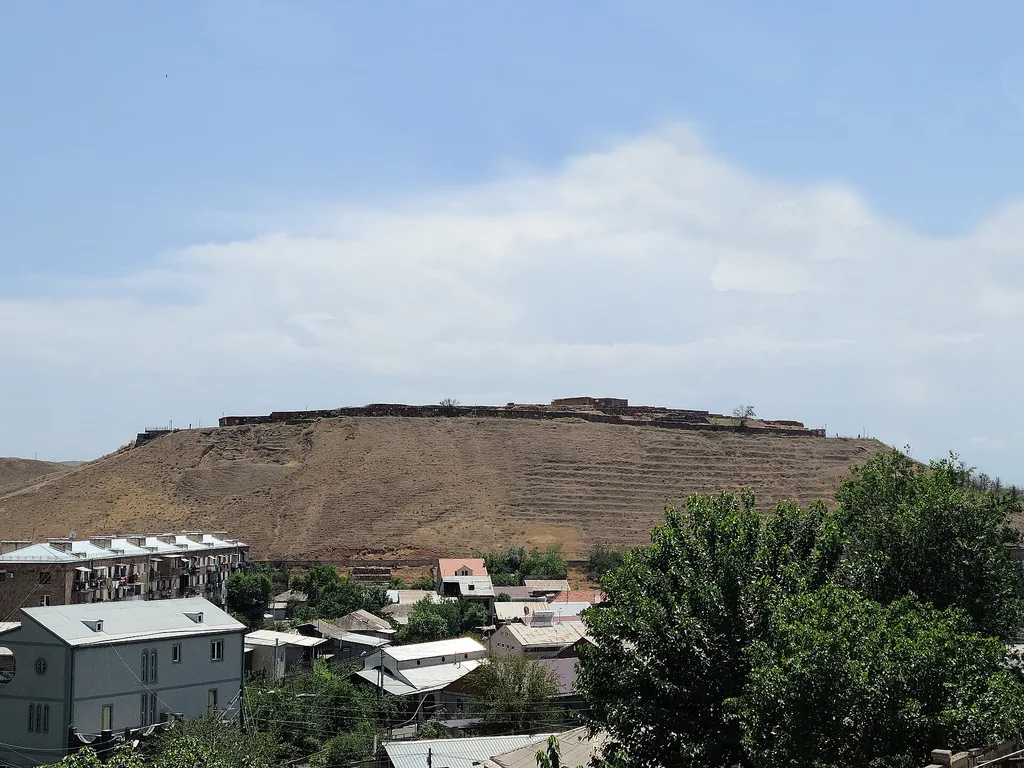
Karmir Blur is an archaeological site located within the borders of Yerevan. It is one of the most important Urartian sites of the Ararat Plain. The soil of the hill is reddish, and the site got its name from this color. Excavations showed that the fortress-city of Teishebaini was located here. It was one of the major administrative, economic and military centers of the last period of the Kingdom of Van (Biainili).
The Founding of Teishebaini
The name of the city is known from Urartian cuneiform inscriptions. In them, Rusa II, the son of Argishti II, is named as the founder of the city. The city was built in the first half of the 7th century BC, probably in the 670s. The name is connected with the Urartian god Teisheba. Teisheba was one of the country's chief gods, together with Khaldi and Shivini. The site complements the picture of Erebuni well. Erebuni was founded in 782 BC by Argishti I, that is, more than a century earlier.
History of the Excavations
Excavations began in 1939. They were led by Boris Piotrovsky, who at that time was working in the Armenian SSR together with Armenian scholars. The work, with interruptions, continued for decades. Armenian archaeologists and scientific institutions of Armenia were involved in it. The results were published in separate works and were also reflected in the first volume of the multi-volume "History of the Armenian People".
Structure of the City
The center of the site was a fortress built on the hill, with thick walls and towers. Inside the fortress, many rooms, halls and storerooms were excavated. These testify to an administrative building that oversaw the surrounding plain. Around the hill extended the lower city, with residential and craft quarters.
The Finds
Among the most notable results of the excavations are:
- Cuneiform inscriptions on stone and clay tablets. They contain information about the founding and economic records.
- Wine and grain storerooms with huge clay jars, whose number and capacity testify to a large state economy. The volume of the contents was often marked on the jars.
- Bronze objects: helmets, shields, arrowheads, ornaments and household items. On some of them the names of Urartian kings have been preserved.
- Seals, clay and metal vessels, statuettes. These show the high level of the crafts.
- Burnt grain, seeds and other agricultural remains. They shed light on the ancient agriculture of the Ararat Plain.
The Destruction of the City
A clear layer of fire was revealed during the excavations. The city was destroyed and burned at the end of the 7th century BC or the beginning of the 6th century BC. Researchers' opinions differ about the destroyers and the exact reasons for the fall of the Urartian state. It is certain only that Teishebaini lost its significance. Later, the Armenian Yervandid statehood formed in the region.
Significance Today
Karmir Blur is important for the study of Armenia's ancient statehood and material culture. Part of the finds is kept in the History Museum of Armenia and the Erebuni Museum-Reserve. The site testifies that the territory of Yerevan was inhabited and important already in the 8th–7th centuries BC.
Sources
- Academy of Sciences of the Armenian SSR — History of the Armenian People, vol. I
💬CommentsClick to read and leave a comment⌄
No comments yet. Be the first!