
Anania Shirakatsi: The Path to Science

Introduction
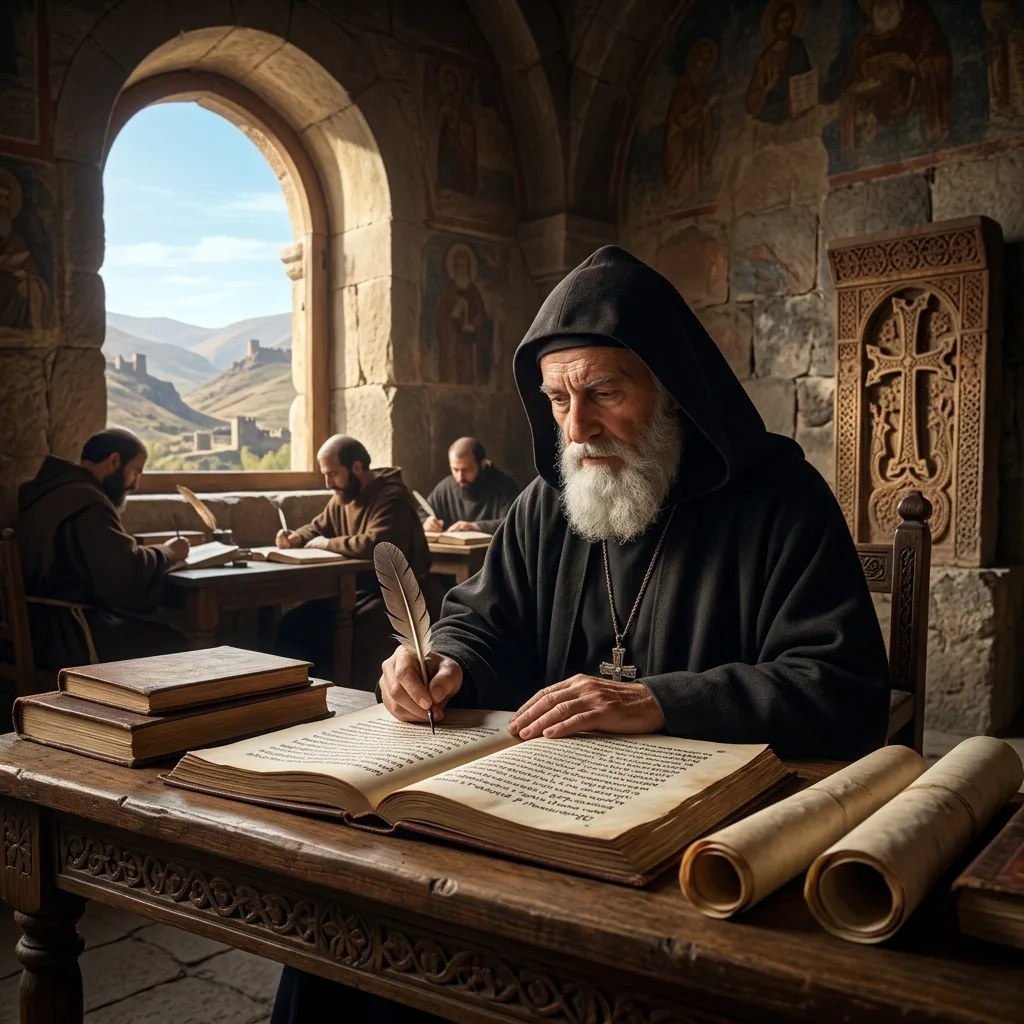
In Armenian medieval literature, very few authors left a first-person account of their own lives. Anania Shirakatsi did.
His autobiographical work, "Vasn Vorpisutian Kenats Irots" ("On the Circumstances of His Life"), is a rare document: the seventh-century scientist himself explains why he left his homeland, where he sought knowledge, and at what cost he acquired it. This very text is our main source about his life.
In this article, we present his story based on Armenian primary sources and clearly distinguish between what he himself testifies, what tradition has added, and what scholars still debate to this day.
Who Was Anania Shirakatsi?
He lived approximately between 610 and 690 AD. These dates are approximate and vary in different publications; no source records the exact year of his birth or death.
He was also called Shirakavantsi, Shirakuni, or Anetsi. Regarding his birthplace, sources offer three options: Shirakavan (Yerazgavors) in the Shirak province, the town of Anania (Aneank), or, according to a third view, Ani. There is no definitive answer.
His contemporaries called him "hamarogh"—meaning a calculator or mathematician. This moniker in itself shows what he was famous for during his lifetime.
The Journey: According to His Own Testimony
Here is the part that makes Shirakatsi's story unique: we know his route because he wrote it down himself.
First step: He received his primary education in his homeland, according to tradition, at the school of Dprevank, where he studied the Bible. It was there that he fell in love with calculation—arithmetic.
The problem: In Armenia, he found neither a teacher of a sufficient level nor the necessary scientific books. This in itself is an important historical testimony to the state of exact sciences in seventh-century Armenia.
Second step: He left for Byzantium. In Theodosiopolis (Karin), he heard from a man named Yeghiazaros about a mathematician named Kristosatur, who lived in Fourth Armenia. He went to him and studied for six months.
The disappointment: After these six months, Shirakatsi concluded that Kristosatur did not possess an exhaustive knowledge of arithmetic. It is a detail worthy of attention that he openly writes about his teacher's limitations.
Third step: He decided to go to Constantinople. On the way, he met acquaintances coming from there, who told him about Tychicus of Byzantium, a Greek philosopher who knew Armenian and lived on the coast of Pontus, in Trebizond. Shirakatsi changed his direction.
Eight years: He studied under Tychicus for eight years—the art of calculation, astronomy, chronology, and related sciences. By his own testimony, the teacher treated him like a son.
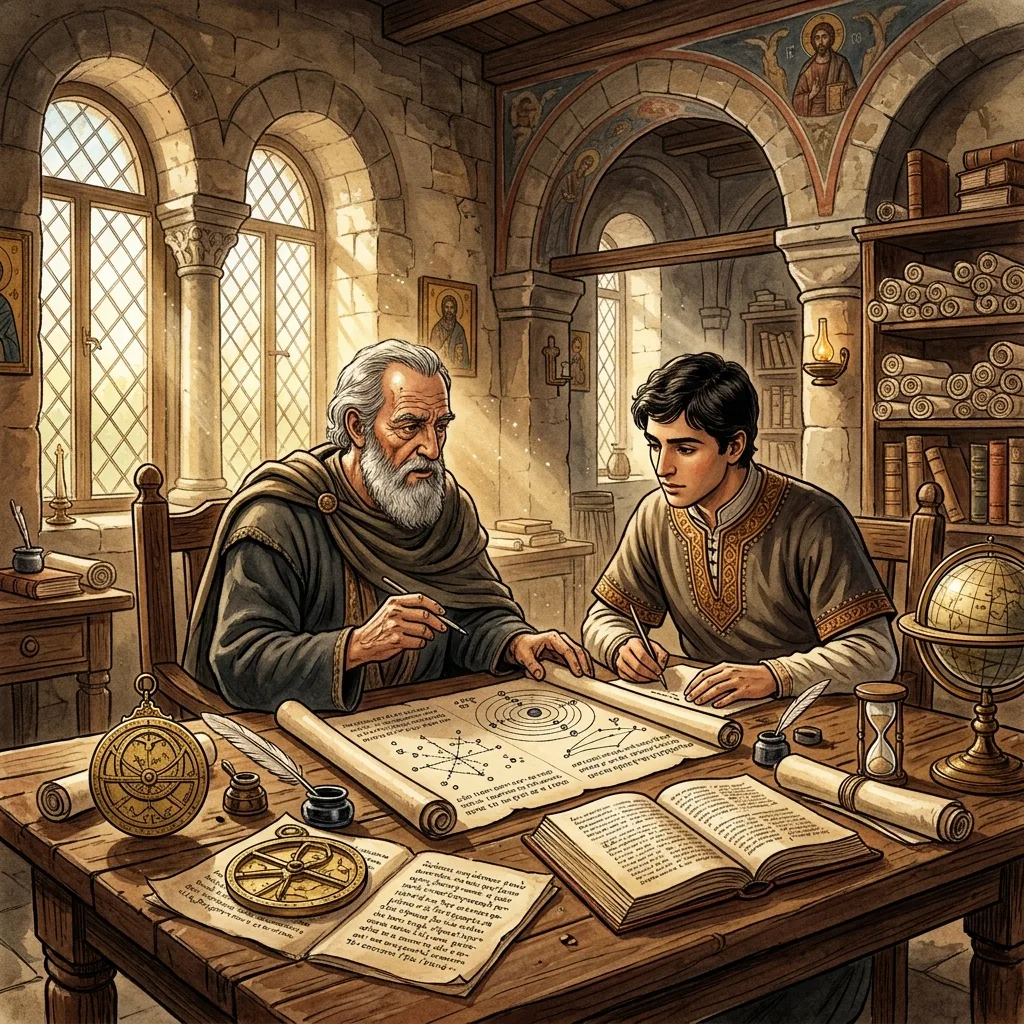
Tychicus's school enjoyed wide renown in the region at the time, and students came there from various countries to study.
The return: Shirakatsi returned to Shirak, opened his own school, and began teaching.
What Did He Do After Returning?
Mathematics
The first Armenian arithmetic textbook, containing tables of the four operations and a collection of practical problems, is associated with Shirakatsi's name.
The problems are particularly interesting because they are not abstract, but practical: trade, the army, ships, wheat distribution. They are a window into the medieval Armenian economy and daily life. A classic example is the problem of the ship and the wheat cargo, where successive parts of the cargo are removed in different fractions, and one is required to find the initial quantity.
Cosmography
In his work "Cosmography and Chronology", Shirakatsi addresses the shape of the Earth, eclipses, and the nature of celestial bodies.
His famous formulation about the Earth is that it is like an egg: the round yolk in the middle, surrounded by the white and the shell. This is a remarkable position for the seventh century.
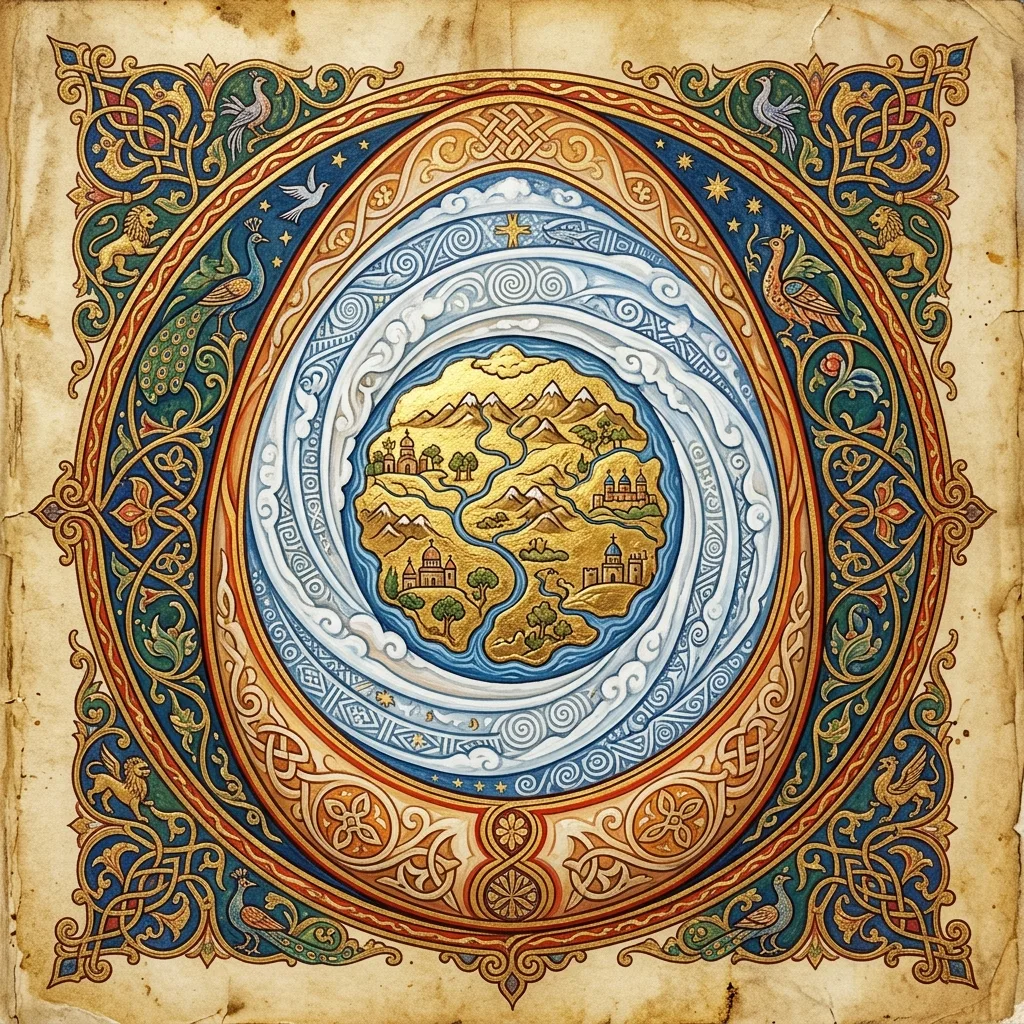
He explains the solar eclipse without any mythical elements: the Moon stands between the Sun and the Earth and blocks the light, and the lunar eclipse with the opposite arrangement. This explanation is essentially correct.
An important consequence: with this stance, Shirakatsi directly opposed fortune-telling and astrology, which linked human destiny to the position of the stars.
Chronology
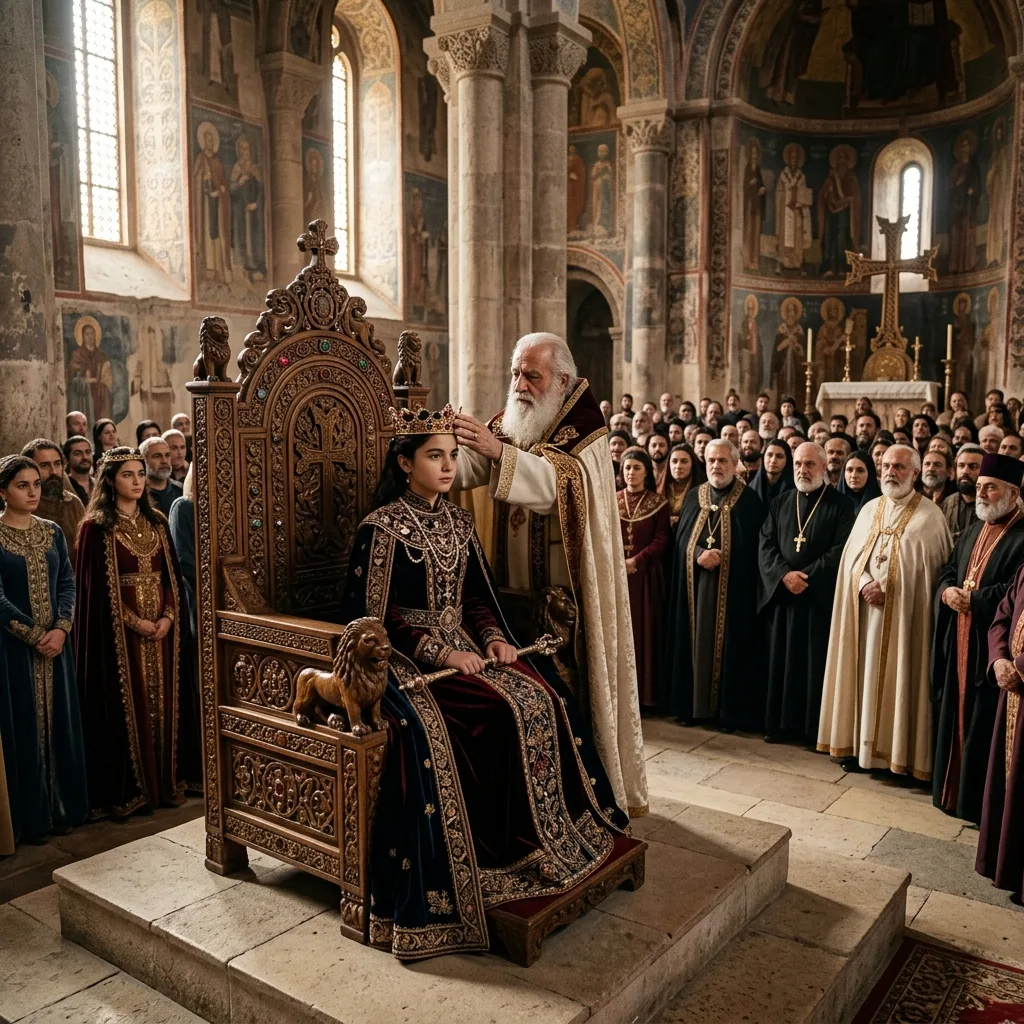
Anastas I Akoretsi, Catholicos of All Armenians (reigned 661–667), commissioned him to compile an immobile Armenian calendar so that church holidays would not shift from year to year.
Shirakatsi carried out the commission and drafted a proposal for an immobile calendar using leap years. However, it was not officially put into use due to the early death of the Catholicos.
This episode clearly demonstrates the level of Shirakatsi's authority: a task of state and church significance was entrusted specifically to him.
Disputed Questions
An honest history requires separating what is not certain.
1. Biographical Dates
The exact years of his birth and death are not known. The range of 610–690 is reconstructed based on internal chronological references in his works and the dates of Catholicos Anastas's reign.
2. Birthplace
Three options: Shirakavan, the town of Anania, or Ani. The sources do not corroborate one another.
3. Authorship of "Ashkharhatsuyts"
This is the most serious debate. "Ashkharhatsuyts" (The Geography), a medieval geographical work that has reached us in two recensions—long and short—has often been attributed to Movses Khorenatsi in the manuscript tradition.
A significant portion of modern researchers attribute it to Shirakatsi, based on the work's content, mathematical apparatus, and the reflection of seventh-century realities. But the titles of the manuscripts remain as they are, and the question is not considered closed.
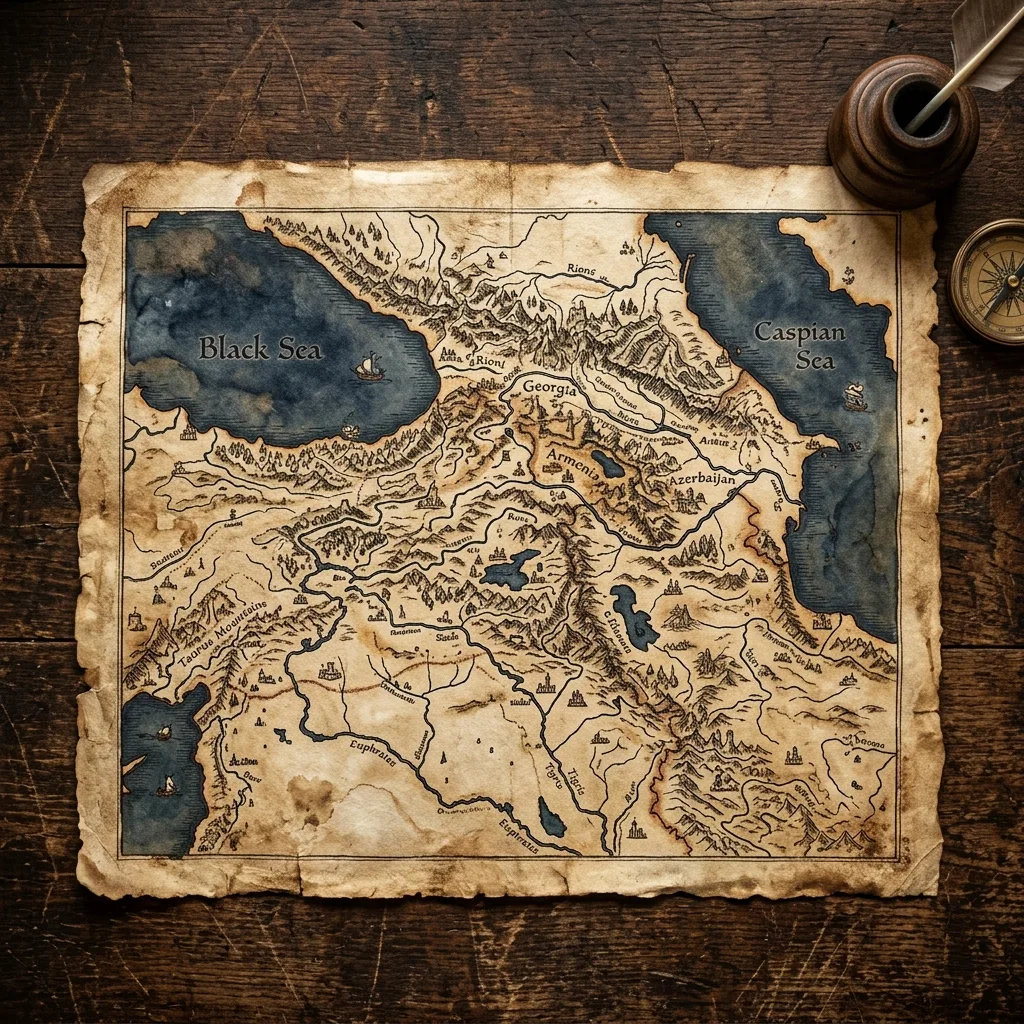
Therefore, the most accurate formulation is: "The Ashkharhatsuyts attributed to Shirakatsi".
4. Musical Heritage
A number of researchers attribute the authorship of sharakans (hymns) to him, particularly those for Vardavar and Pentecost. This attribution is also debated, not proven.
5. Which Works Are Truly His
The manuscript material preserved under Shirakatsi's name is extensive, but in the Middle Ages, distributing texts under an authoritative name was a common practice. Therefore, the boundaries of his corpus are still being clarified by philologists.
Why Is This Story Important?
The most powerful moment in Shirakatsi's biography is not his discoveries, but his starting situation.
In seventh-century Armenia, there lived a man who wanted to study the science of numbers and simply could not find anyone to learn from. He could have given up. Instead, he wandered in foreign lands for years, accepted that his first teacher was not enough, reached Trebizond, studied for eight years, and returned so that the next generation would not have to leave.
Opening a school is the most important line of his biography.
Sources
- Anania Shirakatsi, "Vasn Vorpisutian Kenats Irots" (Autobiography)
- Anania Shirakatsi, "Cosmography and Chronology", Yerevan, 1940
- Anania Shirakatsi, arithmetic tables and "Problems and Solutions"
- "Ashkharhatsuyts" attributed to Shirakatsi: long and short recensions
- B. Tumanyan, "History of Armenian Astronomy", Yerevan, 1964-1968
- Publications of the Mesrop Mashtots Matenadaran on the manuscript heritage of Shirakatsi
- Studies on the history of the reform of the Armenian church calendar, concerning the commission of Anastas Akoretsi
💬CommentsClick to read and leave a comment⌄
No comments yet. Be the first!