
The Battle of Avarayr in 451 and the Rebellion of Vardan Mamikonian
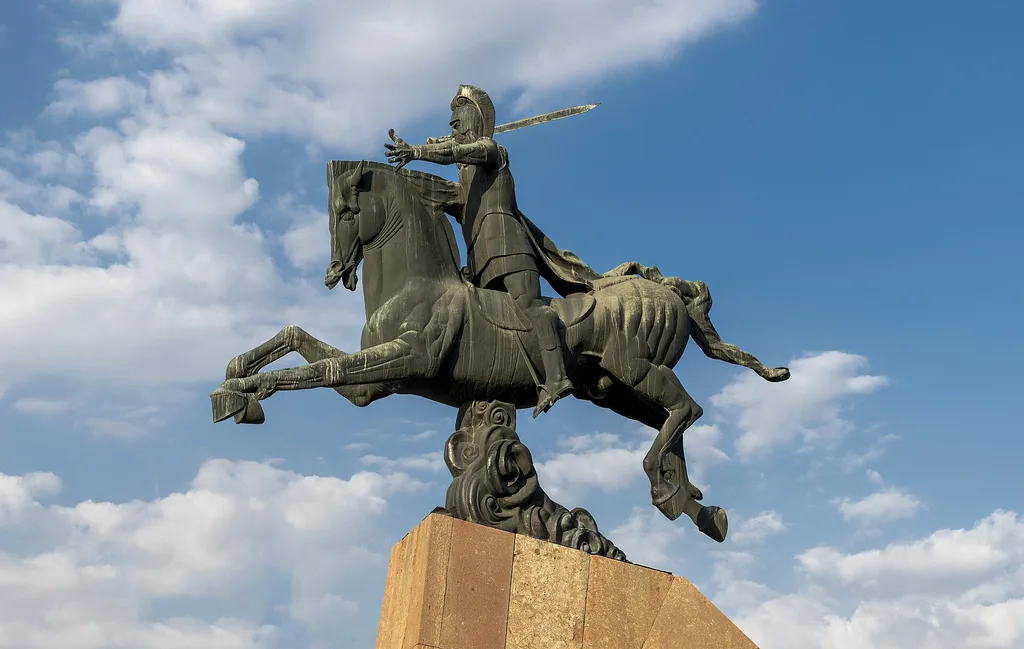
The Battle of Avarayr and the Vardanank' War
On May 26, 451, a battle took place on the plain of Avarayr that became a symbol of the defense of faith and national identity in the history of the Armenian people. It ended in military defeat, but the Armenians ultimately preserved their Christian faith and the right to live by their ancestral laws. Two fifth-century authors, Yeghishe and Ghazar Parpetsi, recount this in detail.
Historical Circumstances
The Arshakuni kingdom in Armenia came to an end in 428, and the country was under the dominion of Sasanian Iran. The Armenian nakharar houses, first of all the Mamikonians, retained their traditional role in governing the country and leading its armed forces. The Armenian Church already had its own written language: the Bible was being translated using the script created by Mesrop Mashtots, which deepened the roots of Christian culture.
The Policy of Yazdegerd II
In his work "On Vardan and the Armenian War," Yeghishe relates that the Sasanian king Yazdegerd II sought to establish Zoroastrianism in Armenia. According to Yeghishe, his edict demanded that the Armenians renounce Christianity and accept the Mazdayasnian faith. As Yeghishe tells it, the Armenian nakharars convened an assembly and wrote a reply rejecting the demand. In Yeghishe we find the well-known idea that for Armenians faith is not an external circumstance but the foundation of identity. Ghazar Parpetsi, who wrote at the end of the fifth or the beginning of the sixth century, likewise emphasizes the role of religious pressure and the spiritual character of the uprising.
Vardan Mamikonian and Vahan Mamikonian
The Armenian sparapet Vardan Mamikonian was the military leader of the uprising. According to Yeghishe's account, Vardan and a number of nakharars were forced to travel to Iran and outwardly yield there, but then returned and prepared for the struggle. Together with the head of the Church, Hovsep Vayotsdzortsi, and the clergy, they swore an oath to defend the faith. There was no unity among the nakharars: some went over to the Persian side, which worsened the Armenians' situation. Vahan Mamikonian, son of Vardan's brother Hmayak, later became the continuer of the struggle.
The Battle on the Plain of Avarayr
Yeghishe describes how the Armenian army went out to the plain of Avarayr, where it was met by the Sasanian army with war elephants. Vardan Mamikonian was killed in the battle, together with many of his comrades. Yeghishe presents their death as martyrdom for the faith; for this reason Vardan and his companions are commemorated by the Armenian Church as saints. The feast of Vardanank' is still celebrated to this day on the Thursday before Great Lent, before Poon Paregentan.
Military Defeat, but Spiritual Victory
At Avarayr the Armenians were defeated militarily: Vardan was killed, and the Persian army remained master of the field. However, Yeghishe and Ghazar Parpetsi show that the struggle did not end there. In the following years, the struggle led by Vahan Mamikonian led to the Treaty of Nvarsak in 484, by which religious freedom and the right to live by their own traditions were reaffirmed for the Armenians.
The Significance of Avarayr
For the Armenian people, Avarayr became a symbol not only of battle but also of values. The Vardanank' War strengthened the role of the Armenian Church in national life and helped Armenians preserve their identity even in the absence of statehood. Today the feast of Vardanank' is still celebrated as a day of faith, patriotism and national dignity.
Sources
- Yeghishe — On Vardan and the Armenian War
- Ghazar Parpetsi — History of the Armenians
💬CommentsClick to read and leave a comment⌄
No comments yet. Be the first!