
The Mother Cathedral of Etchmiadzin and the Catholicosal See of the Armenian Apostolic Church
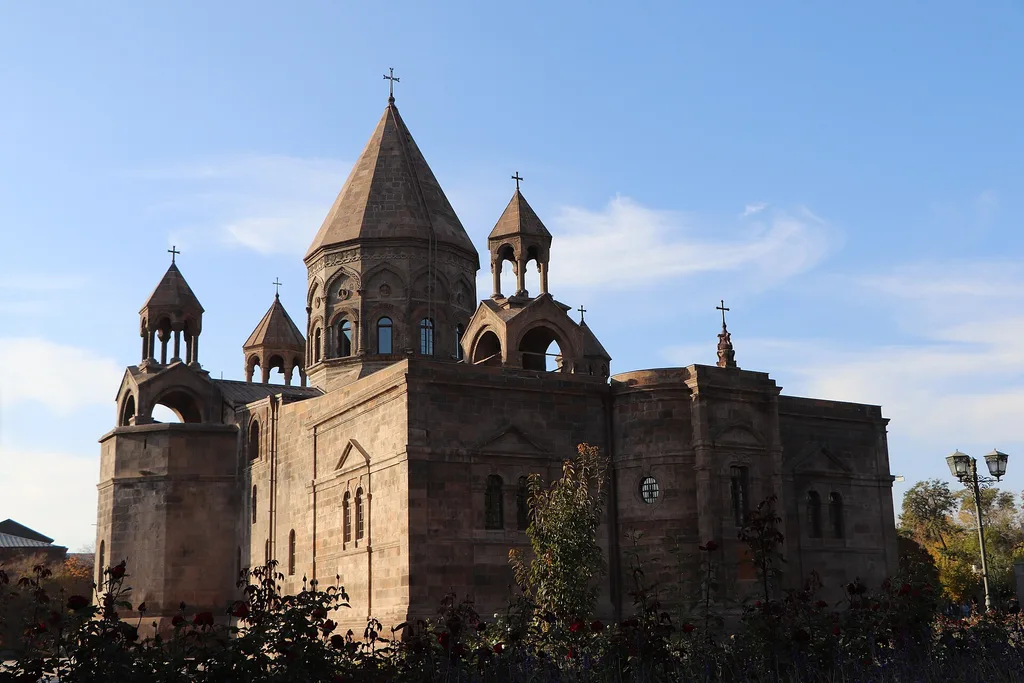
Etchmiadzin: the heart of the Armenian Church
The Mother Cathedral of Etchmiadzin is the spiritual center of the Armenian Apostolic Church and one of the oldest cathedrals in the world. It is located in the Ararat Valley, in the city of Vagharshapat, which was later also called Etchmiadzin. The history of the cathedral is closely linked with the adoption of Christianity as the state religion in Armenia and reflects the centuries-long path of the Armenian Church.
The tradition according to Agathangelos
According to Agathangelos's "History of the Armenians," when Gregory the Illuminator was brought out of Khor Virap and Christianity was proclaimed in Armenia, he saw in a vision the descent of the Only-Begotten of God. Amid rays of light he saw a radiant figure holding a golden hammer, who struck the ground and showed the site of the cathedral. The name "Etchmiadzin" is traditionally interpreted as "the place where the Only-Begotten descended."
This is a tradition established in ecclesiastical historiography. According to the traditional dating, the cathedral was built during the time of the Illuminator, at the beginning of the 4th century, usually given as around 301–303. Agathangelos's account is important testimony to the memory of the founding of the Armenian Church and should be understood as tradition.
Archaeological dating and changes to the building
Archaeological studies show a more complex picture. Traces of earlier structures have been discovered at the site of the Mother Cathedral, including, according to researchers, remains of a pre-Christian building. In scholarly literature, the main volume of the present cathedral is linked to the end of the 5th century, when the building was reconstructed; traditionally this reconstruction is associated with the name of Vahan Mamikonian. At that stage a church with a cruciform plan and a dome at the center was created.
Thus the traditional dating (beginning of the 4th century) and the archaeological-architectural dating (end of the 5th century for the main volume) differ: the first refers to the tradition of the founding, the second to the formation of the surviving structure. In the following centuries the cathedral was repeatedly repaired and expanded. For example, in the 17th century additions supporting the domes were added, and in 1654–1658 the large western bell tower was built, during the time of Pilipos Aghbaketsi and Hakob IV Jughayetsi.
Vagharshapat: an early Christian center
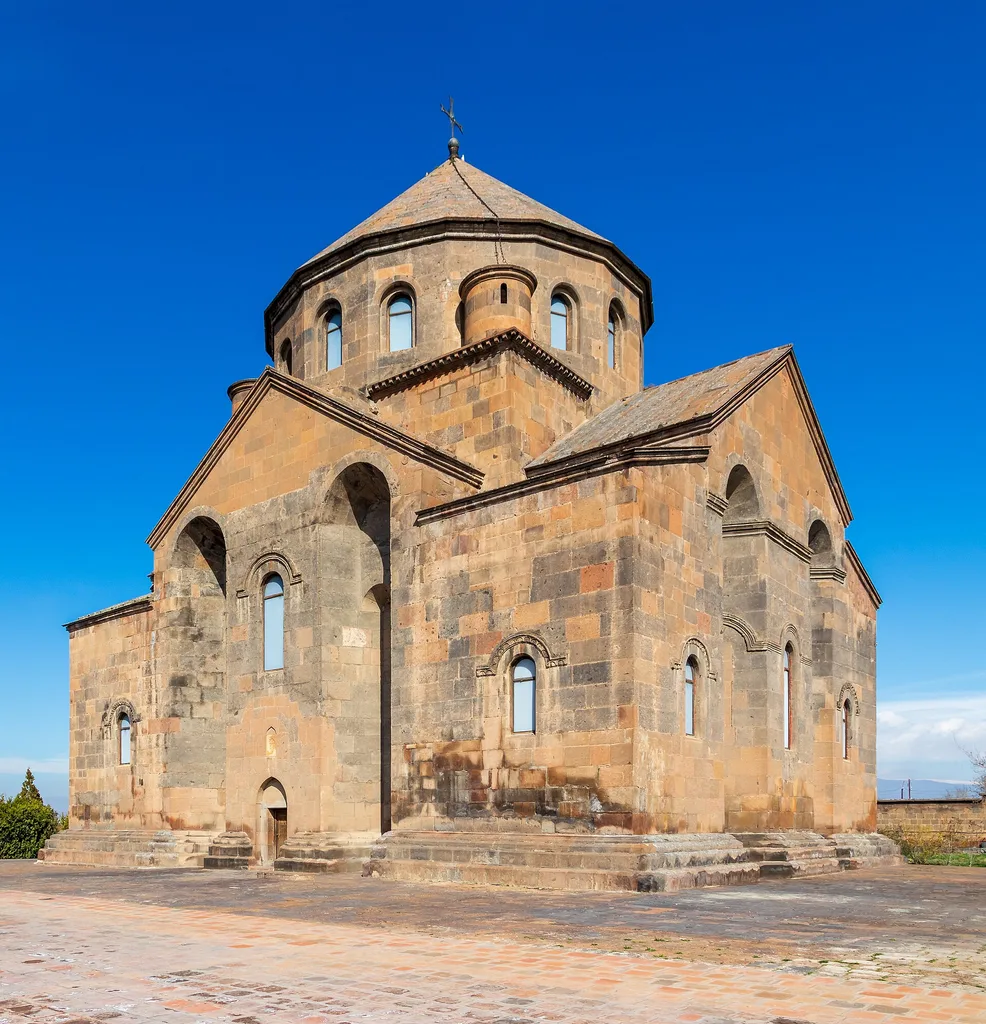
Vagharshapat has been an important city since ancient times and, in the Arsacid period, a royal residence. An ecclesiastical center formed around the cathedral. Vagharshapat is also home to the churches of Saint Hripsime, Saint Gayane and Shoghakat, which are associated with traditions of the period of the adoption of Christianity. These structures, together with the Mother Cathedral, are included in the UNESCO World Heritage List.
Relocations of the Catholicosal See
The residence of the Catholicos, the head of the Armenian Church, changed owing to historical circumstances. After the Illuminator, the See was initially in Vagharshapat, and then in different periods was moved to Dvin and other places. From the end of the 5th century Dvin was the main residence of the Armenian Catholicoi and remained so for several centuries. During the period of Arab rule and political instability, the See was also temporarily established in other places.
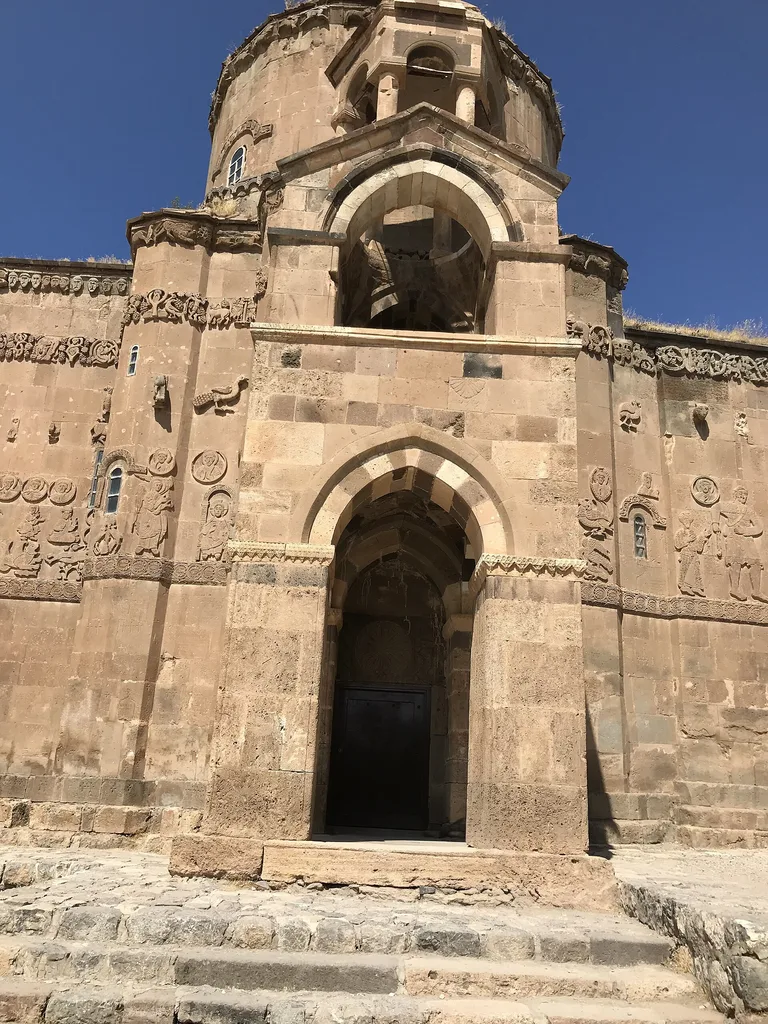
In the era of the Bagratids the Catholicosate was in Arkina, and then in Ani. In 931–944 the See of the Catholicos of All Armenians was temporarily in Aghtamar, while the separate Catholicosate of Aghtamar was established in 1113 by Bishop David and survived until 1895. From the middle of the 11th century, owing to changes in the political situation, the Armenian Catholicoi moved outside Greater Armenia, and eventually the See was established in Cilicia, in Sis. Even after the fall of the Armenian state of Cilicia, Sis remained the catholicosal residence.
The return to Etchmiadzin in 1441
At the beginning of the 15th century, part of the clergy in Greater Armenia held that the See should return to its original place, Vagharshapat. In 1441 an ecclesiastical assembly convened in Etchmiadzin elected Kirakos Virapetsi as Catholicos, and thereby the Mother See returned to Holy Etchmiadzin. Since then Etchmiadzin has been the residence of the Catholicos of All Armenians.
The Catholicosate of Sis continued to exist separately as the Catholicosate of Cilicia, whose center is today in Antelias. The See of Aghtamar also long survived in the form of a local hierarchy. Thus 1441 is an important stage in the reaffirmation of the primacy of the Mother See.
Etchmiadzin today
Today the Mother See of Holy Etchmiadzin is the center of the Armenian Apostolic Church, where the Catholicosate, the theological seminary and the museum are located. The blessing of the Holy Chrism (Muron) is performed here, and it is used in Armenian communities around the world. The cathedral remains a symbol of the faith, history and identity of the Armenian people, both in Armenia and in the diaspora.
Sources
- Agathangelos — History of the Armenians
- History of the Armenian People (multi-volume edition, Institute of History of the Academy of Sciences of the Armenian SSR)
- Armenian Soviet Encyclopedia
💬CommentsClick to read and leave a comment⌄
No comments yet. Be the first!