
The Monastery of Gandzasar and the Armenian Princely Tradition of Artsakh
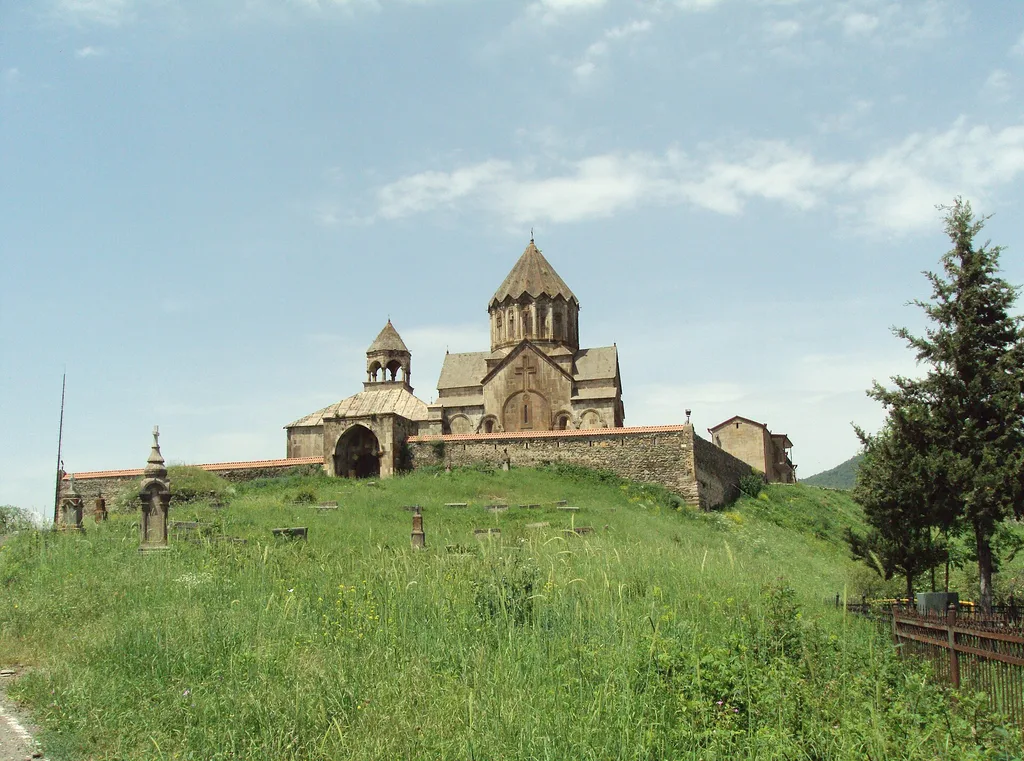
Gandzasar: the Spiritual and Princely Center of Artsakh
The Monastery of Gandzasar is located in Artsakh, in the historic district of Khachen (administratively, near the village of Vank in the Martakert region), on the left bank of the Khachen River, on a mountainside. For centuries it was one of the most important centers of the Armenian Church in Artsakh, and in the Middle Ages also the spiritual heart of the Principality of Khachen. The name is interpreted as "treasure mountain" ("gandz" + "sar"); this explanation is usually linked to the metal mines in the surrounding area.
The Principality of Khachen and the Hasan-Jalalyans
In the 12th–13th centuries, princely authority in a considerable part of Artsakh remained in the hands of Armenian noble houses. The Principality of Khachen was ruled by the Hasan-Jalalyans, a branch of the Aranshahik dynasty. A notable representative of this house, Hasan-Jalal Dola (in the first half of the 13th century), was the prince of Khachen and the builder of the cathedral of Gandzasar; monastic life at Gandzasar had existed even earlier. His descendants continued the building and church-construction work. Kirakos Gandzaketsi, a 13th-century Armenian historian who was born near Artsakh and knew Hasan-Jalal personally, writes about him and about the monastery he built in his "History of the Armenians".
The Church of St. John the Baptist
The main structure of Gandzasar is the Church of St. John the Baptist (S. Hovhannes Mkrtich), the cathedral of Gandzasar. It was built in 1216–1238 on the initiative of Hasan-Jalal Dola, and the completion of construction, according to the church's inscription, is dated to 1238. It is one of the notable monuments of Armenian medieval architecture and one of the most beautiful structures of Artsakh.
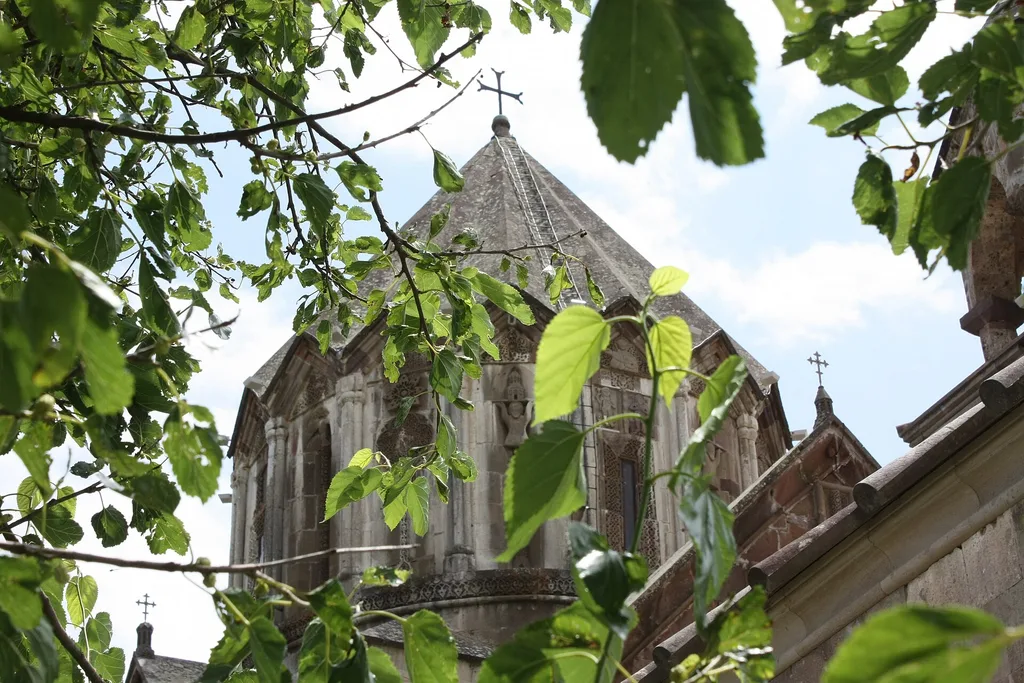
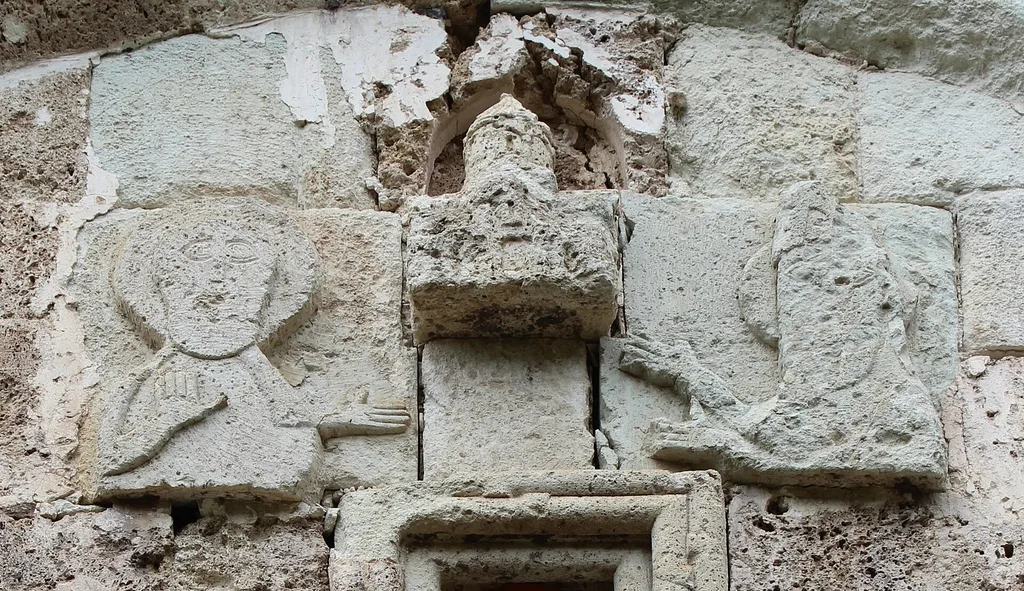
The cathedral has a cross-domed composition: the dome rises in the center on a multifaceted drum. The ornamental carvings of the drum, and the crosses and decorative patterns on the walls, attest to the high mastery of the Artsakh architectural school. Armenian inscriptions have been preserved on the facades and inside, mentioning the builder and the patron.
Tradition: the Prince and the Church
The construction of Gandzasar shows the essence of the Artsakh princely tradition: princely authority and the church were closely tied to one another. The princes built monasteries and patronized manuscript copying and education, while the monasteries became centers not only of prayer but also of learning and culture. Gandzasar later became the seat of the Catholicosate of Aghvank (Gandzasar); according to Armenian sources, the catholicoses sat here from the 15th century (1400) until the beginning of the 19th century (the relocation of the spiritual center of the Church of Aghvank to Artsakh dates from the end of the 13th century), which strengthened its role in the spiritual life of Artsakh.
Armenian Architecture of Artsakh
Gandzasar belongs to the rich architectural heritage of Artsakh, which includes Dadivank, Gtchavank, Horekavank, Amaras and other monuments. These structures were created by Armenian masters within the general development of Armenian architecture, and bear the characteristic features of Armenian church building: clear proportions, refined stone working, and the art of khachkars. Historians of Armenian architecture regard Gandzasar as one of the pinnacles of the Artsakh architectural school.
The Significance of the Heritage
Gandzasar attests that Artsakh has been an inseparable part of Armenian civilization over the centuries. The walls, inscriptions and architecture of the monastery speak of the Armenian princes, masters and clergy who created this heritage. It must be preserved and studied as an important part of the cultural memory of the Armenian people.
Sources
- Kirakos Gandzaketsi — History of the Armenians
- History of the Armenian People (Institute of History, Academy of Sciences of Armenia)
💬CommentsClick to read and leave a comment⌄
No comments yet. Be the first!