
Gregory the Illuminator and the Proclamation of Christianity as the State Religion of Armenia
When Armenia Became a Christian State
Armenia was the first country in the world to proclaim Christianity as its state religion. This event is associated with the names of Saint Gregory the Illuminator and the Arsacid king Tiridates III. It determined the spiritual, cultural and political development of the Armenian people for centuries to come.
The Main Primary Source: Agathangelos
The principal testimony about the activity of Gregory the Illuminator and the conversion of Armenia is Agathangelos's "History of the Armenians." The author presents himself as the secretary of Tiridates, but the work, according to scholarly tradition, took shape later, in the 5th century. It narrates not only the conversion, but also the general picture of the conflict between the Arsacids and the Sasanians and the murder of King Khosrov II. In Agathangelos's account the historical basis is interwoven with hagiographic tradition, so the descriptions of religious miracles should be understood as church tradition.
Gregory and Tiridates
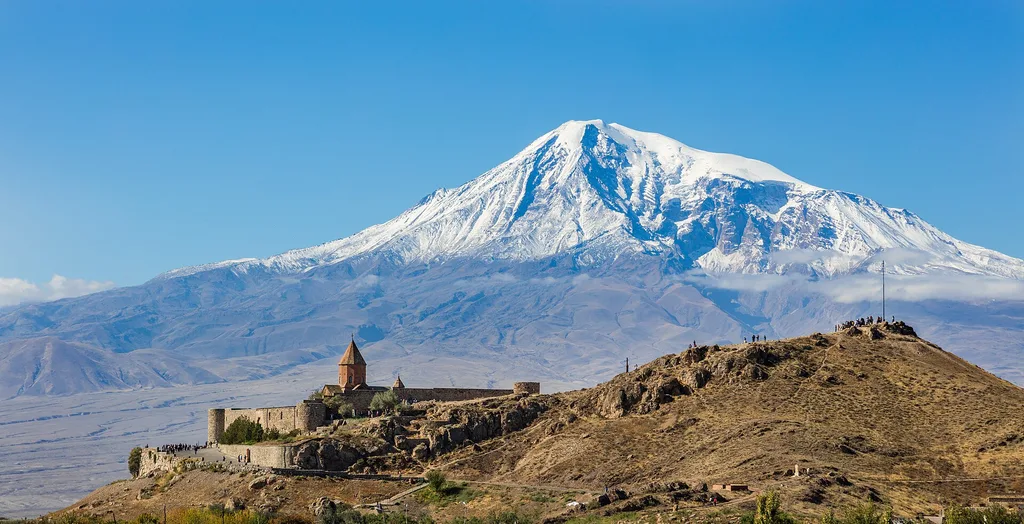
According to Agathangelos, Gregory was the son of Anak the Parthian. Anak is considered the murderer of Khosrov II, while Gregory was saved and grew up in Caesarea, in a Christian environment. In adulthood he returned to Armenia and entered the service of Tiridates. When he refused to take part in pagan sacrifices, he was subjected to torments and, according to tradition, remained for many years in the Khor Virap of Artashat.
The Conversion of Tiridates
According to Agathangelos, Tiridates fell gravely ill, and Gregory was brought out of the pit. After his preaching, the king, the court and the people accepted Christianity. The chronicler's account also includes the story of the martyrdom of the Hripsimian virgins; they are considered early witnesses of the Christian faith in Armenia. This is a traditional story preserved by the Church, and it should be distinguished from documented political facts. The conversion was a state-level policy: royal authority supported the new faith, and Christianity became the official religion of the country.
Dating Variants
The traditional date is 301. It is accepted in the Armenian Church and in Armenian historiography. Nevertheless, the question of dating is debated; the chronology of the sources is not unambiguous. In Armenian historiography the year 301 is traditionally accepted, while the dates proposed in scholarly literature range from about 284 to 314; the Encyclopaedia Iranica adopts the year 314. Accordingly, it is prudent to speak of "301, by the traditional dating," bearing in mind that the event falls at the boundary between the end of the 3rd century and the beginning of the 4th.
Gregory the Illuminator as Leader of the Church
According to Agathangelos, Gregory was ordained in Caesarea and became the first leader of the Church of Armenia, the Catholicos. His activity included converting pagan temples into Christian churches, organizing the clergy and spreading Christian teaching throughout the country. The support of royal authority was the foundation of this work. Gregory's successors for a long time came mainly from his lineage.
The Tradition of the Founding of the Mother Cathedral of Vagharshapat
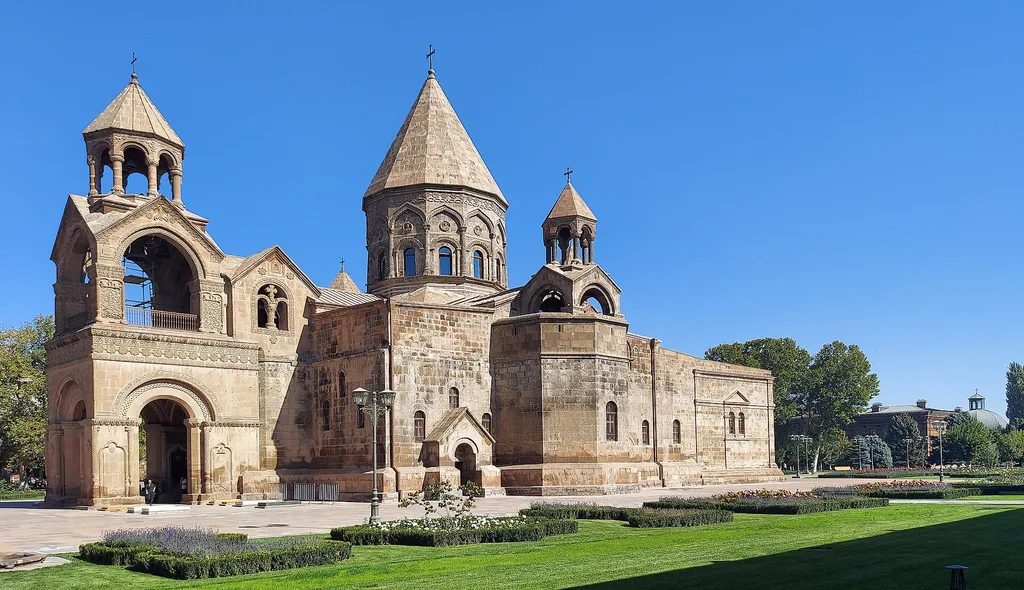
According to Agathangelos's account, Gregory saw in a vision the descent of Christ in Vagharshapat, and the place was marked as the site for founding a church. From this tradition arose the name Etchmiadzin, which means "the place where the Only-Begotten descended." This is a tradition, and it should be presented as such. The Mother Cathedral remains to this day the spiritual center of the Armenian Apostolic Church and has symbolic significance for the Armenian people.
Significance for the Armenian People
The adoption of Christianity strengthened Armenian identity at a time when the country was within the sphere of influence of powerful neighbors. Later, the alphabet created by Mashtots and the translation movement relied precisely on this spiritual foundation. Gregory the Illuminator is venerated by the Armenian Church as a saint, and his name remains one of the central figures of Armenian history.
Sources
- Agathangelos — History of the Armenians
- History of the Armenian People (Institute of History, National Academy of Sciences of Armenia)
💬CommentsClick to read and leave a comment⌄
No comments yet. Be the first!