
From Grigor Narekatsi to Sayat-Nova: no, Sayat-Nova and the ashugh art of the 18th century
Sayat-Nova and the Ashugh Art of the 18th Century
In Armenian medieval poetry, the profound spiritual verse of Grigor Narekatsi (10th century) holds a special place, while Sayat-Nova is one of the last brilliant peaks of secular lyric poetry. He is the most prominent figure of 18th-century Armenian ashugh art, and his songs still resound today in the everyday life and on the stage of the Armenian people.
Life in Tiflis
Sayat-Nova (born Harutyun Sayadyan) was, according to the accepted view, born in 1712 in Tiflis. At that time Tiflis was a multiethnic city in which the Armenian artisan and merchant community played an important role. According to the traditional biography, he studied ashugh art, played the kamancha and the chonguri, and in his youth also engaged in weaving.
It is known that he sang at the Georgian royal court, in the circle of Heraclius II. This circumstance testifies to the breadth of the cultural ties of his time.
Biographical Uncertainties
Many details of Sayat-Nova's life are not confirmed and rely mainly on tradition and on the internal evidence of his songs. This applies in particular to the details of his court service, his love stories, and his final years. Literary scholars are cautious in the biographical interpretation of the names and events mentioned in the songs, since the poetic persona does not always coincide with the real person.
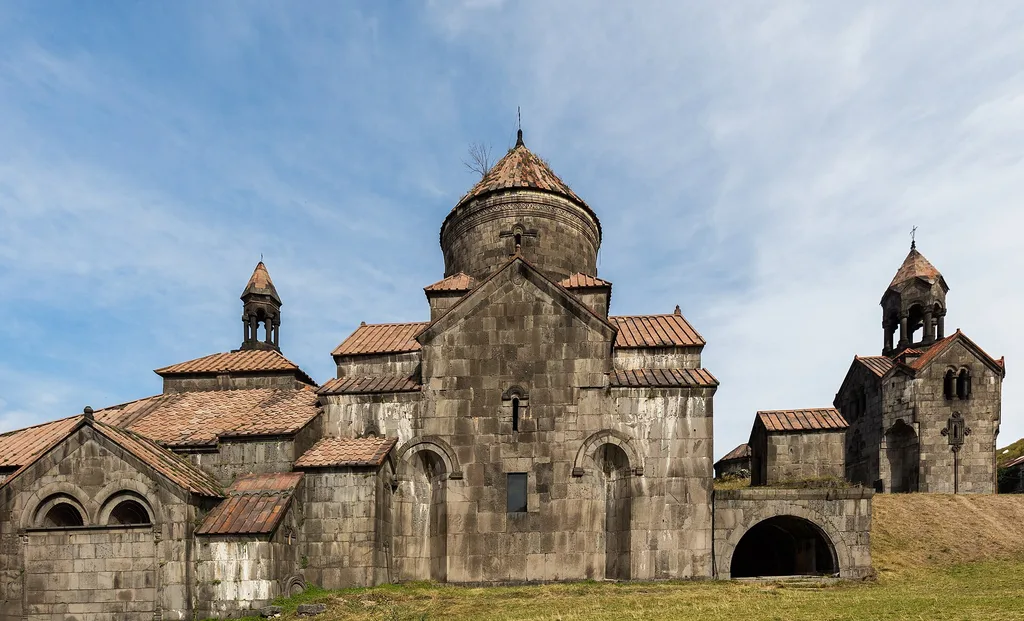
It is traditionally noted that he became a clergyman and served at the Haghpat monastery. His year of death is usually considered to be 1795: according to the view accepted in Armenian historiography, in September 1795, during the invasion of Agha Mohammad Khan Qajar, he was killed and buried in the Church of St. George in Tiflis, while a number of sources name the Haghpat monastery as the place of death. These details should be taken as traditional rather than fully documented data.
The Multilingual Songbook
Sayat-Nova sang in several languages, including Armenian and Georgian. His songbook, the so-called "Davtar", has survived in manuscript. The Armenian songs have a special weight in Armenian culture. His multilingual output reflects the multilingual environment of Tiflis, where an ashugh had to be understood by different listeners.
The Nature of His Art
The themes of his songs are love, beauty, the transience of life, and human dignity. In the famous song "Tamam ashkhars ptut eka" ("I have wandered the whole world") faith in worldly wisdom and honesty is expressed. Sayat-Nova made use of rich imagery, musicality, and traditional ashugh forms.
His Place in Armenian Culture
Sayat-Nova has become a symbol of Armenian ashugh art. His work was studied by Armenian literary scholars of the 19th–20th centuries. His songs have become part of the folk repertoire, and his figure is present in music, literature, and cinema, in particular in Sergei Parajanov's film "The Color of Pomegranates", in a free interpretation.
Sources
- Armenian Soviet Encyclopedia — article "Sayat-Nova"
💬CommentsClick to read and leave a comment⌄
No comments yet. Be the first!