
Haghpat Monastery: A Center of Secular and Spiritual Life in Lori in the 13th Century
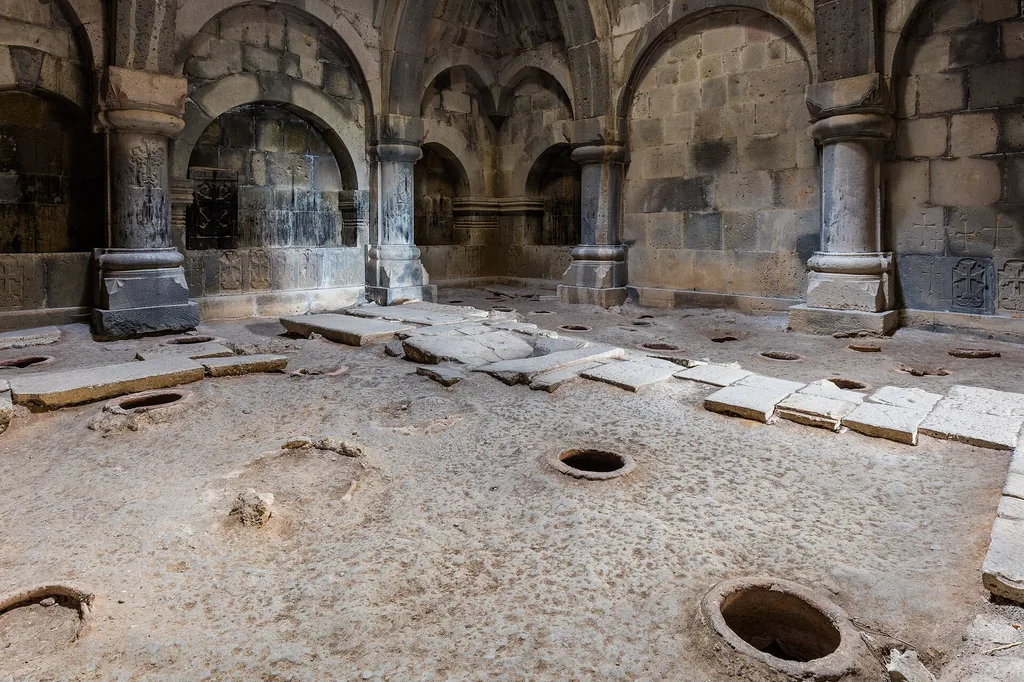
Haghpat Monastery in the Lori Province
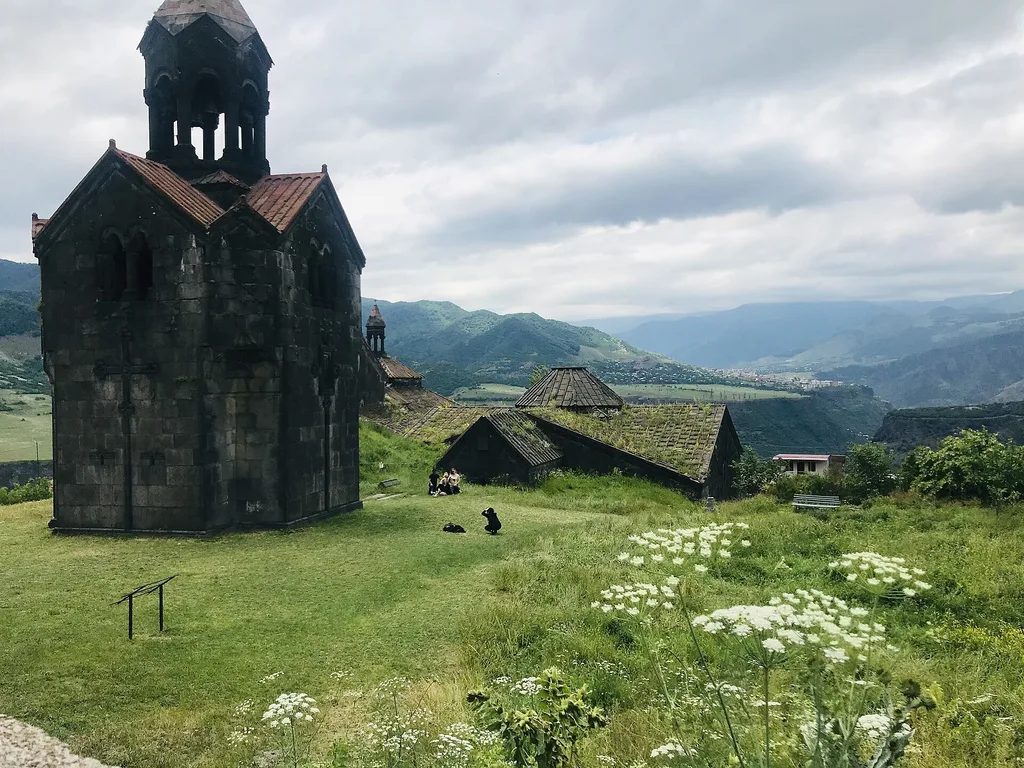
The Haghpat monastic complex is located in the Lori Province, on the upper slope of the deep gorge of the Debed River, near the village of Haghpat. It is one of the most prominent centers of Armenian medieval architecture and culture. Haghpat, together with the Sanahin Monastery, is included in the UNESCO World Heritage List. The main structures of the complex were formed from the second half of the 10th century to the 13th century.
Foundation
The main church of Haghpat, Surb Nshan (Holy Sign), was built in the second half of the 10th century, around 976–991, during the period of the Bagratid Kingdom. According to lapidary inscriptions, the construction is linked to the name of Queen Khosrovanuysh of the Kyurikian Bagratids. At that time Lori and the adjacent regions were within the domains of the Kyurikian Bagratids. The complex was later supplemented with new structures: gavits, chapels, a book depository and a refectory.
The Architectural Complex
Surb Nshan is a cross-domed church built of local stone. Its architecture is a high example of Armenian medieval building thought. In later centuries the chapels of Gregory the Illuminator and of the Holy Mother of God, as well as other structures, were added to the main cathedral. The complex is surrounded by a wall, which protected the monastery from external dangers.
The 13th Century: A Center of Spiritual and Secular Life
In the 13th century Lori was under the rule of the Zakarians, and Haghpat experienced a flourishing in this period. The buildings were expanded here, and educational and scribal activity developed. The monastery was not only a place of prayer but also a center of education, manuscript copying, and economic and legal life, where donations and land transactions were recorded. This is attested by the numerous lapidary inscriptions preserved on the walls.
The Scriptorium Tradition
The scriptorium of Haghpat was one of the renowned centers of manuscript production in medieval Armenia. Manuscripts were copied and illuminated here, some of which are now kept in the Matenadaran. Among the monastery's well-known educational figures is Hovhannes Sarkavag Imastaser (11th–12th centuries), who is associated with Haghpat and Sanahin. The monastery also had a library and a school, where clergymen and scribes were trained. A separate book depository had been built for keeping the manuscripts. According to tradition, in time of danger the books of Haghpat were hidden underground. The details of this story should be regarded as a legend.
The Bell Tower
The bell tower of Haghpat was built in 1245 as a freestanding three-story structure. It is one of the early and notable examples of Armenian medieval bell towers. The structure stands next to the church and forms an important part of the architectural composition of the complex.
The Khachkars and the Amenaprkich
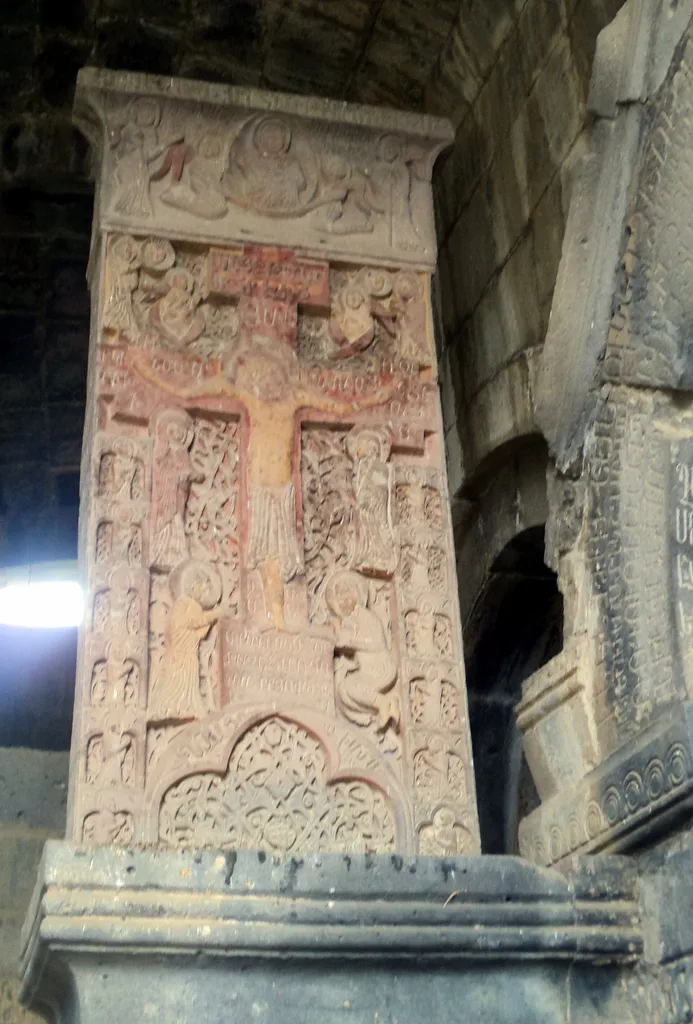
Many khachkars have been preserved in Haghpat. The best known of them is the Amenaprkich (All-Savior) khachkar, erected in 1273. It is considered one of the masterpieces of Armenian khachkar art and stands out for its delicate carving and rich ornamentation. The khachkar attests to the high skill of Armenian masters of the 13th century.
Sayat-Nova and Tradition
Haghpat is associated with the name of the great ashugh Sayat-Nova (1712–1795). In the last period of his life he was a clergyman, and he is traditionally considered to have served at Haghpat. According to tradition, he was killed in Tbilisi in 1795 during the invasion of Agha Mohammad Khan and was buried in the yard of the Church of Saint George. Information about the circumstances of his death has been preserved mainly through tradition, so it should not be presented as fully established fact. According to popular tradition, the tale of the ashugh's love and exile is also linked with the monastery, and it too has a layer of legend.
Haghpat Today
Today Haghpat is an important site of the cultural memory of the Armenian people and one of the well-known tourist destinations of Armenia. The preservation and study of the monastery continue, and its inclusion in the UNESCO list underscores its world significance.
Sources
- Institute of History of the Academy of Sciences of Armenia — History of the Armenian People
- Armenian Soviet Encyclopedia
💬CommentsClick to read and leave a comment⌄
No comments yet. Be the first!