
Horomos Monastery and the Monastic Complexes near Ani
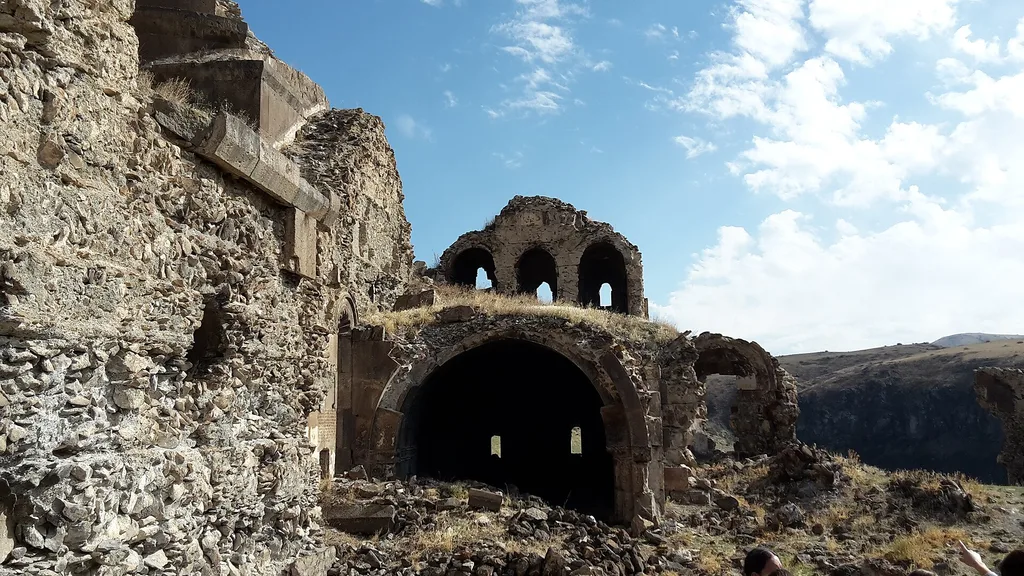
The Surroundings of Ani: A Ring of Monastic Centers
Ani, the capital of the Bagratid Kingdom, stood on the bank of the Akhurian (Arpachay) River, on a triangular promontory protected by deep gorges. Around the city a dense network of monasteries and churches had formed, which were at once spiritual, educational and scriptorium centers. Many of these complexes are today located in the territory of Western Armenia, in the region of the Akhurian gorges. In the province of Shirak, too, Armenian churches and monasteries have survived, which are part of the same cultural environment.
Shirak and the Origins of Ani
Shirak is an ancient Armenian province, part of the Ayrarat region. In medieval Armenian sources it is mentioned as a hereditary domain of the Bagratids. Ani is mentioned as a fortress from the early Middle Ages, and received the status of capital in the middle of the 10th century. According to the accepted historiography, King Ashot III the Merciful moved the capital from Kars to Ani in 961. His son Smbat II built the city's walls, and under Gagik I the city reached the peak of its flourishing.
Horomos Monastery
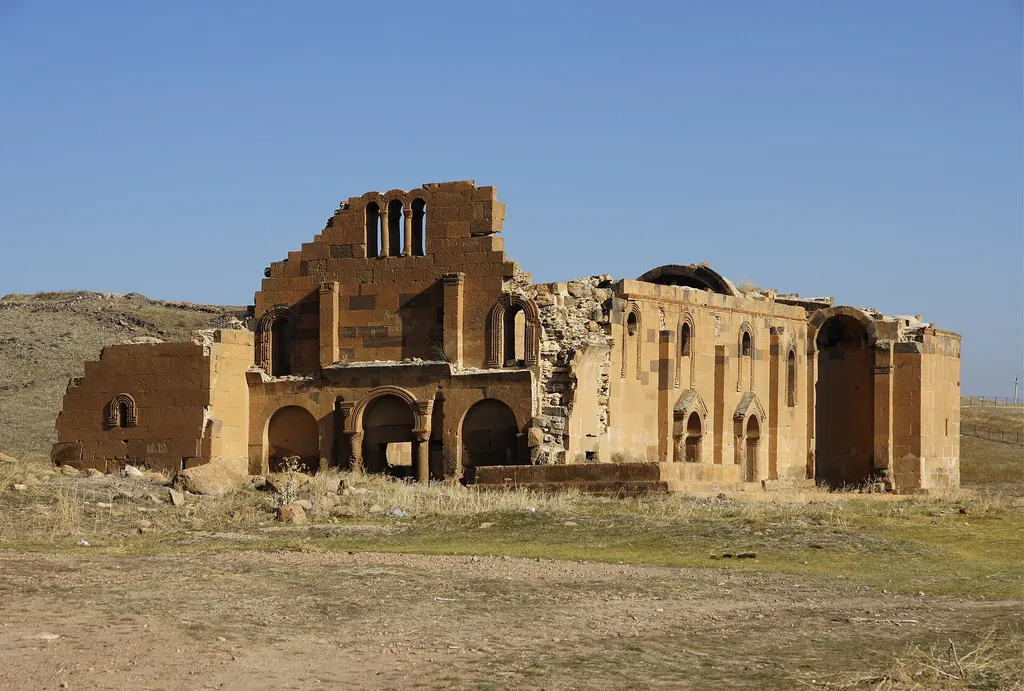
Horomos Monastery is located on the edge of the Akhurian gorge, north of Ani. It is considered one of the important monastic complexes of the Bagratid period. The monastery was founded in the 10th century and developed in the 11th century. It is known that construction work was carried out also in later centuries, including the 13th century. The monastery is linked with the Bagratid royal dynasty. Researchers hold differing opinions about the exact dating of individual structures, so the above should be understood as a general outline.
The Monastic System around Ani
In the Akhurian gorges and their surroundings, Armenian architects created a chain of monasteries. Among them the following are known:
- Horomos and Khtskonk, in the immediate vicinity of Ani,
- Harich and Marmashen, in Shirak, within the wider cultural geography of Ani,
- The cave churches of the Ani gorges, which were used as hermitages and ritual sites.
These sites were connected to Ani by roads and rural estates, ensuring the city's spiritual and economic ties with the surrounding provinces.
The Role of Monasteries under the Bagratids
The monasteries were not only places of worship but also centers of education and manuscript copying; manuscripts were copied here and Armenian literature was preserved. Under the Bagratids they held landed property and received donations from the king and from nobles (nakharars). The monasteries were also a factor of political and religious stability, linking royal authority with the Armenian Apostolic Church.
Architectural Features
The school of Ani continued the Armenian architectural traditions of the 7th century. Typical features are domed halls, cross-domed compositions, fine stone working, and wall niches and relief carvings on the exterior walls. The Cathedral of Ani (Katoghike), whose construction was completed in 1001 under the direction of the architect Trdat, is one of the pinnacles of that school. Trdat is also known for repairing the dome of the Hagia Sophia in Constantinople after an earthquake. The forms of the monastic complexes were largely consistent with that style.
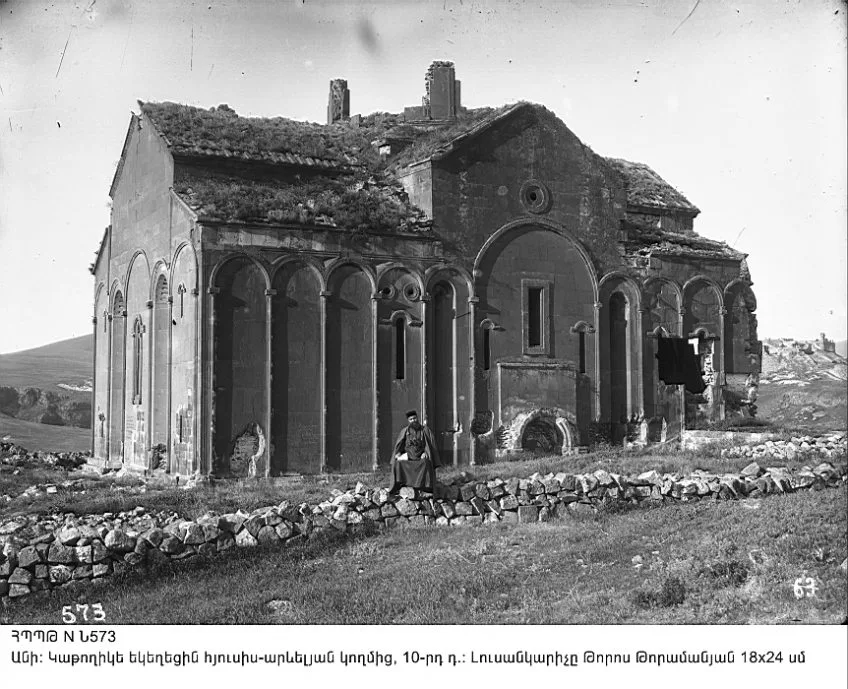
Preservation Issues and Memory
Some of the Armenian monuments of Ani and its surroundings are deteriorating today due to natural effects, earthquakes and the lack of proper care. For the Armenian people these stones are not only architecture but also the historical memory of Western Armenia. Their study, documentation and a clear presentation of their Armenian identity are part of our cultural responsibility.
Sources
- Stepanos Taronetsi (Asoghik) — Universal History
- History of the Armenian People (Institute of History, National Academy of Sciences of the Republic of Armenia)
- Armenian Soviet Encyclopedia
- René Grousset — Histoire de l'Arménie des origines à 1071
💬CommentsClick to read and leave a comment⌄
No comments yet. Be the first!