
How Cilicia received the royal crown and became the trade gateway of the East and West
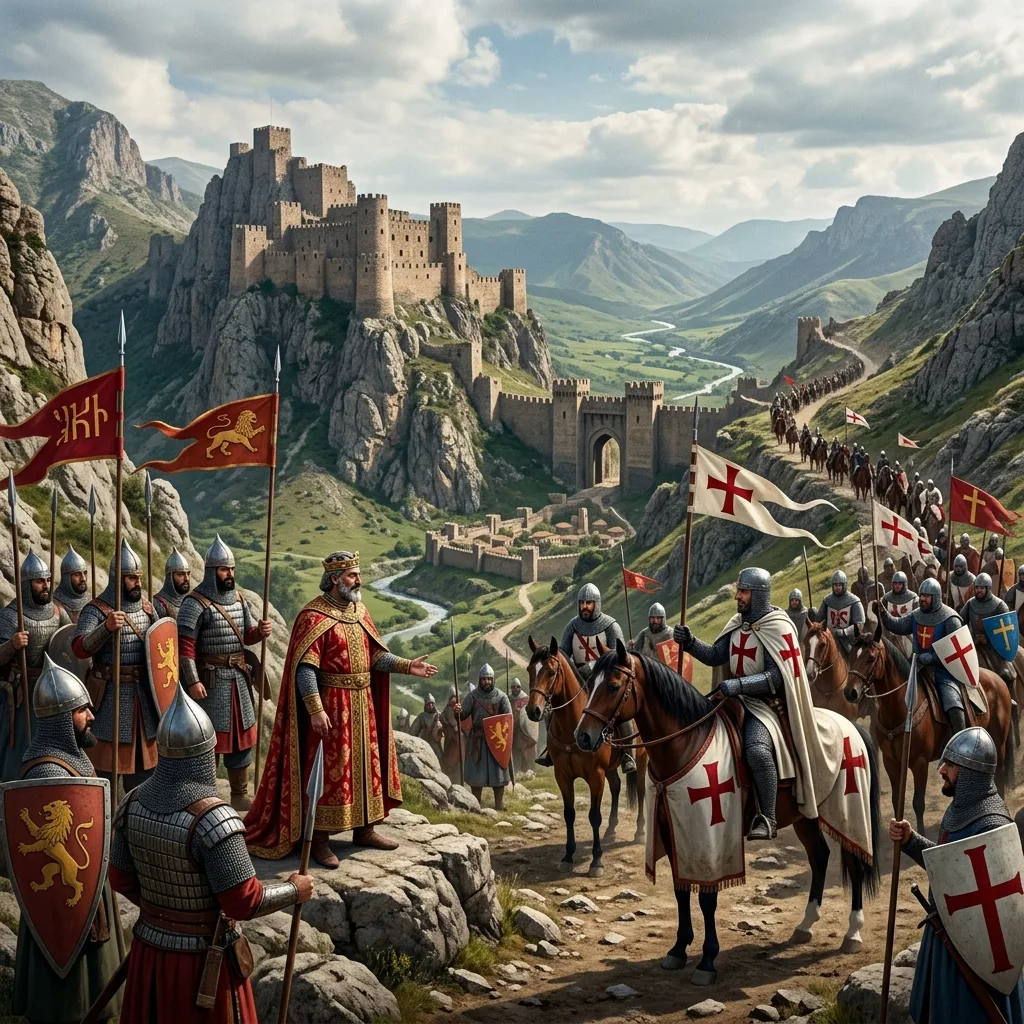
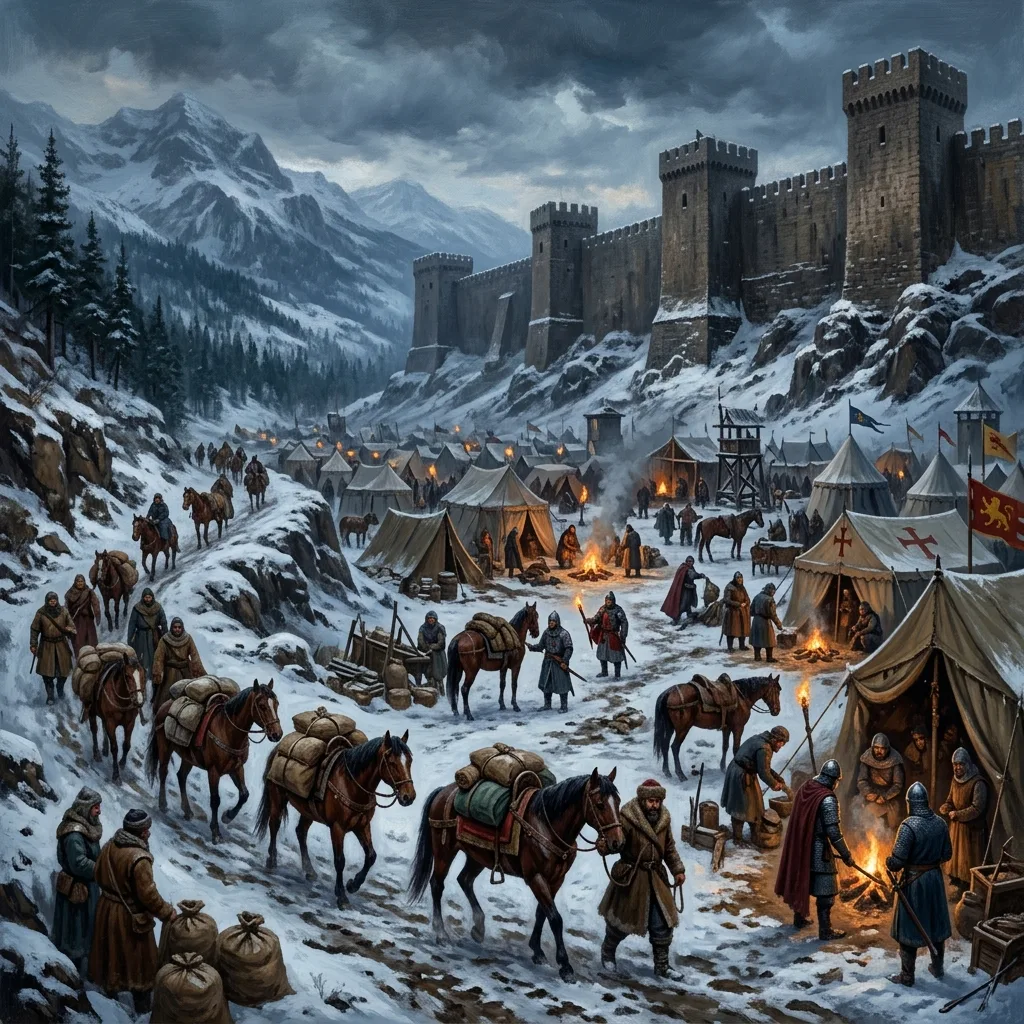
In June 1098, when Antioch finally fell, the crusaders did not know that the Armenian princes who came to their aid in the Taurus Mountains had just laid the foundation of a state destined to last for nearly three centuries.
Constantine I Rubenid received the titles of count and baron. The titles themselves meant little. What mattered was the door they opened.
From the Mountains to the Sea

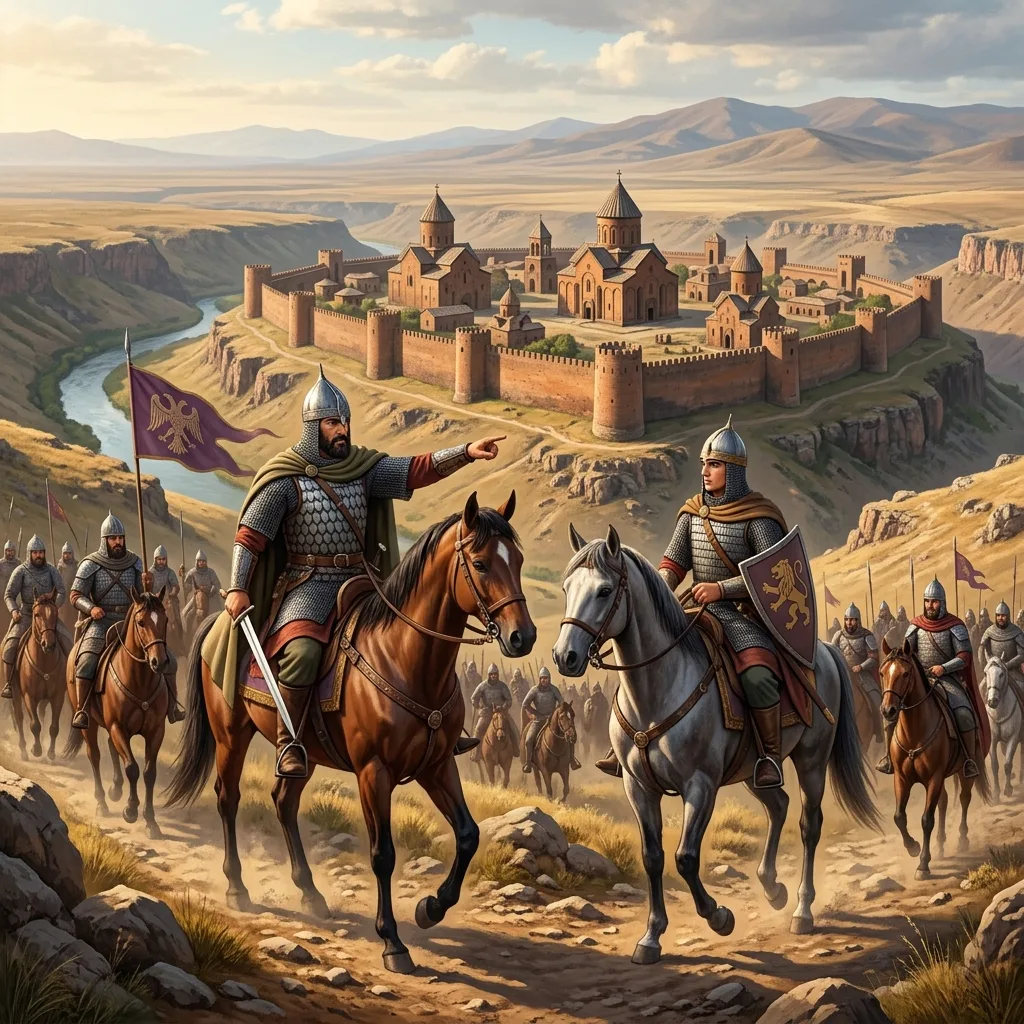
The Rubenid principality began as a few mountain fortresses: Vahka, Partzerpert, Kopitar. For Byzantium, these were rebellious fortifications; for the Seljuks, an inconvenient obstacle. After the Crusade, everything changed: the Armenian princes suddenly became players in a geopolitical game where Rome and Constantinople vied for influence.
The following generations took advantage of this:
- Thoros I (1100–1129) recaptured Anazarbus and Sis from the Byzantines, descending from the mountains to the plain.
- Prince Leo I (1129–1137) captured Tarsus, Adana, and Mamistra (Msis), bringing the Rubenids to the Mediterranean coast for the first time. The price was heavy: in 1137, Emperor John II Komnenos campaigned in Cilicia and took him prisoner; Leo died in a Constantinople prison.
- Thoros II (1144/45–1169) escaped from Byzantine captivity, returned to Cilicia, and reclaimed the lost fortresses one by one, defeating the army of Andronikos Komnenos in 1152.
In other words, throughout the 12th century, Cilicia was not gifted independence but slowly, generation by generation, fought for its place. The crown came at the end—as recognition of an already existing power.
The Calculation of Leo the Magnificent
In 1187, Leo II became prince, whom history would remember as Leo I the Magnificent. He understood what his predecessors did not: Cilicia was too small to survive alone, but too important for the great powers to ignore.
His position was unique. During the Third Crusade, Cilicia was the very land corridor through which European armies had to pass to Syria. The vast army of Frederick Barbarossa marched along this route, and Leo began negotiations with him for a crown. In June 1190, the Emperor drowned in the Cilician river Saleph (Göksu), and the plan collapsed.
Leo did not give up. He turned to Barbarossa's son, Henry VI, and simultaneously to Pope Celestine III. Henry agreed to grant the crown, demanding in return that Leo recognize him as his suzerain. The Pope had a different demand.
The Price of the Crown
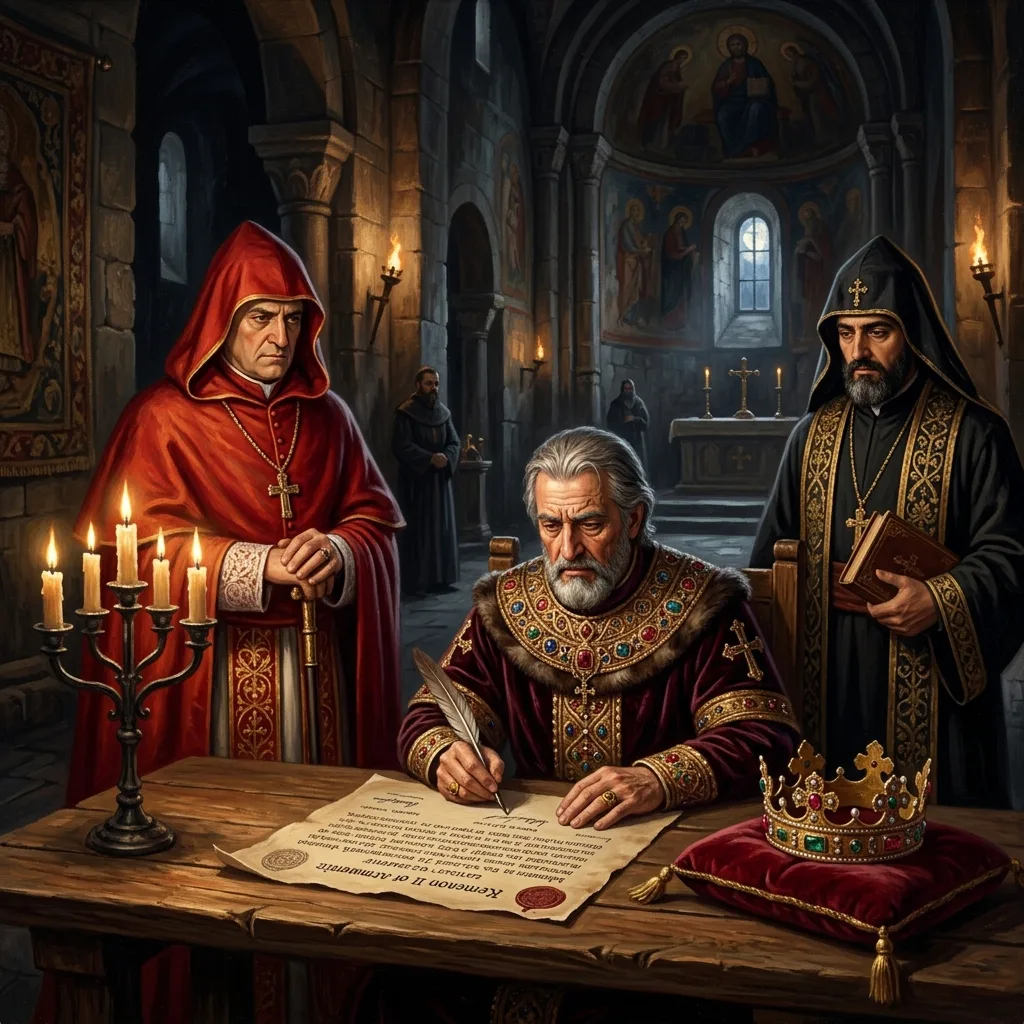
Rome's condition was ecclesiastical: the Armenian Apostolic Church had to enter into union with Rome.
In 1194–1195, Leo took this step. The pro-Latin Gregory VI Apirat was elevated to the patriarchal throne, and an act of union was signed. On paper, the issue was settled.
In reality, it was not. The Armenian clergy and people never accepted the doctrine of the two natures of Christ. A rival Catholicos was elected in Greater Armenia, and the church split. This contradiction—between the concessions required for foreign policy and internal resistance—accompanied the Armenian Kingdom of Cilicia throughout its history.
January 6, 1198
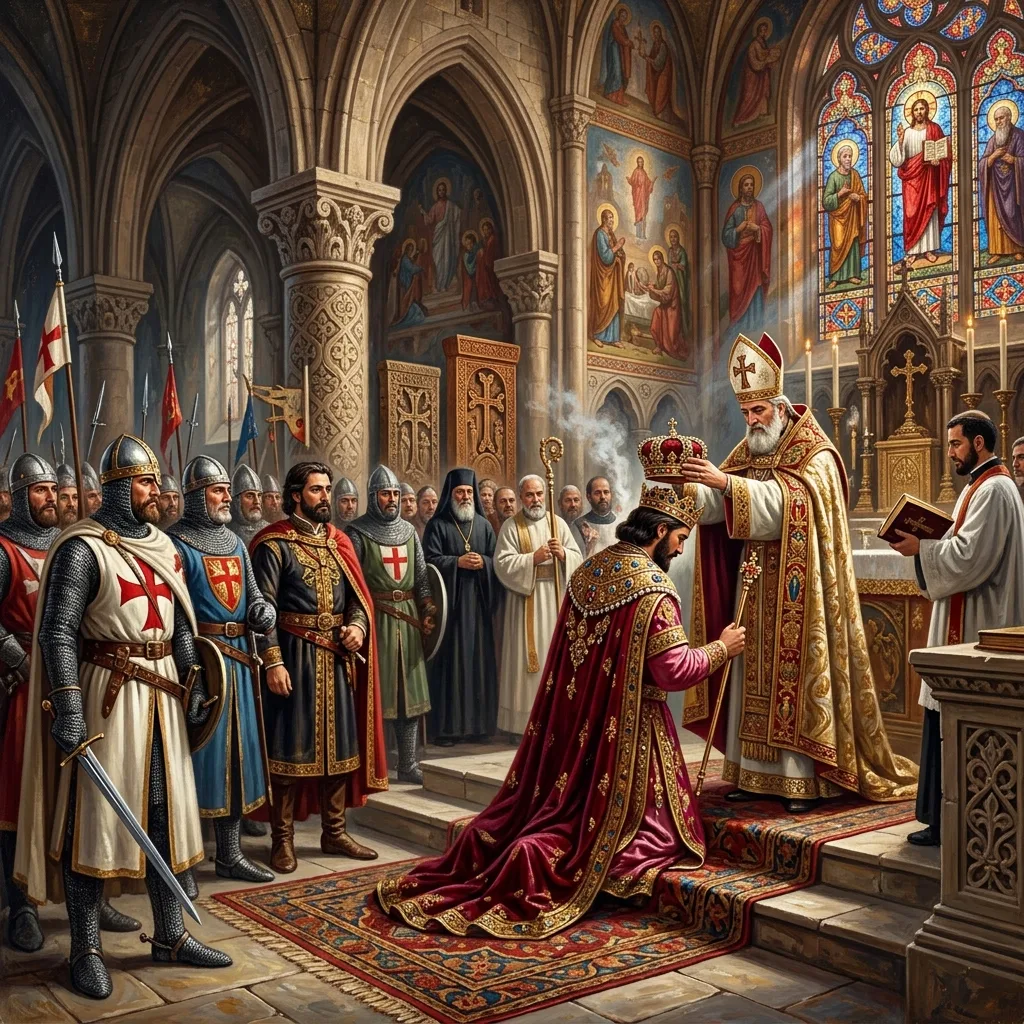
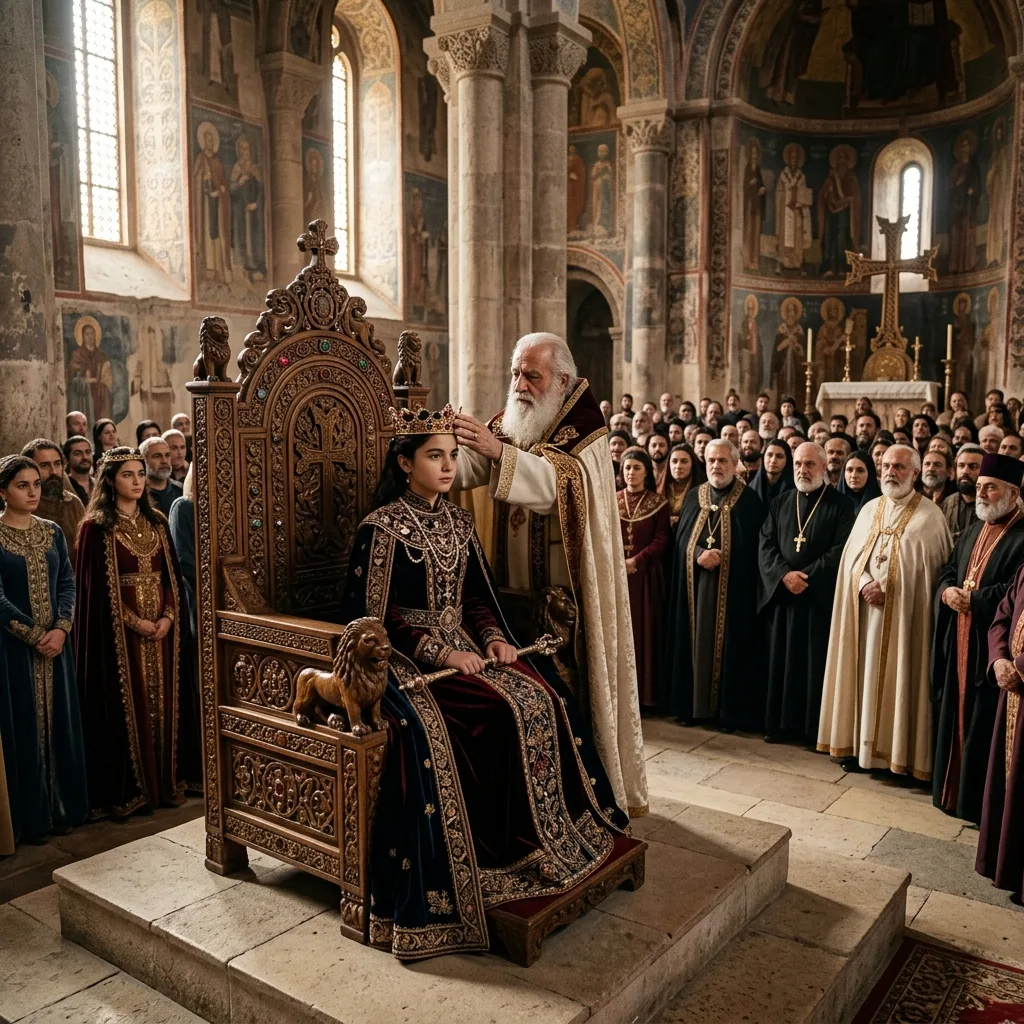
In the Cathedral of Saint Sophia in Tarsus, people gathered who were rarely found in the same hall: Armenian clergy, Franco-Armenian nobility, the Greek Archbishop of Tarsus, the Syrian Jacobite Patriarch, and ambassadors of the caliph.
Catholicos Gregory VI Apirat crowned Leo. Archbishop Conrad of Wittelsbach of Mainz, as papal legate, presented him with the remaining royal regalia on behalf of Emperor Henry VI. The Imperial Chancellor, Bishop Conrad of Hildesheim, was also present.
For accuracy: sources differ on the dates. January 6 is not in doubt, but in some manuscripts, the year is given as 1198, in others as 1199. Runciman accepts 1198; Rüdt-Collenberg insists on 1199. The Armenian tradition has settled on 1198. It is also interesting that, according to some accounts, Leo also received a crown from the Byzantine Emperor Alexios III so as not to lose the favor of Constantinople.
Two crowns from two rival empires is the most accurate description of Leo's diplomacy.
What the Crown Changed
The coronation officially severed Cilicia's link with Byzantium. But more profound changes were happening within.
The Armenian state began to function on the Western model. The old nakharar system gave way to a feudal one. Title names were replaced with Latin ones: princes became barons, the sparapet became the constable. In 1265, Smbat Sparapet compiled the Lawcode, partially drawing on the Assizes of Antioch. The court adopted Frankish customs, but the language, church, and writing remained Armenian. It was during this period that Toros Roslin, the pinnacle of Armenian miniature painting, worked in Rumkale.
Ayas—The Gateway to the World
Now we come to the most interesting part.
Leo understood that there was something more important than an army—trade. In 1201, he granted Genoa exemption from export and import duties and the right to establish trading posts. Soon, the Venetians and Pisans received the same.
The result was the port of Ayas (Lajazzo to the Europeans). When the harbor of Tarsus silted up, and Acre—the last major Crusader port—fell in 1291, Ayas remained virtually the only gateway between East and West. Silk Road cargoes now passed through Cilicia.
Venetian, Genoese, and Pisan merchants had their own quarters in Ayas, Corycus, and Sis, complete with warehouses, churches, courts, and baths. The most advanced financial instruments of the time were used: a merchant could depart from Ayas without cash, carrying only a bill of exchange, receive goods in Barcelona, and return.
In 1271, the 17-year-old Venetian Marco Polo disembarked in Ayas, and it was from here that his journey to the court of Kublai Khan began. In his book, he describes Ayas as a major commercial city where all kinds of spices, silk, gold-woven, and woolen fabrics are brought from the interior. According to him, anyone wishing to travel deep into Asia must begin their journey from Ayas.
The volumes were impressive: Venetian archives recorded a single shipment sent from Ayas to Venice in 1344—4,000 bales of cotton.
The Third Player: The Mongols
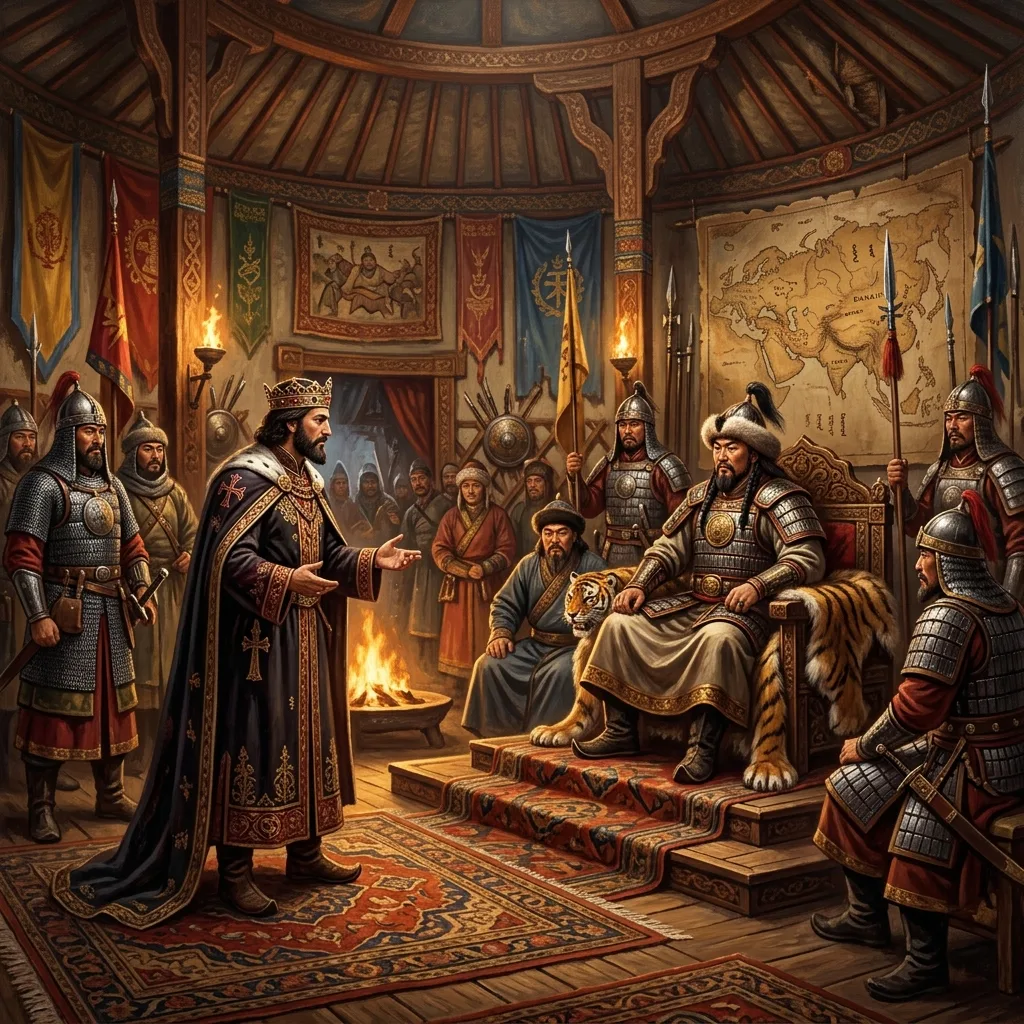
In 1254, King Hetoum I did what no European monarch dared to do: he personally traveled to Karakorum, the capital of the Mongol Empire, and concluded an agreement with Möngke Khan.
The calculation was cold and correct: the Mongol advance was inevitable, and it was better to become an ally than to be conquered. Cilicia received privileges, protection, and safe trade routes to the East. The half-century reign of Hetoum I (1226–1270) became the most prosperous period of the kingdom.
But every alliance has its adversary. In the case of Cilicia, it was the Egyptian Mamluks.
The Fall
In 1266, the Mamluks invaded Cilicia. At the Battle of Mari, the Armenian army was defeated, Prince Thoros was killed, Leo was taken prisoner, and the capital, Sis, was sacked.
Later, there were brief periods of recovery, new privileges for the Venetians, and the rebuilding of Ayas. But the trend was irreversible. In 1347, Ayas fell to the Mamluks for good. The trade artery was severed, and with it, the kingdom's revenues.
In 1375, Sis fell. The last king, Leo V of Lusignan, was taken prisoner, later released, and spent the remaining years of his life in Europe, trying in vain to organize a new crusade. He died in Paris in 1393 and was buried in the royal necropolis of Saint-Denis alongside the kings of France.
What Remains
Cilician Armenia existed for about three centuries—from the 1080s to 1375. During this time, the small state, which began as a group of mountain fortresses:
- became one of the trade hubs of the medieval Mediterranean,
- established diplomatic relations with Rome, the Holy Roman Empire, France, Cyprus, and the Mongol Empire,
- created the finest examples of Armenian miniature painting and literature,
- and formed Middle Armenian as a literary language.
The beginning of it all was a starving camp in the winter of 1098 under the walls of Antioch, where food was brought down from the Taurus Mountains.
Sources and Further Reading
- S. Der Nersessian, The Kingdom of Cilician Armenia (A History of the Crusades, Vol. II)
- J. Ghazarian, The Armenian Kingdom in Cilicia during the Crusades
- S. Runciman, A History of the Crusades
- Marco Polo, The Travels of Marco Polo
- Smbat Sparapet, Chronicle and Lawcode
- Matthew of Edessa, Chronicle

💬CommentsClick to read and leave a comment⌄
No comments yet. Be the first!