
Makaravank and Khoranashat: 13th-Century Monastic Complexes of Tavush
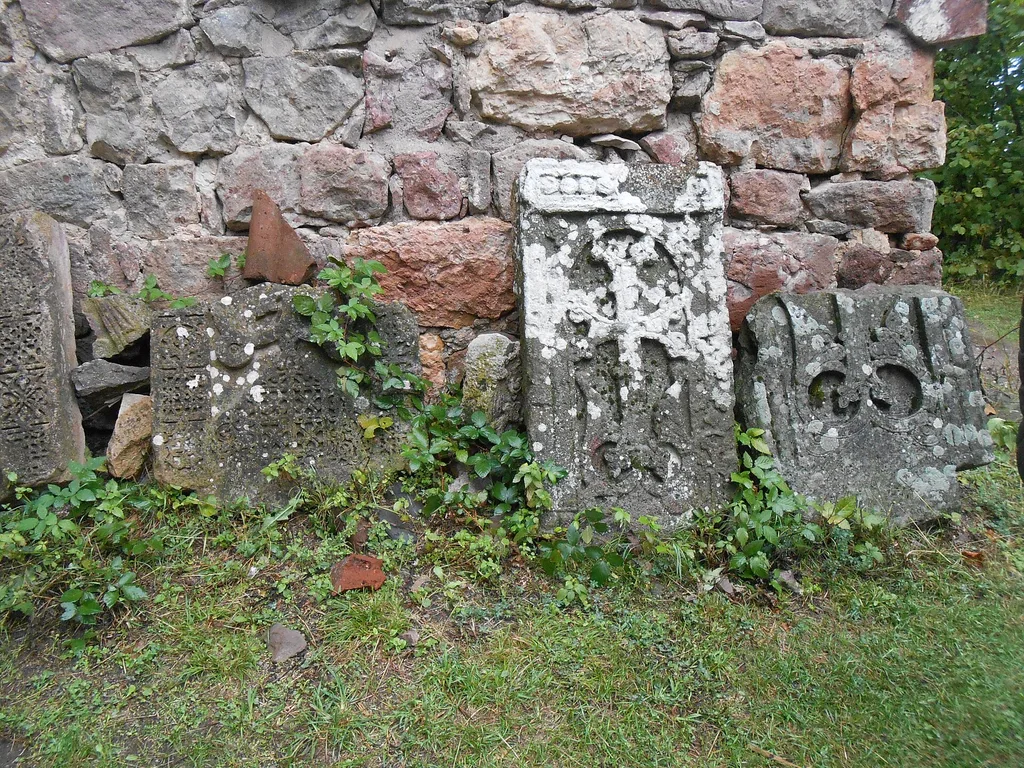
Makaravank: a monastery hidden in the forests
Makaravank is located in the Tavush Province, near the village of Achajur, on the densely forested mountain slopes around Ijevan. Several structures built at different times have survived here. The oldest of them is the small church, whose exact dating requires clarification. The monastery acquired its complete form and fame in the 13th century, when monastic construction flourished in Northern Armenia under the rule of the Zakarians.
The main church and the gavit
The monastery's main church is a domed structure built at the beginning of the 13th century. Its volumes are clear, and its walls are laid with dressed stone. Adjoining the main church on the north is the gavit, which was built in 1224. In Armenian monastic complexes, the gavit served as a space for assemblies and solemn ceremonies and as a passage to the church.
Sculptures and khachkars
Makaravank is known for its rich sculptural decoration. On the walls of the church and the gavit, around the window frames and the entrances, there are floral and geometric ornaments, as well as khachkars. This decoration is one of the characteristic features of 13th-century Armenian monastic architecture, when delicate carving in stone became an integral part of the building.
Khoranashat
Khoranashat is also one of the 13th-century monastic complexes of the Tavush Province, about 2.5 km north-east of the village of Chinari, on a forested slope. It was founded by Vanakan Vardapet in 1211. It belongs to the architectural school of the same region. The churches are built of local stone, their volumes are proportionate, and the decoration is restrained and delicate.
The surroundings of Haghartsin
The Haghartsin monastic complex is in the Tavush Province, near Dilijan, and is one of the Armenian monastic centers of the 13th century. Among the best-known structures of the complex are the Church of Surb Astvatsatsin (Holy Mother of God) (1281), the Church of Surb Stepanos (1244) and the refectory (1248), while the Church of Surb Grigor belongs to an earlier period. The combination of forested slopes and stone buildings gives these places a special beauty.
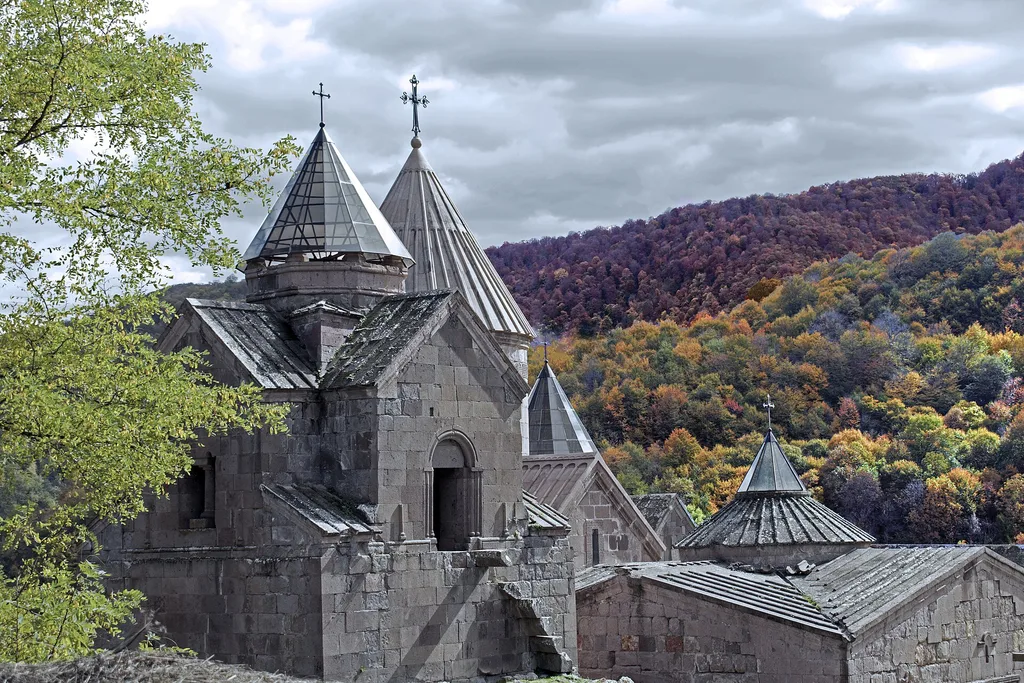
Why these complexes are important
Makaravank, Khoranashat and Haghartsin show that in the 13th century, even in difficult political conditions, Armenian monasteries remained centers of education, manuscript copying and culture. They are an integral part of Armenian architecture and living witnesses of our historical heritage.
Sources
- Toros Toramanyan — Materials for the History of Armenian Architecture
- Armenian Soviet Encyclopedia
💬CommentsClick to read and leave a comment⌄
No comments yet. Be the first!