
Mesrop Mashtots and the Creation of the Armenian Script
Mesrop Mashtots and the Creation of the Armenian Alphabet
The Armenian alphabet was created at the beginning of the 5th century, and this event is one of the turning points in the history of Armenian culture. The invention of the script made it possible to write biblical, ecclesiastical and historical works in Armenian, strengthened national identity and marked the beginning of the golden age of Armenian written culture. The principal author of this undertaking is Mesrop Mashtots.
Mashtots before the creation of the alphabet
Mashtots was born in the village of Hatsekats in the Taron region, in the 360s. This date is approximate; the exact year is unknown. According to his disciple Koryun, he had studied Greek, served at the Arshakuni court in the royal chancellery, and then abandoned secular life and became a monk and preacher. Koryun notes that while preaching in the villages, Mashtots saw how little the people understood the service conducted in a foreign language (Syriac and Greek). This need prompted him to think about a script of their own.
The sources and their differences
Our oldest testimony about the creation of the alphabet is Koryun's work «The Life of Mashtots», written in the 5th century, probably after Mashtots's death (440). Koryun was a disciple of Mashtots, that is, a contemporary witness. Movses Khorenatsi also describes these events in his «History of the Armenians» and likewise considers himself a disciple of Mashtots. The accounts of the two authors largely coincide, but there are differences in details. For this reason, the traditional narratives below are presented as the testimony of the sources, not as indisputable fact.
The creation of the alphabet
According to Koryun, Mashtots turned to Sahak Partev, Catholicos of the Armenians, and to King Vramshapuh of the Arshakuni dynasty. Vramshapuh informed him that the Syrian bishop Daniel had characters created for Armenian. Koryun relates that Daniel's letters did not meet the phonetic needs of Armenian. Mashtots then went with his disciples to Syria and to Hellenic cultural centers, in particular Edessa and Samosata. There, according to Koryun, with the help of Rhoupanos, a master of Greek calligraphy, he finally composed and arranged the Armenian letters.
Traditionally, Mashtots's alphabet consisted of 36 letters. Later, in the Middle Ages, two more letters were added: «օ» and «ֆ». On chronological questions there are differences in the scholarly literature: it is generally accepted that the alphabet was created around the year 405. This is an approximate date, not an exact year.
Movses Khorenatsi's account contains some additional details, for example passages with legendary emphases. These should be understood as tradition, not as documented data.
The first translations and schools
After the creation of the alphabet, Mashtots began opening schools and training disciples. Koryun notes that the first translated text was the beginning of Solomon's Proverbs: «To know wisdom and instruction, to perceive the words of understanding». This line is traditionally considered the first sentence written in Armenian.
The work continued together with Sahak Partev. They organized the translation of the Bible into Armenian, which was carried out in the first half of the 5th century. The translation was later refined by comparison with the Greek original. The Armenian translation of the Bible is considered a classic example of Old Armenian, Grabar.
The beginning of the golden age
The disciples of Mashtots and Sahak Partev — Koryun, Yeznik Koghbatsi, Movses Khorenatsi and others — created the first major works of Armenian literature. This period, the 5th century, is customarily called the «golden age» of Armenian literature. Works of the golden age include Yeznik's «On God» (Yeghts aghandots), Agathangelos's «History of the Armenians», Pavstos Buzand's «History», and Yeghishe's «On Vardan and the Armenian War». The dating of these authors is sometimes debated in Armenian studies, but they are generally classed as belonging to the 5th-century literature.
The creation of the Armenian alphabet played an important role in preserving national identity under Armenia's difficult political conditions, after the partition of the country (387, when Armenia was divided between Byzantium and Sasanian Persia). Mashtots operated in both the eastern and western parts of Armenia, organizing schools. According to Koryun, he later also created the Georgian and Albanian alphabets; this is information transmitted by Koryun, the details of which are debated in Armenian studies.
Death and memory
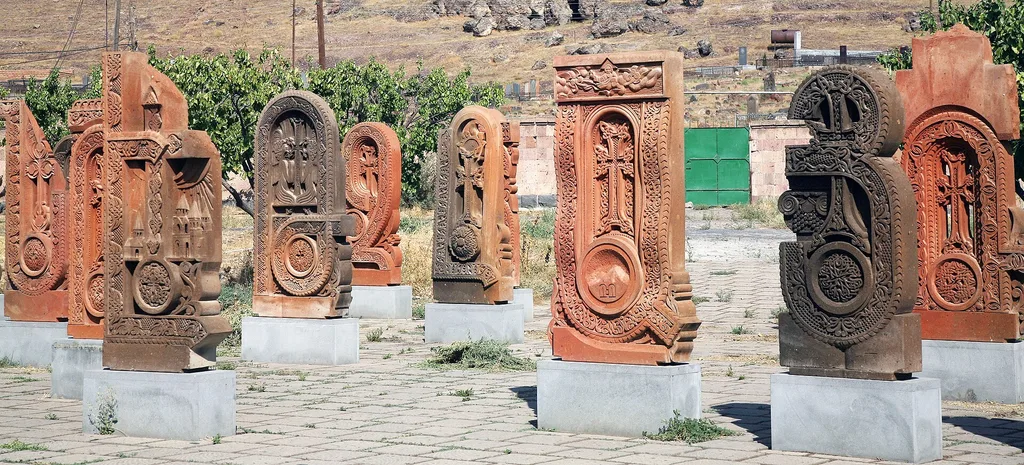
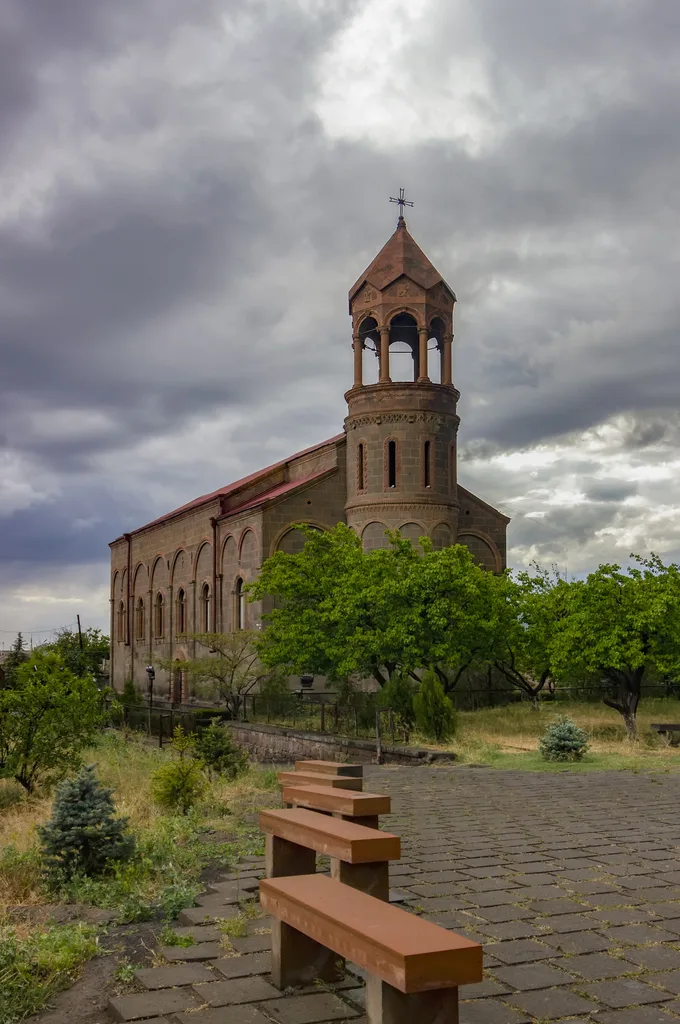
Mashtots died on February 17, 440. According to Koryun, he was buried in Oshakan, where the church built over his grave still stands today. That place is today a sacred pilgrimage site for the Armenian people. The Mesrop Mashtots Matenadaran in Yerevan preserves one of the richest collections of Armenian manuscripts in the world. The Armenian Church ranks Mesrop Mashtots and Sahak Partev among the saints, and the Feast of the Holy Translators is celebrated every year.
Sources
- Koryun — The Life of Mashtots
- Movses Khorenatsi — History of the Armenians
- History of the Armenian People (Institute of History, Academy of Sciences of the Armenian SSR)
💬CommentsClick to read and leave a comment⌄
No comments yet. Be the first!