
Sevanavank and the Early Medieval Churches on the Shore of Sevan
Sevanavank: On the Shore of Armenia's "Sea"
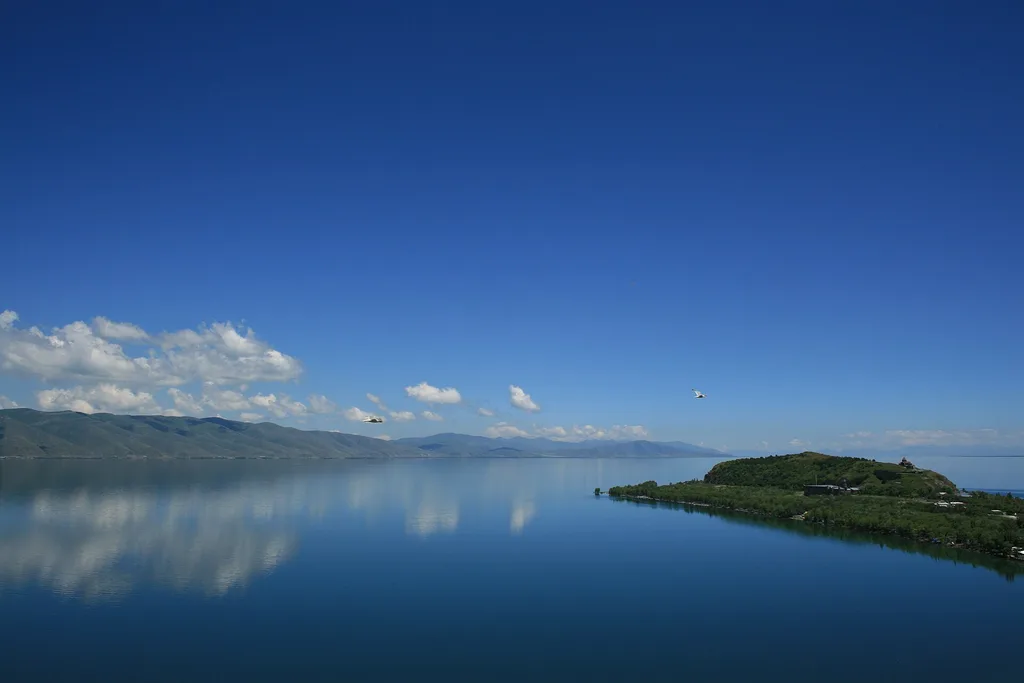
On the north-western shore of Lake Sevan, on a hill that was once an island and has now become a peninsula, stands Sevanavank. It is one of the best-known monuments of Armenian medieval architecture and also one of the centers of early medieval spiritual life on the shore of Sevan. In this article we try to separate what is confirmed by historical written sources and inscriptions from what has been preserved as tradition.
The Foundation: What Is Known
The foundation of Sevanavank is traditionally linked with the year 874 and with the name of Mashtots Yeghivardetsi. Mashtots Yeghivardetsi became Catholicos of the Armenians later, in 897, so in 874 he was not yet Catholicos. Therefore it is correct to say only that the monastery's foundation is traditionally associated with his name.
The clearest information about the monastery has been preserved in the inscriptions of the churches. They mention Mariam, Princess of Syunik, daughter of King Ashot Bagratuni, and her husband Vasak Gabur. The inscription on the construction of the Holy Apostles Church is connected with Mariam's name; it is dated to 874 (the inscription on the eastern face of the drum of the Apostles Church) and is taken as the basis for dating the monastery's structures.
The Formation of the Peninsula
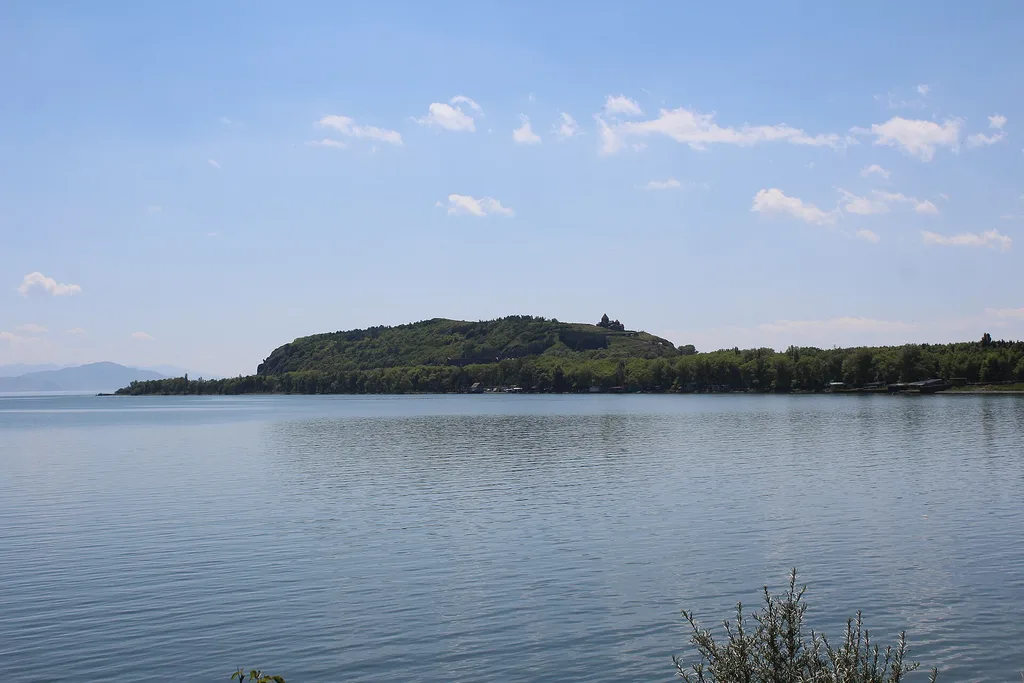
In the 20th century the level of Lake Sevan was artificially lowered for the purpose of water use. Before that, the hill of Sevanavank was an island, and after the drop in water level, during the 20th century, it gradually joined the mainland. This is a fact, not a tradition: today visitors arrive by land, whereas in the early Middle Ages the monastery was an isolated place surrounded by water. That isolation contributed to the ascetic life of the brotherhood.
The Holy Apostles and Holy Mother of God Churches
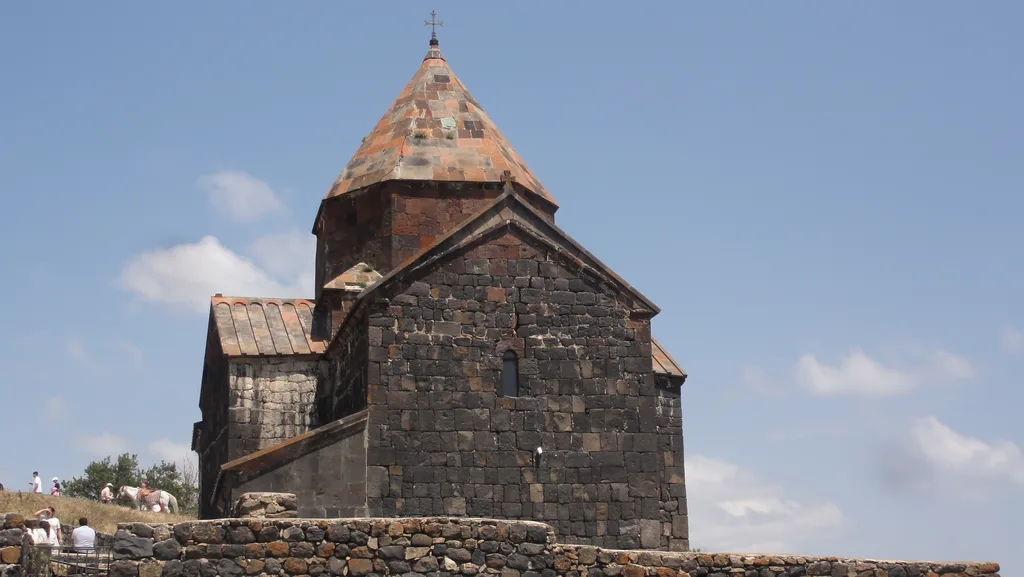
Two churches have been preserved in the monastery complex: the Holy Apostles and the Holy Mother of God. According to Orbelian, both churches were built by Princess Mariam in 874. They are domed structures of stone with plain walls, whose architecture belongs to the early medieval Armenian tradition. The exterior decoration of both churches is relatively restrained.
The monastery was once a more extensive complex; it also included the Saint Karapet Church, which was later destroyed. For that reason, the discussion here focuses on the two surviving structures.
Traditions
Traditions have been preserved around Sevanavank. According to one, the site is linked with the name of Gregory the Illuminator in the 4th century. However, this is a tradition and is not confirmed by early medieval inscriptions.
The monastery is also traditionally presented as a place of spiritual penance. This tradition has layers from later centuries, and it cannot be presented as an exact fact.
The Shore of Sevan and Gegharkunik
The shores of Sevan, which historically are part of the province of Gegharkunik, are rich in churches, khachkars and popular memory. In local oral traditions the monastery is sometimes presented as a sanctuary guarding the lake, but the exact origin of these traditions is difficult to confirm. The khachkars on the shore of Sevan and the neighboring monuments testify to the continuous Armenian spiritual and cultural life of the region.
Why It Matters Today
Sevanavank is not only an architectural monument but also a symbol of Armenian spiritual and national identity. It is also an example of how important it is to distinguish fact from tradition: the churches of the late 9th century and their inscriptions are fact, while the legendary details surrounding the foundation are tradition.
Sources
- History of the Armenian People (Institute of History of the Academy of Sciences of Armenia)
- Armenian Soviet Encyclopedia
💬CommentsClick to read and leave a comment⌄
No comments yet. Be the first!