
The golden statue of Anahit, which was melted in Rome
Introduction
The most revered deity of the Armenian pagan pantheon was Anahit, the goddess of fertility, healing, and motherhood, whom Agathangelos refers to as "the glory and life-giver of our nation." Her temples were among the wealthiest in the entire country.

And it was this very wealth that became the cause of an episode recorded by the Roman naturalist Pliny the Elder—a story of a golden statue, pillage, and a reply uttered years later that silenced the emperor.
In this article, we distinguish three layers: what the ancient sources say, what we know for certain, and where the confusion begins that is still repeated in hundreds of publications today.
Historical Context
In 36 BC, Mark Antony, the de facto ruler of the eastern part of the Roman Republic, launched a large-scale campaign against Parthia. The army's route passed through Armenia, which at that time was Antony's ally, led by King Artavasdes II.
The campaign ended in a severe failure. Antony accused Artavasdes of betrayal and returned to Armenia in 34 BC, this time as a conqueror. The king was captured and taken to Egypt.
It was during these two campaigns that the plundering of Armenian temples took place. Moreover, the sources do not specify an exact year, so the destruction of the statue is attributed to either 36 or 34 BC.
What Pliny the Elder Writes
The episode is preserved in the thirty-third book of the "Natural History", in the section dedicated to gold. Pliny writes that the statue of Anahit was the first known statue cast entirely from solid gold, without a wooden or stone core. It is this very detail that interests him as a naturalist; the use of pure gold of such volume was exceptional in the ancient world.
According to Pliny, Antony's soldiers broke the statue into pieces and divided it among themselves as booty.
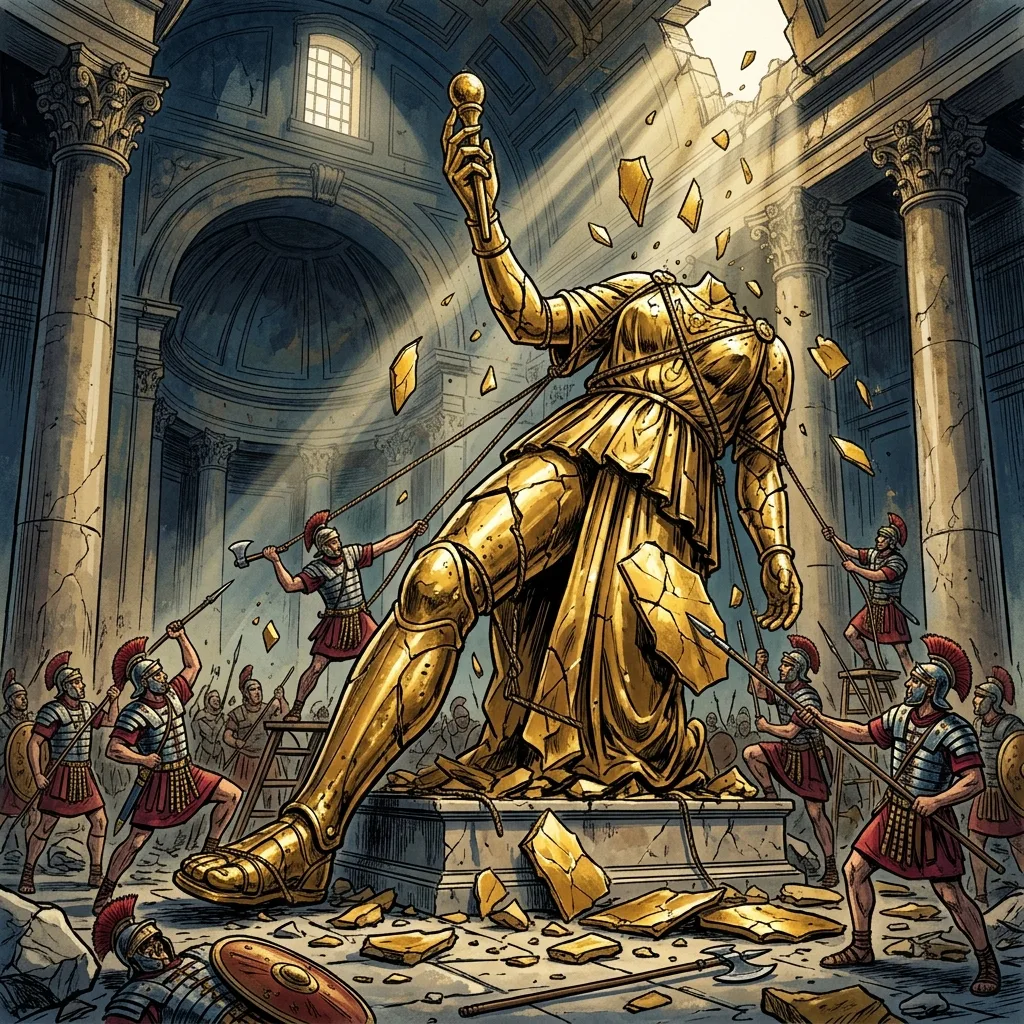
Then comes the most memorable part of the episode. Years later, at the court of Emperor Augustus, a conversation arises about how the person who laid hands on the goddess was supposedly punished, becoming blind and paralyzed. A veteran present, hailing from the city of Bononia (today's Bologna), replies that he himself was the first to do so, that his entire wealth comes from that booty, and that the emperor is at that very moment dining off tableware made from that very statue.
How Reliable Is This Testimony?
Arguments in favor:
- Pliny was a Roman official, close to court circles, and had access to official records.
- He presents the episode not as a miraculous tale, but as practical proof of the volume of gold.
Arguments against:
- He writes decades after the death of Augustus, in the second half of the first century.
- The story has a moralizing structure: sacrilege, supposed punishment, and a witty retort. In ancient literature, such structures are often the result of literary elaboration.
Where Was the Temple?
Here begins the first disagreement.
Strabo, writing in the early first century, places the main center of Anahit's worship in the settlement of Eriza in the province of Ekeghyats, under the name Acilisene. He describes it as an extremely wealthy sanctuary with a large number of devotees and an extensive temple economy.
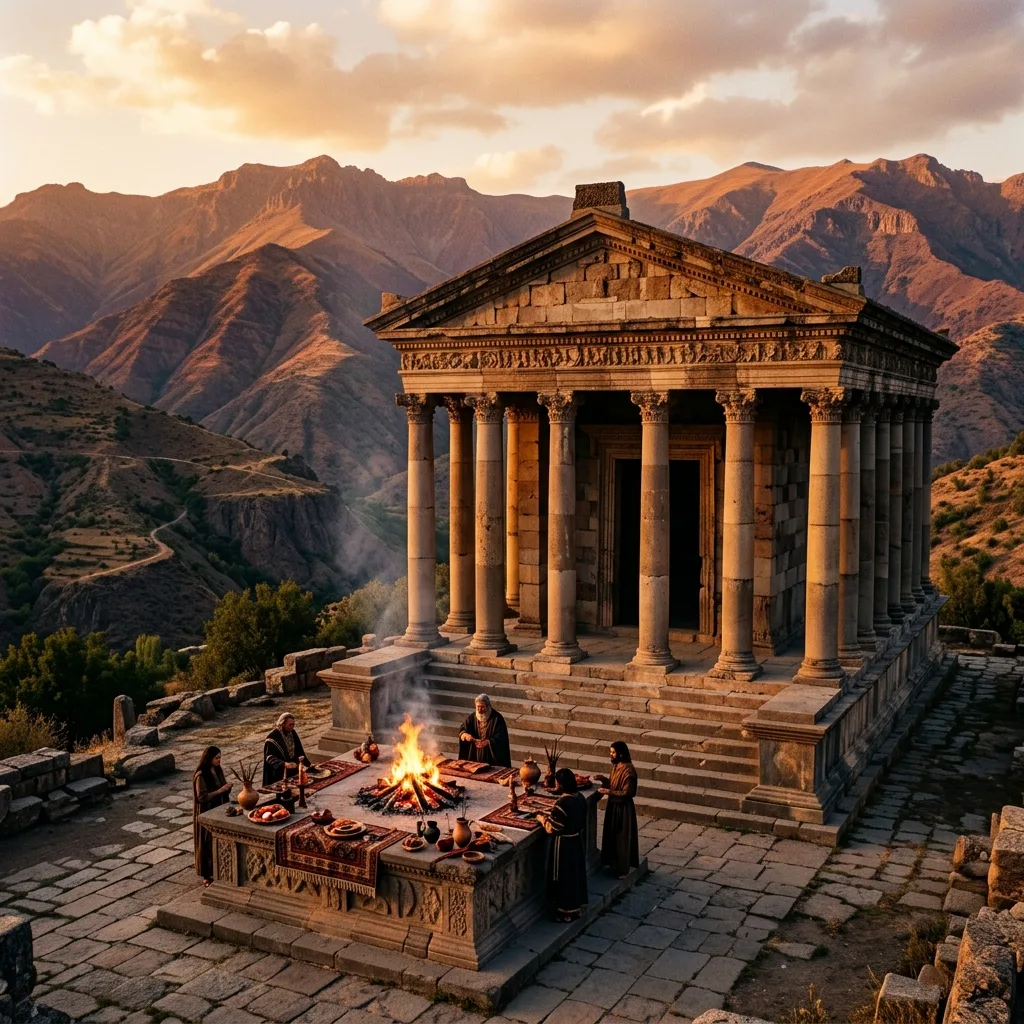
Pliny does not mention a specific settlement in the story of the golden statue.
Therefore, the connection with Eriza is a logical reconstruction rather than direct testimony. It is possible that it refers to the main temple of Eriza itself, but it is also possible that it refers to another, smaller sanctuary dedicated to Anahit, of which there was more than one in Armenia.
The Biggest Confusion: The Golden Statue and the Bronze Head
This is the point where almost everyone is mistaken, including serious publications.
Nothing of the golden statue has been preserved. It was completely melted down and dispersed in the first century. It is physically impossible for any fragment of it to have reached us.
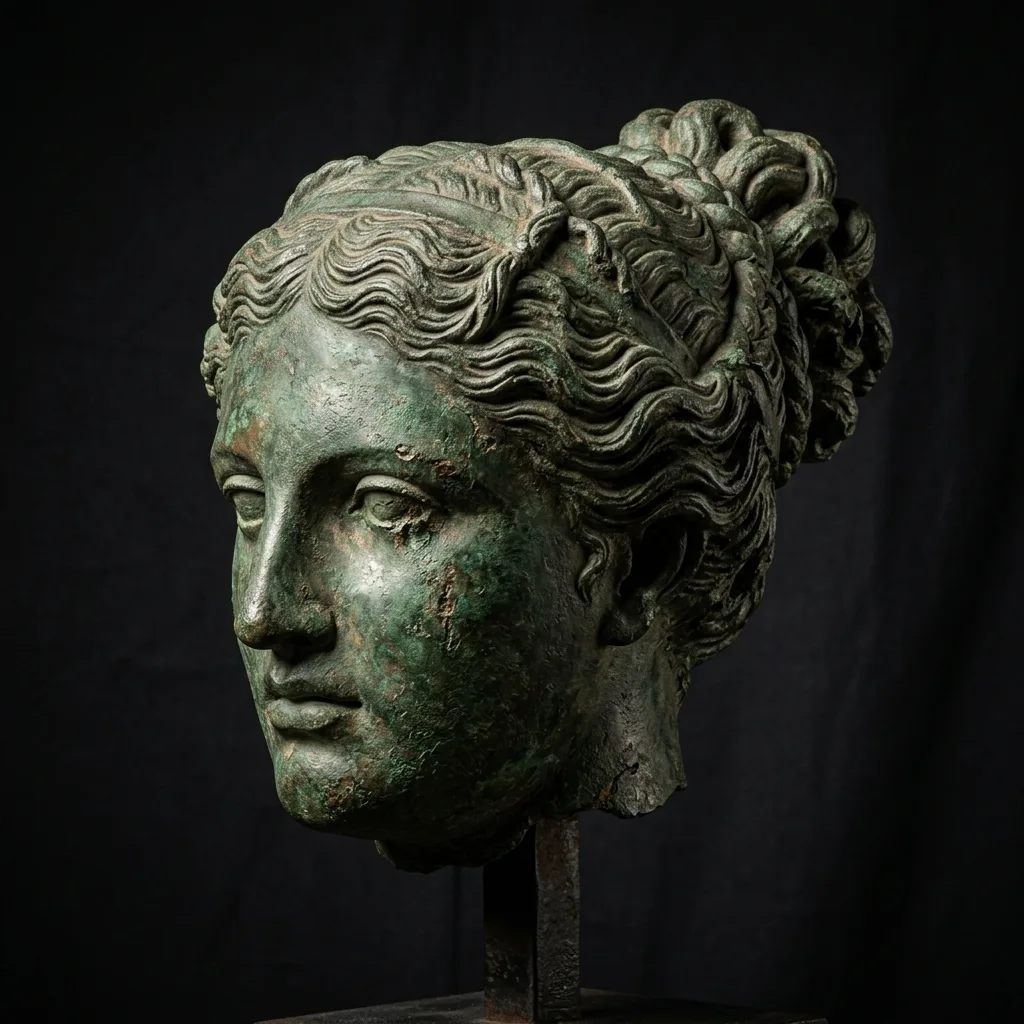
What we all know from textbooks is a completely different object:
- It is a bronze head and a left hand, not gold.
- It was discovered in the early 1870s in the settlement of Satala in historical Lesser Armenia (now Sadak, Gümüşhane Province, Turkey). In sources, the date of discovery varies between 1872 and 1873.
- It dates approximately from the fourth to the second centuries BC, the Hellenistic period.
- Shortly after its discovery, it was acquired by the British Museum, where it is kept to this day.
But Is It Really Anahit?
The identification is also a hypothesis. It was proposed by Ghevont Alishan in 1890 in his work "Ayrarat". The main argument is geographical: the location of the find is relatively close to the province of Ekeghyats, where Strabo places the main temple of Anahit. This view was accepted by a wide circle of scholars and became entrenched in Armenian cultural memory.
However, this is an attribution rather than a documented identity. The head bears no inscription, and in Hellenistic sculpture, the iconographic attributes of female deities are often interchangeable. Therefore, the most accurate formulation is "head attributed to Anahit", not "head of Anahit".
When Anahit Returned to Armenia
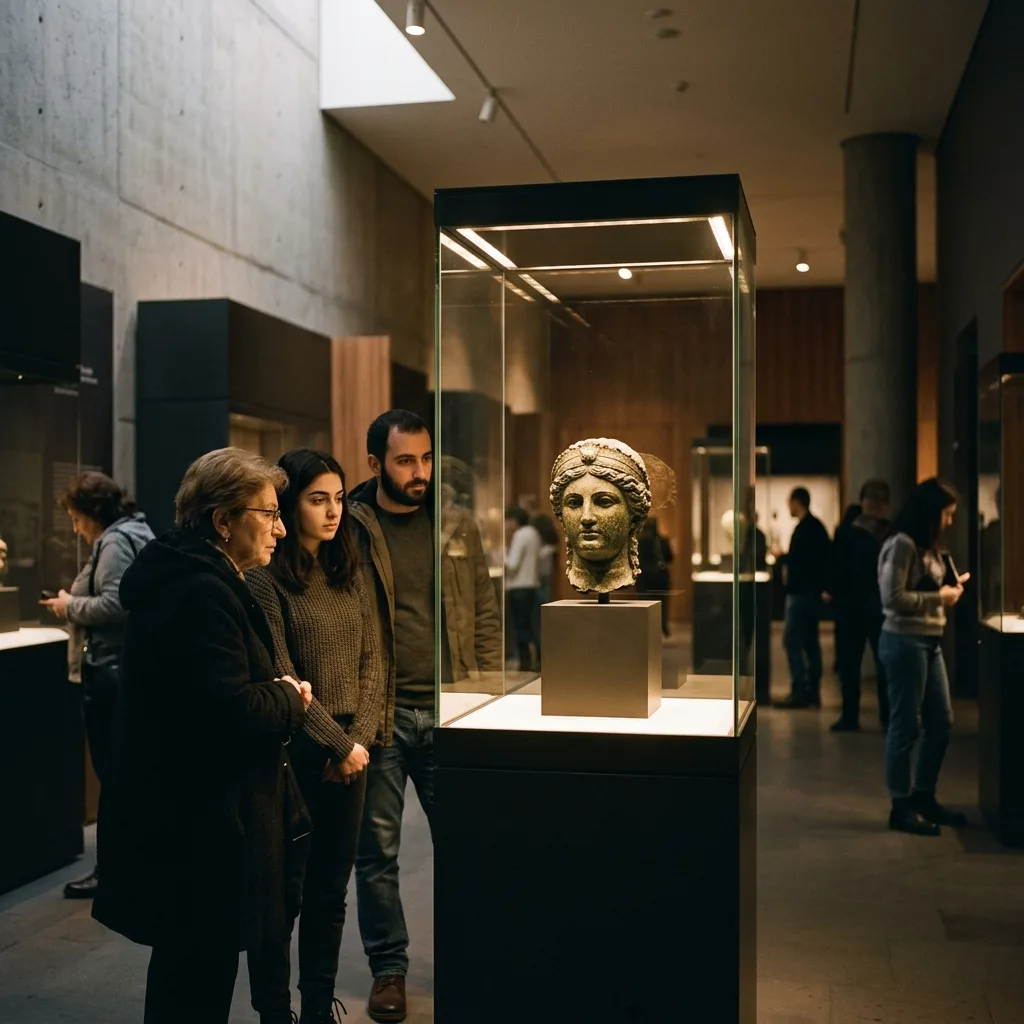
In 2024, the British Museum and the History Museum of Armenia signed a loan agreement for a period of six months.
- The head and the left hand were brought to Armenia on September 16, 2024.
- The exhibition, titled "Mother Deity: From Anahit to Mary", opened on September 21 at the History Museum of Armenia.
- The exhibition lasted until April 10, 2025, after which the exhibits were returned to London.
This was the first and so far only time these fragments were exhibited in Armenia. It is important to understand that this was a temporary loan and not a return of ownership. Today, the exhibits are back in the British Museum.
Conclusion
This story is actually two separate stories that have merged into one over the centuries.
The first is the story of the golden statue, preserved only in Pliny's text, without any physical trace, and for that reason it will always remain on the boundary between testimony and literary elaboration.
The second is the story of the bronze head—a tangible, dated, but anonymous object whose identity we have reconstructed by logic, not by proof.
Both deserve to be told. But they also deserve to be distinguished from each other.
Sources
- Pliny the Elder, "Natural History", Book XXXIII
- Strabo, "Geography", Book XI
- Agathangelos, "History of the Armenians" - on the cult of Anahit
- Plutarch, "Antony" - for the chronology of the Parthian campaign
- Ghevont Alishan, "Ayrarat", 1890
- British Museum collection description concerning the bronze head of Satala
- History Museum of Armenia, materials from the exhibition "Mother Deity: From Anahit to Mary", 2024-2025

💬CommentsClick to read and leave a comment⌄
No comments yet. Be the first!