
Queen Zabel: The throne inherited by the child

Introduction
In the history of the Armenian Kingdom of Cilicia, the figure of Zabel holds a unique place; she ascended the throne not by conquest or election, but because her father had no male heir.
Her biography was almost entirely determined by the decisions of others—regents, princely councils, and foreign policy calculations. And yet, she remained on the throne for twenty-six years and became the woman at the foundation of the Hethumid dynasty.
In this article, we present her history based on Armenian primary sources and clearly highlight the points where the sources differ.
Origin and Succession
Zabel (also found with the spelling Zapel) was the daughter of King Leo II of Cilician Armenia, from the Rubenid dynasty.
Her date of birth is disputed. Sources provide the options of 1215, 1216, and 1217. For the chronology of subsequent events, this difference is significant, as it determines how old she was at the time of her marriages.
Leo II had no male successor. Therefore, he anointed his daughter, Zabel, as the heir to the Armenian throne. This was an important decision that later became the source of a prolonged political struggle.

In 1219, Leo died.
The Regency Period
Regents ruled the country on behalf of the minor queen.
The first regent: Atan (Adam). Under his regency, Zabel was proclaimed Queen of Cilicia. However, Atan was soon assassinated.
Disputing the throne: Raymond-Roupen of Antioch, the grandson of Leo II's elder brother, Roupen III, attempted to seize the throne. He was defeated, captured, and killed.
The second regent: Constantine of Baberon. A prince of the Hethumid dynasty and one of the most powerful nobles in Cilicia, he held the title of constable (commander-in-chief). He became the de facto ruler of the country and remained in this role for years.
Sources record the date of Zabel's coronation differently: both May 2, 1219, and her mention as queen starting from 1222 are found.
First Marriage: Philip of Antioch
Constantine of Baberon convened an assembly of Armenian princes and clergy and raised the issue of the queen's marriage.
The decision: To marry Zabel to Philip, the son of Bohemond IV, Duke of Antioch. The calculation was political: the unification of the two states or a close alliance.
The condition: Philip committed to respecting the rights of the Armenian princes, the Armenian faith, and customs.
What happened: After arriving in Cilicia, he broke his promises. Sources note that he removed many Armenian officials from the court, invited crusader knights and Catholic clergy to the palace, and treated the Armenian nobility with contempt. Some narratives also mention that he attempted to restrict the use of the Armenian language at court.
The consequence: The Armenian council of nobles deposed Philip and imprisoned him.
Death: two versions. Some sources write that he died in prison. Others mention that he was killed in battle in 1225. The year of his deposition is also recorded differently: 1224 or 1225.
Second Marriage: Hethum
The question of the succession remained open. Constantine of Baberon convened a new council and, with the consent of the princes and clergy, married Zabel to his son, Hethum.
The date: June 14, 1226. The ceremony took place in the city of Tarsus.
Hethum was also a youth, born in 1213 or 1215. In other words, both spouses were minors.
With this marriage, the Hethumid dynasty was established on the throne of Cilicia, replacing the Rubenids, whose lineage had ended with the death of Leo II.
The political outcome: The crusader knights and the Catholic clergy, who sought to expand their influence in the country, lost that opportunity.
The Co-Rule
Zabel and Hethum I ruled together. This co-rule was not merely formal; the two are depicted together on various Cilician coins, which was an important public-political statement for that time.
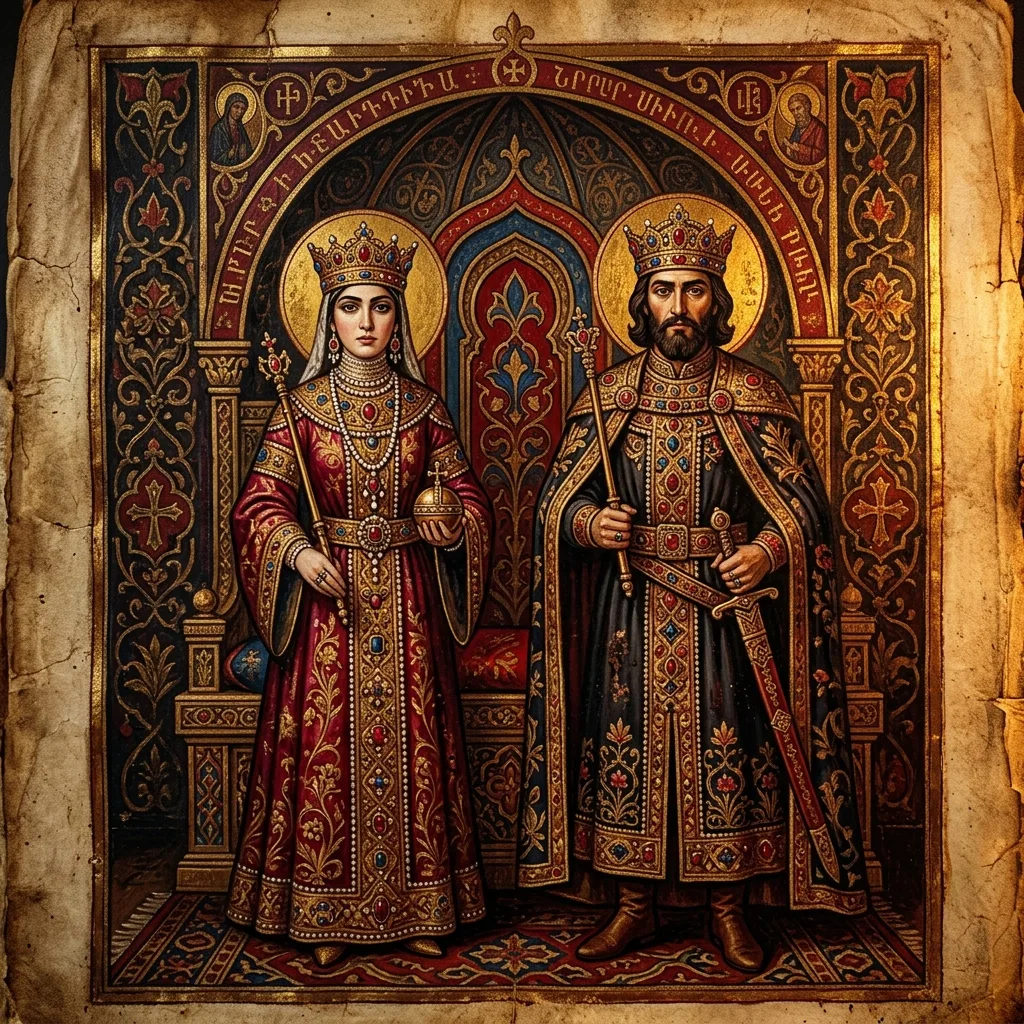
They had eight children: the future King Leo, Thoros, Sibyl, Fimi, Rita, Maria, Roupen, and Vasak, who died at the age of four.
Zabel died in 1252. Hethum I ruled until 1269 or 1270.
Disputed Questions
1. Date of birth: 1215, 1216, or 1217. Consequently, in 1226, she was 9–11 years old.
2. Date of coronation: May 2, 1219, or mention as queen starting from 1222.
3. Philip's death: In prison or in battle. Correspondingly, in 1224 or 1225.
4. The Seleucia episode: In Western sources, there is a story according to which Zabel fled to Seleucia and refused to marry Hethum until she was brought back. Armenian sources do not write about this. Therefore, it should be presented as a separate tradition, not an established fact.
5. Hethum's date of birth: 1213 or 1215.
6. Charitable activity: Zabel is credited with sponsoring hospitals and care for the poor. This tradition is persistent in Armenian historiography, but specific documentary details are scarce.

Conclusion
Zabel's story is well-suited for a melodramatic reading, and that is precisely the danger.
The facts themselves are enough. The father anointed his daughter as heir because he had no son. Two different assemblies of princes decided whom she should marry. The first marriage ended in deposition and prison. The second resulted in twenty-six years of co-rule, eight children, and a new dynasty that ruled Cilicia for another century and a half.
All this happened in the life of a woman who ascended the throne as a child.
Sources
- Smbat Sparapet, "Chronicle"—for the chronology of events in Cilicia
- Kirakos Gandzaketsi, "History of Armenia"
- Vahram Rabuni, "Rhymed History of the Rubenians"
- Cilician numismatic material: the joint coins of Zabel and Hethum I
- Armenian Soviet Encyclopedia, articles "Zapel" and "Hethum I"
- Academic studies dedicated to the history of Cilician Armenia



💬CommentsClick to read and leave a comment⌄
No comments yet. Be the first!