
Blessing of the Grapes 2026: why is the Feast of the Assumption of the Holy Mother of God on August 16 this year
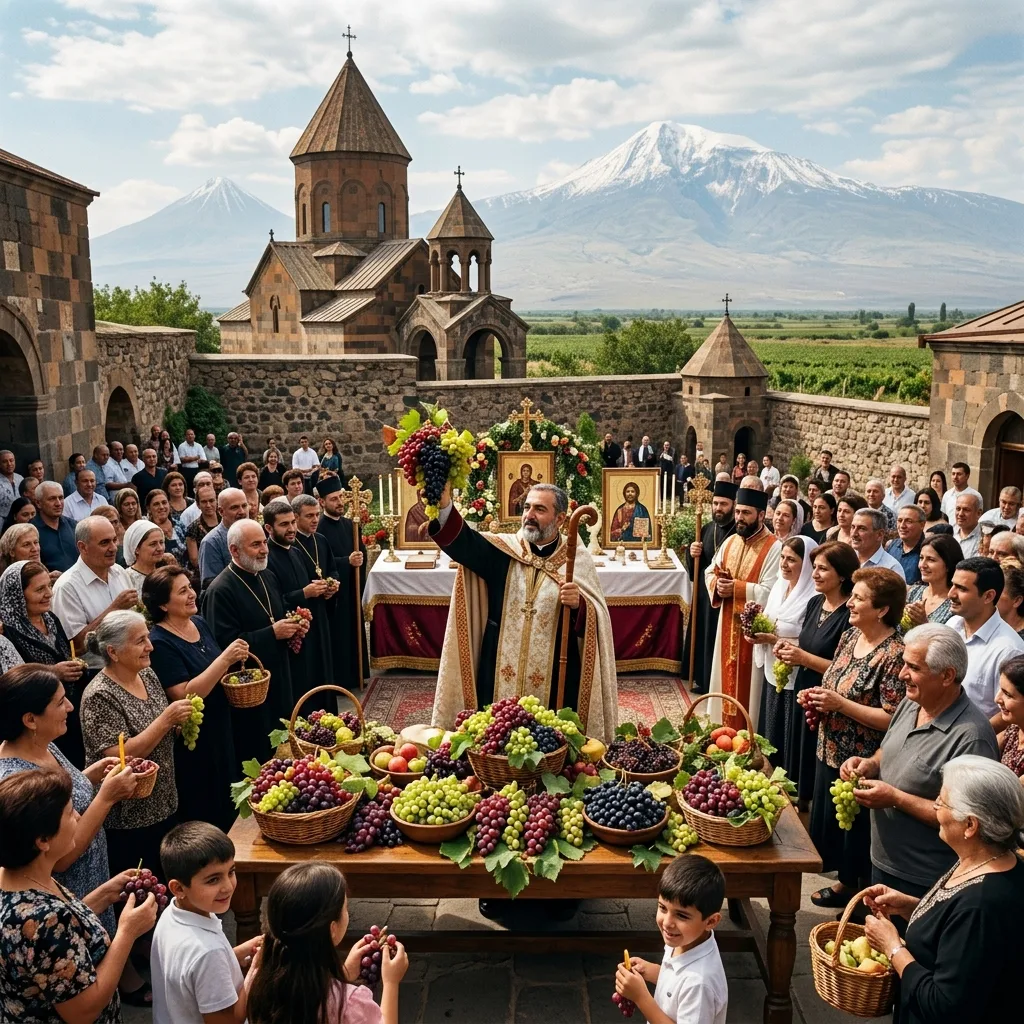
This year, the Feast of the Assumption of the Holy Mother of God, more commonly known as the Blessing of the Grapes, will be celebrated on August 16, 2026.
The date changes every year, and this causes confusion. The reason is the rule: the Armenian Apostolic Church celebrates the feast on the Sunday closest to August 15. Therefore, the date varies from August 12 to 18. This year, August 15 is a Saturday, so the feast is moved to the next day, Sunday.
For comparison, in 2023 it was celebrated on August 13, and in 2021, on August 15.
The place of the feast in the church calendar
The Feast of the Assumption is the fourth of the five tabernacle feasts of the Armenian Apostolic Church. It is considered the oldest of the feasts dedicated to the Mother of God.
Like the other tabernacle feasts, it has a complete ritual cycle.
- Weekly fast — a fasting period starting one week before a feast
- Navakatik — on the eve of the feast
- On the feast day — Divine Liturgy in all churches, followed by the Blessing of Grapes service
- Merelots — the day following the holiday, this year on August 17
On the feast day, Mariam, Maro, Mari, Marianuysh, Tiruhi, Iskuhi, Srbuhi, Makruhi, Taguhi, Lusik, and other names are celebrated.
The Ritual of the Blessing of Grapes
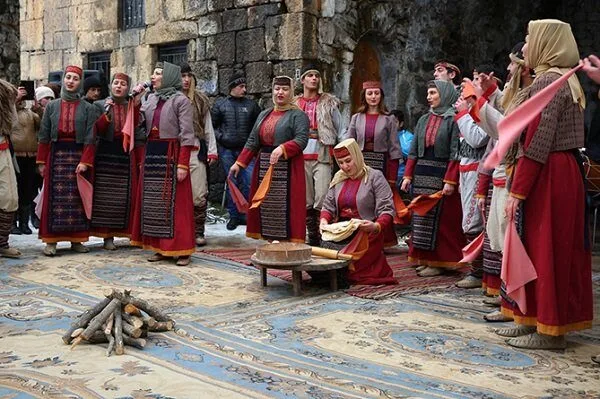
After the Divine Liturgy, the rite of the blessing of grapes is performed, after which the blessed bunches are distributed to the people. The meaning of the ritual is that a blessing is sought not only for the grapes, but for the entire harvest of the year.
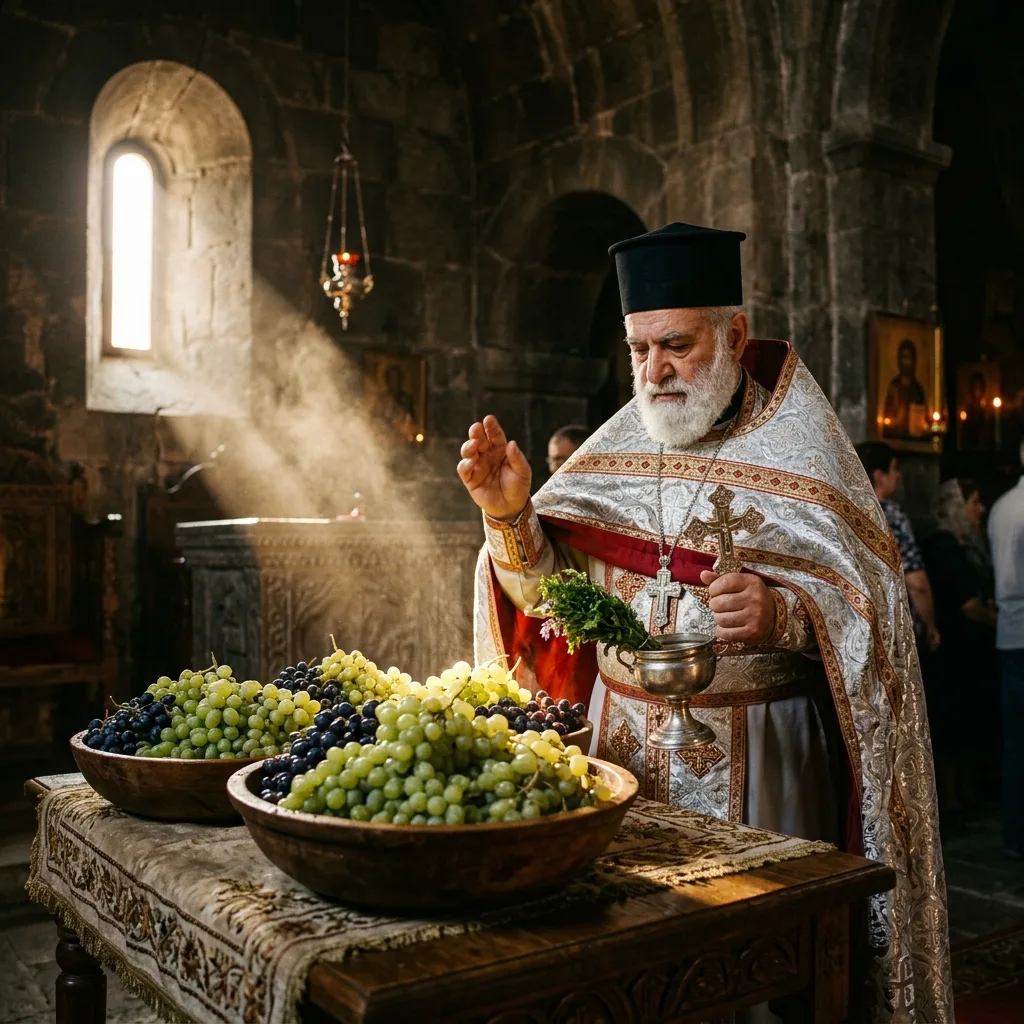
The traditional rule: Until this day, the grapes of the new harvest were considered unblessed, and eating them was restricted, following the same logic as apples on Vardavar. Only after the ritual did the consumption of grapes begin.
The wine tradition: In some places, wine was made from the blessed grapes and kept until the next year's Blessing of the Grapes as a sign of abundance.
The pilgrimage: On the night before the holiday or early in the morning, the faithful ascend to the churches and monasteries bearing the name of the Holy Mother of God.
Where does the ritual come from? Two explanations
It is worth being careful here, as different sources offer different explanations, and they are not mutually exclusive.
The theological explanation
According to church interpretation, after the expulsion from Paradise, the curse spread not only to man, but also to the entire earth, along with its plants and animals. And when human nature was blessed anew with the coming of the Only-Begotten Son, the bunch of grapes was blessed above all other fruits.
The ethnographic explanation
According to ethnographers, the ritual continues the pre-Christian tradition of the first fruits. The first ripe harvest had to be offered at the place of worship, and only after that was it permitted to taste it. "The Feast of the New Fruits," with its ritual content, was established within the Christian Feast of the Assumption.
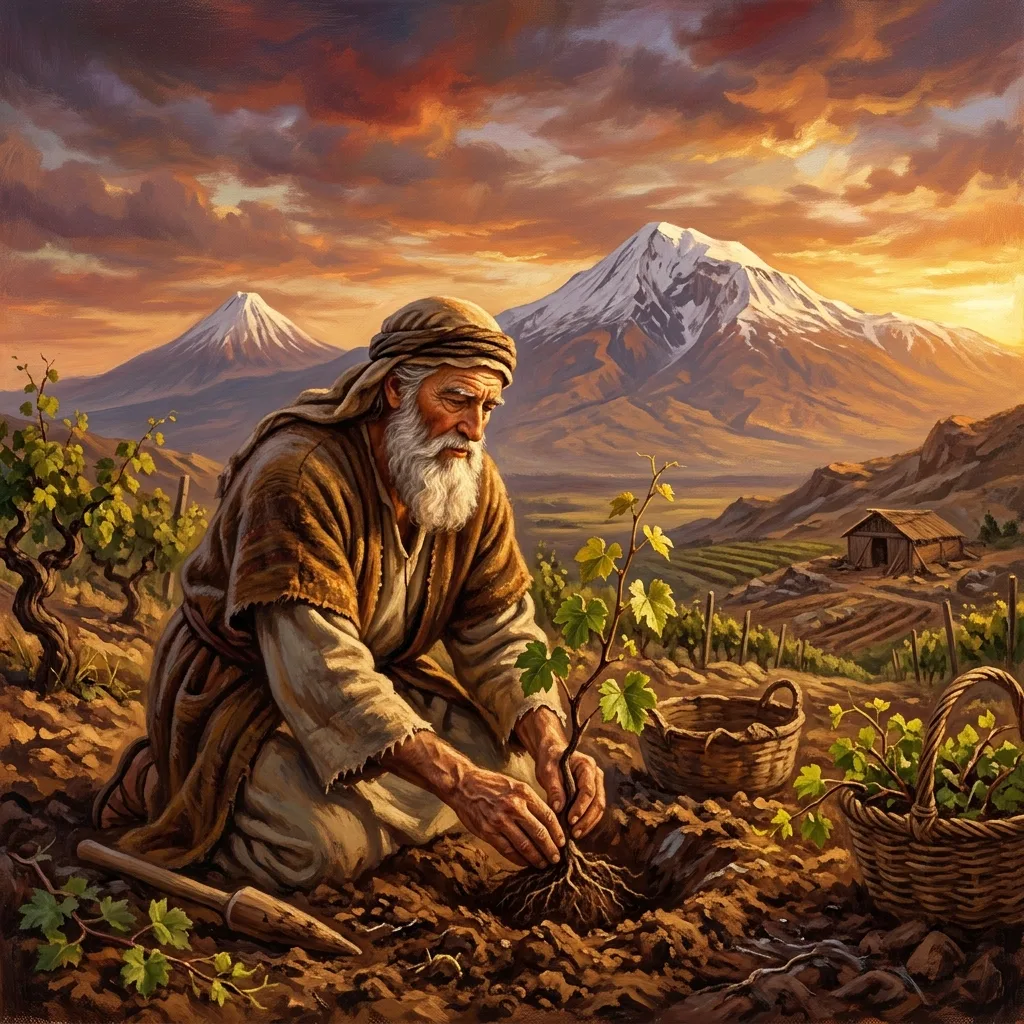
There is also a third, legendary connection with Patriarch Noah, who, according to the Bible, planted a vineyard after descending from Ararat.
The most accurate formulation is that the current form of the ritual is multi-layered: the Christian content was superimposed on an older agricultural ritual. This is not an exception — the same pattern also applies to Vardavar and other holidays.
The practical reason is also clear: grapes ripen in Armenia during these very days of August.
Folk names of the holiday
Ethnographic literature records numerous local names of the holiday:
- Assumption of the Mother of God
- Grape Easter (Mount Musa)
- Astvaratsin (Hark-Bulanikh)
- Astadzadzin (Vank-Meghri)
- Fruit Festival — a common synonym in many settlements
This diversity of names shows how deeply rooted the holiday was in the local way of life.
The tradition of the icon
According to Armenian tradition, the image of the Mother of God was given to the Apostle Bartholomew, who brought it to Armenia. Subsequently, the Church of the Holy Mother of God was built in the Andzavyats province, followed by a nunnery and the Hogyats Monastery, where the image was kept.
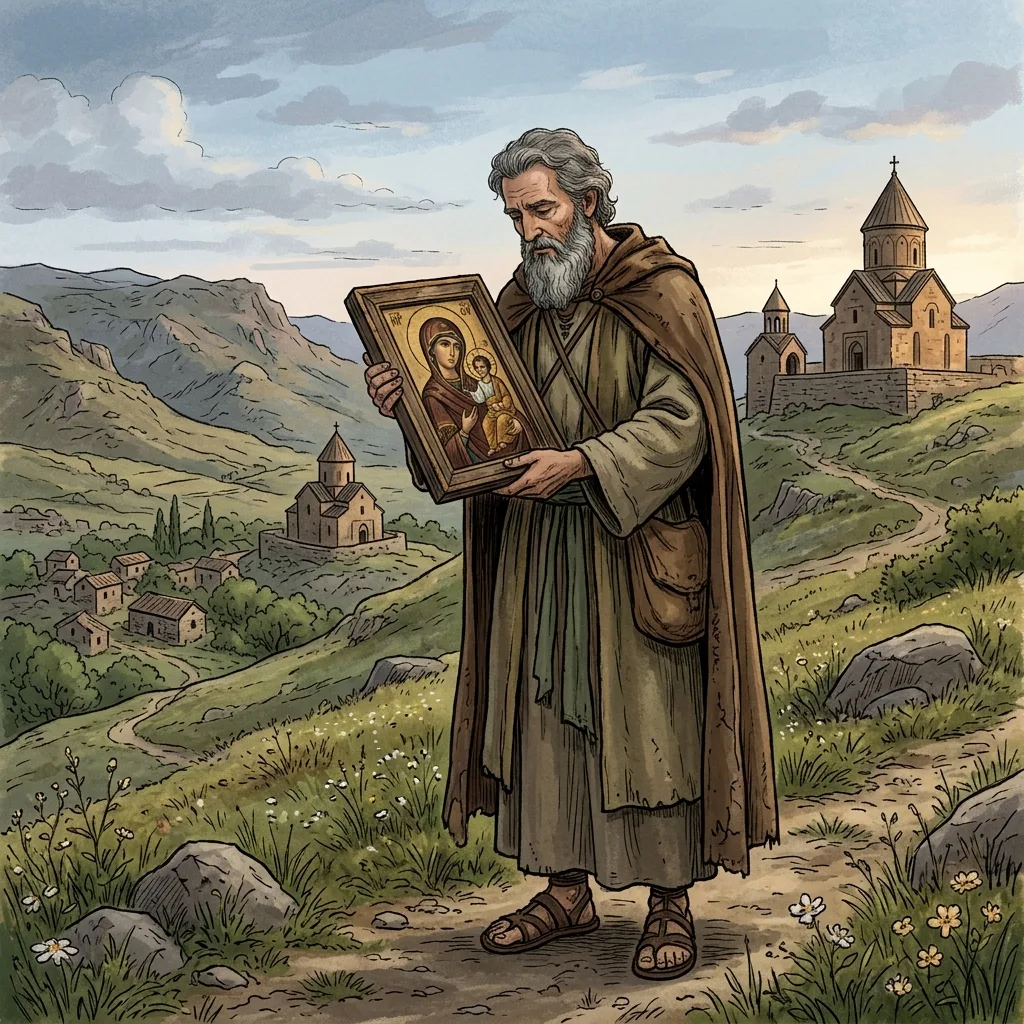
Over the centuries, the traces of the icon have been lost. The feast and the custom of making pilgrimages to churches and monasteries bearing the name of the Mother of God have remained.
This is a tradition, not a documented historical fact, and it is presented in the article as such.
Practical information
Date: August 16, 2026, Sunday Merelots (Memorial Day): August 17, Monday Start of the fast: one week before the feast Ritual: Divine Liturgy, followed by the Blessing of Grapes service in all churches
Sources
- Official Calendar of the Mother See of Holy Etchmiadzin
- Ritual of the Tabernacle Feasts of the Armenian Apostolic Church
- Studies in Armenian Ethnography: On the Folk Names and Rituals of the Feast of the Assumption
- Armenpress, publications dedicated to the Blessing of Grapes ceremony
💬CommentsClick to read and leave a comment⌄
No comments yet. Be the first!