
Komitas Vardapet and the Collection of Armenian Folk Songs
Komitas Vardapet and the Collection of Armenian Folk Songs
Komitas (Soghomon Gevorgi Soghomonyan) is one of the figures in the history of Armenian music thanks to whom the Armenian peasant song became the foundation of professional art. He was a composer, singer, lecturer, ethnographer and one of the founders of Armenian musicology. His life and fate are inseparably linked with the tragic history of the Armenian people.
Childhood and Education
Komitas was born in 1869 in the Armenian community of the city of Kütahya (Kutina) in Asia Minor. He lost his parents at an early age and was raised under the care of relatives. In his childhood he spoke the language that was common among the Armenian population of the city, and he mastered literary Armenian later. In 1881 he was sent to the Gevorgian Theological Seminary in Etchmiadzin, where he attracted attention with his voice. After graduating from the seminary he was ordained a vardapet and received the name Komitas, in honor of the 7th-century Armenian Catholicos Komitas, an author of sacred songs.
Musical Education in Berlin
From 1896 Komitas studied in Berlin, at Richard Schmidt's private music school and at the University of Berlin, where he studied music history, theory and the fundamentals of comparative musicology. After returning to Etchmiadzin he began teaching and directing a choir, as well as systematic work on collecting folk songs.
Notation and Arrangement of the Peasant Song
During his life Komitas traveled through Armenian villages and transcribed thousands of songs, most of which were recorded directly from peasant performers. He distinguished the melodic and rhythmic features of songs and considered the accurate preservation of the dialect text important. Alongside transcriptions he made arrangements for voice and choir, in which he preserved the original structure of the folk song without adapting it to European harmony. His arrangements include "Krunk" (The Crane), "Kele-kele", "Unkerd kamar-kamar" and other songs. He also wrote sacred music, in particular the "Patarag" (Divine Liturgy).
The question of Armenian khaz notation and the study of Armenian sacred song occupy an important place in Komitas's research.
Lectures and Concerts in Europe
Komitas gave lectures and concerts in European cities, presenting the Armenian folk song. His performances, particularly in Berlin and Paris, brought recognition to Armenian music in European musical circles and helped present it as an independent and rich musical culture.
Constantinople and Concert Activity
In 1910 Komitas moved to Constantinople, where he organized the "Gusan" choir, which performed with hundreds of singers. He continued to transcribe, arrange, teach and give concerts, becoming one of the central figures of Armenian musical life in the Armenian community of Constantinople.
The Genocide and a Tragic Fate
On the night of April 24, 1915, representatives of the Armenian intelligentsia were arrested in Constantinople, among them Komitas. This was the beginning of the Armenian Genocide carried out by the Ottoman government. Komitas was exiled into the interior of Anatolia, but after a short time was returned to Constantinople thanks to the intervention of influential persons. What he had seen and the tragedy of his people profoundly damaged his mental health. He ended up in psychiatric treatment, in 1919 was moved to Paris, and remained in clinics until the end of his life in 1935.
Komitas's tragedy is considered one of the symbols of the cultural and personal consequences of the Armenian Genocide. As a result of the Genocide, a large part of the Armenian rural environment, in which the songs he transcribed lived, was destroyed. Some of his manuscripts have been lost.
Komitas's Legacy
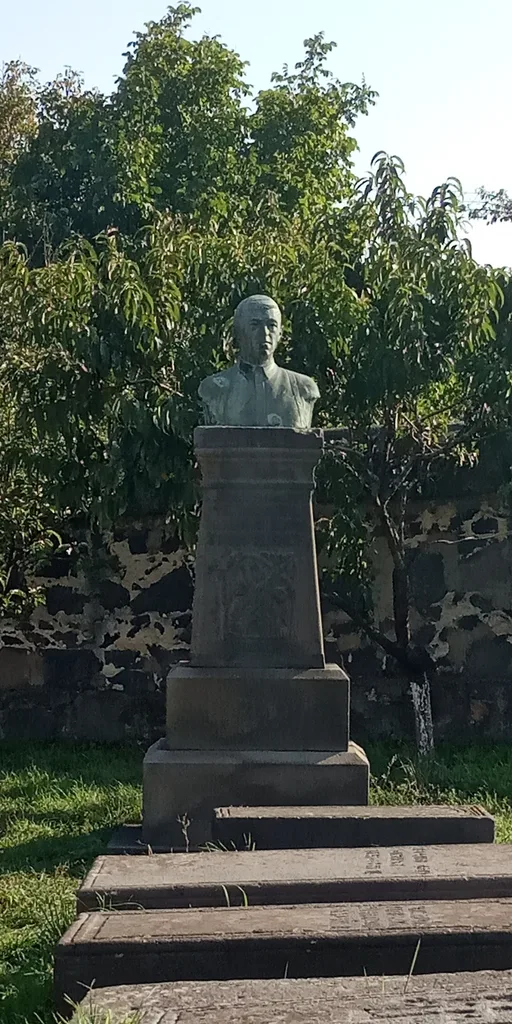
In 1936 Komitas's remains were transferred to Yerevan, and he rests in the Komitas Pantheon. The Yerevan State Conservatory is named after him, and the Komitas Museum-Institute preserves and publishes his manuscript legacy. The songs he collected and arranged are still performed today in Armenia and the diaspora, remaining one of the pillars of Armenian musical identity.
Sources
- Institute of History of the National Academy of Sciences of Armenia — History of the Armenian People
💬CommentsClick to read and leave a comment⌄
No comments yet. Be the first!