
Mkhitar Gosh: laws for a state that did not yet exist

Introduction
A code of law is usually written by the state for its courts. In the case of Mkhitar Gosh, the opposite was true: he wrote a book of laws at a time when Armenian statehood in Eastern Armenia was in a phase of restoration, while a significant part of the Armenian population lived under foreign rule.
It is this very circumstance that makes the “Book of Judgments” not only a legal, but also a political document.
In this article, we present his/her biography based on Armenian primary sources and clearly distinguish what is documented, what is reconstructed, and where the data differs.
Who was Mkhitar Gosh?
His biographical data have been preserved mainly by the 13th-century historian Kirakos Gandzaketsi. This is important to emphasize: we know about Gosh's life mainly thanks to one late source, not his own autobiography.
Birth: Born in Gandzak (now Ganja). The exact year of birth is not known for certain; sources give the options of 1120, "the 1120s", or 1130. The most cautious phrasing is: the first quarter of the 12th century.
Nickname: The word "Gosh" means thin-haired, with a sparse beard. That is, it is a nickname derived from appearance, not a surname.

Education: He received his primary education in his birthplace. He was ordained as a celibate priest, studied under Vardapet Hovhannes Tavushetsi, and received the degree of vardapet from him.
Cilicia. Not content with what he had achieved, he went to Cilician Armenia and studied under the scholars of the Black Mountain. According to tradition, he hid that he was already a vardapet and received the same degree there for a second time. This detail is reported in the biographical tradition and well reflects his attitude towards knowledge, although it is not a verifiable fact in itself.
The Return. Returning to Eastern Armenia, he lived in Gandzak for some time. Due to disagreements with Catholicos Stepannos of Albania, he left the city and moved to Khachen, to Prince Vakhtang of Haterk, and then settled in the Getik Monastery.
Nor Getik
The earthquake destroyed the Getik monastery and the surrounding villages. In 1188, under the patronage of the Zakarian princes, Zakare and Ivane, Gosh built a new monastery in the Tandzut valley and named it Nor Getik.
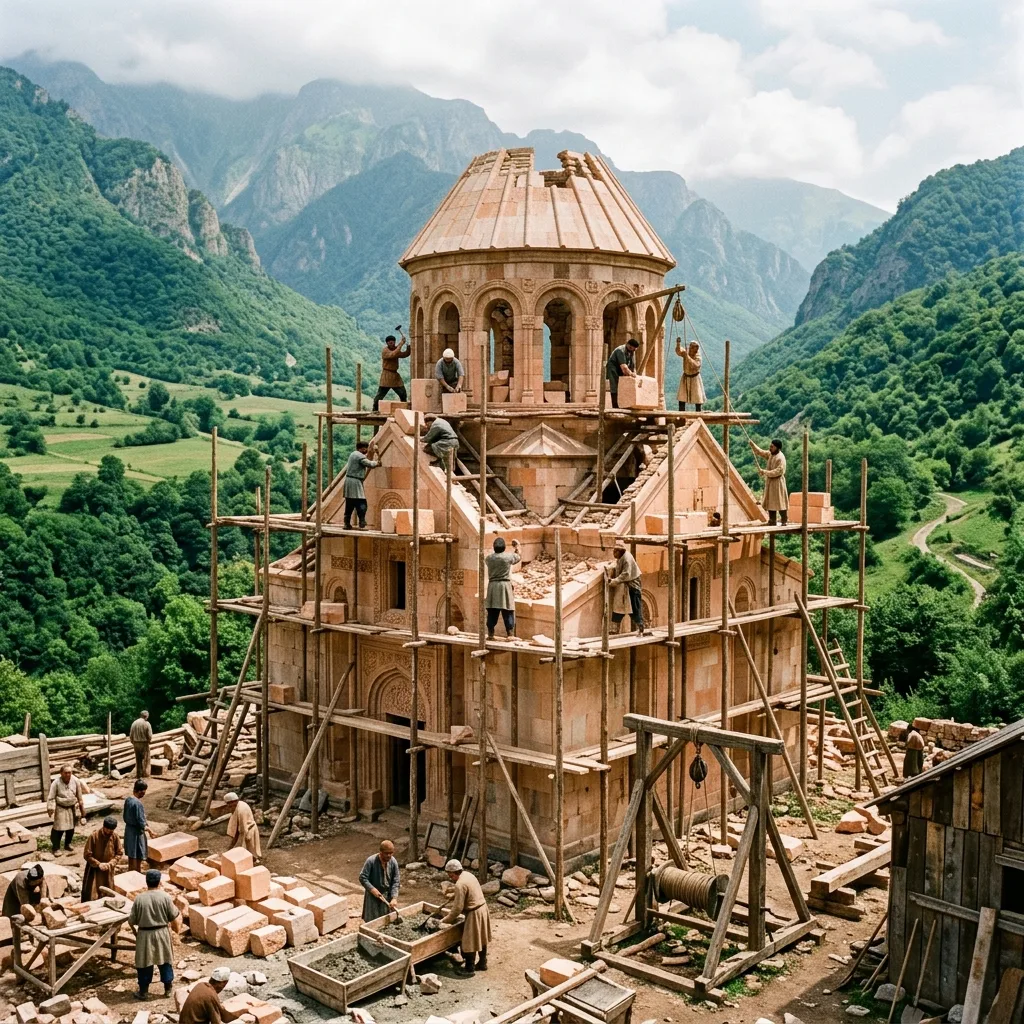
There he opened a school whose reputation went beyond the region, and students came from distant places.
Gosh also enjoyed great authority in political circles, being the advisor and confessor of Zakare the Long-armed. He participated in the church councils of Lori in 1205 and of 1207. In 1196–1198, he made a pilgrimage to Jerusalem.
He died in 1213. After his death, Nor Getik was renamed Goshavank.
“Book of Judgment”: Why was it written?
The code was compiled in 1184. The correct title is "Book of Judgment", although the form "Datastanagirk" has become established in literature.
The motivation is explained by the following situation: the Muslim amirs of Gandzak allowed Christians to have their own laws, but the Armenian legal material was scattered and incomplete. As a result, Armenians were often forced to turn to Muslim courts, which led to unfavorable consequences.
In the preface, Gosh himself writes about his hesitation: he was concerned about this issue for a long time, but did not dare to undertake it, realizing the limits of his own strength. He tried to convince other knowledgeable people to take on the task. In the end, he wrote it himself.

This personal tone is rare in medieval legal texts and is valuable for this very reason.
What is in the book?
Structure: It consists of a preamble and articles, covering the fields of ecclesiastical and secular law. The number of articles varies in the manuscript recensions; different publications note 151 or 251 articles, depending on which recension is being referred to. Recensions A, B, and C are known, between which there are significant differences.
Sources: Biblical (Mosaic) laws, Armenian canon law, and customary law.
Content: It regulates criminal, civil, family, and property relations, as well as addresses the principles of state governance.
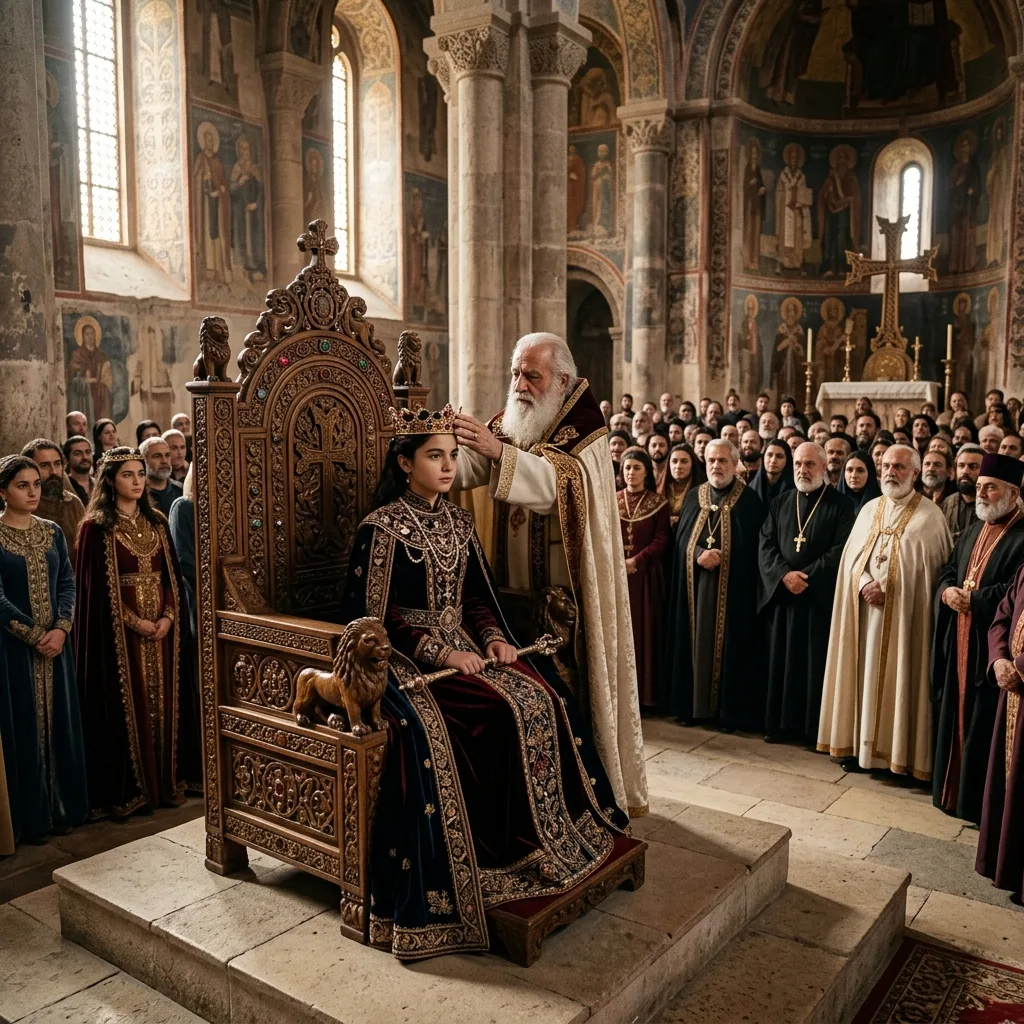
It is noteworthy that Gosh wrote about royal power, taxes, and state sovereignty at a time when there was no independent kingdom in Eastern Armenia. According to researchers' interpretation, he wrote for the future restoration of statehood.
The book's journey after the author
This part is perhaps the most impressive.
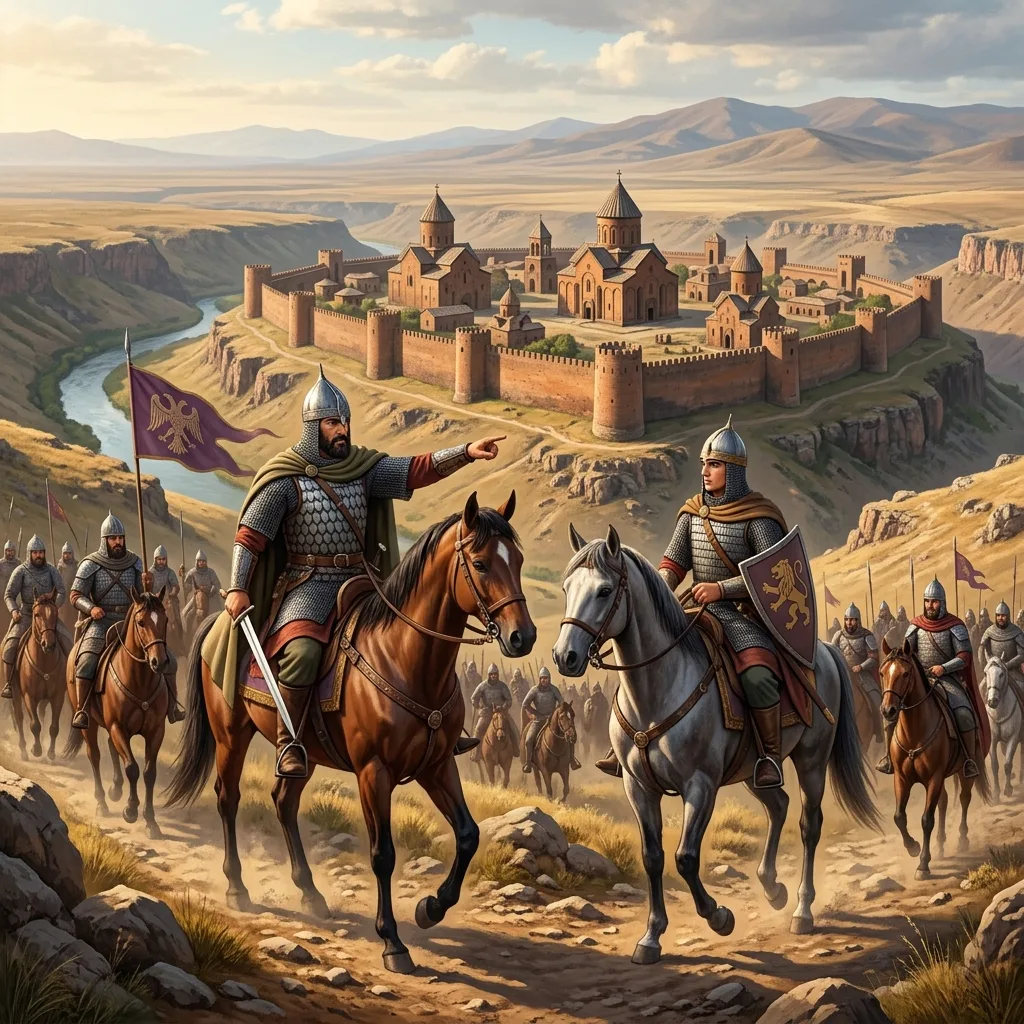
- 13th century: Cilicia. The Code of Laws acquired the force of law in the Armenian Kingdom of Cilicia. Later, in 1265, Smbat Sparapet compiled his own code of laws, as the state needs of Cilicia required more extensive legal regulation.
- 16th century: Poland. Adopted by the Polish King Sigismund I for the Armenian communities of Lviv, Kamenets-Podolsky, and other cities. Individual sections were translated into Latin, Polish, and Tatar.
- 18th century: Georgia. The material entered Georgian legislation as part of the Code of Vakhtang.
- It was also applied in other Armenian communities, in Astrakhan and elsewhere.
That is, the book functioned for centuries and in the legal systems of different states, despite the fact that it was written without a state order.

Gosh's other works
The Lawcode is not his only work. He is the author of about a dozen works, including:
- The collection of fables, containing about 190 fables, is divided into three sections: "Moral Fables", "Mythological Fables", and "Creation Fables". They were first published in Venice in 1790, and translated into French and Russian. With Gosh's fables, the fable was established as an independent literary genre in Armenian literature.
- Biblical commentaries, dogmatic and admonitory epistles, prayers, “The List of the Patriarchs of Caucasian Albania”.
Disputed issues and those subject to clarification
1. Year of birth: Not precisely known. The versions 1120, the 1120s, and 1130 are found.
2. The boundaries of the corpus. The Lawcode also includes materials not authored by Gosh, specifically translations of Syro-Roman laws. In other words, not everything contained in the manuscript was written by him.
3. The number of articles and the recensions. The relationship between recensions A, B, and C, and which of them is the earliest, is a subject of philological debate. It is assumed that in practice, recension C was the most widely used.
4. Biographical details. The story of hiding one's rank in Cilicia is part of the biographical tradition, not a documented episode.
5. The manuscript basis. Numerous manuscripts of the Law Code are kept in the Mashtots Matenadaran. The first edition was published in 1880.
Conclusion
The most remarkable thing in Mkhitar Gosh's history is not the volume of the book, but the chronology.
He was writing in 1184. In Cilicia, it acquired the force of law decades after his death. In Poland, it was applied three centuries later. In Georgia, five centuries later.
The author did not see any of this. And in the preface, he writes that he did not dare to start for a long time.
Sources
- Mkhitar Gosh, “Book of Judgment”, 1184 (preface and articles)
- Kirakos Gandzaketsi, "History of Armenia", on the biography of Gosh
- Mkhitar Gosh, Collection of Fables, first edition: Venice, 1790
- Manuscripts of the Law Code: Mashtots Matenadaran
- First edition of the Code of Laws, 1880
- Kh. Samvelyan, “Mkhitar Gosh's Law Code and Ancient Armenian Civil Law”, Vienna, 1911
- Smbat Sparapet, «Law Code», 1265

💬CommentsClick to read and leave a comment⌄
No comments yet. Be the first!