
Mkhitar Heratsi and “mold”. The Armenian physician who guessed the nature of infection seven centuries before Pasteur

The year is 1184. In the swamps of the lowland regions of Cilician Armenia, a fever breaks out every summer. People shiver, burn with fever, and many die. No one knows why.
In that year, commissioned by Catholicos Grigor IV Tgha, the country's chief physician Mkhitar Heratsi completed the book that would become the cornerstone of Armenian medicine — "Consolation of Fevers". And on the pages of this book, an idea appeared that European medicine would only arrive at centuries later.
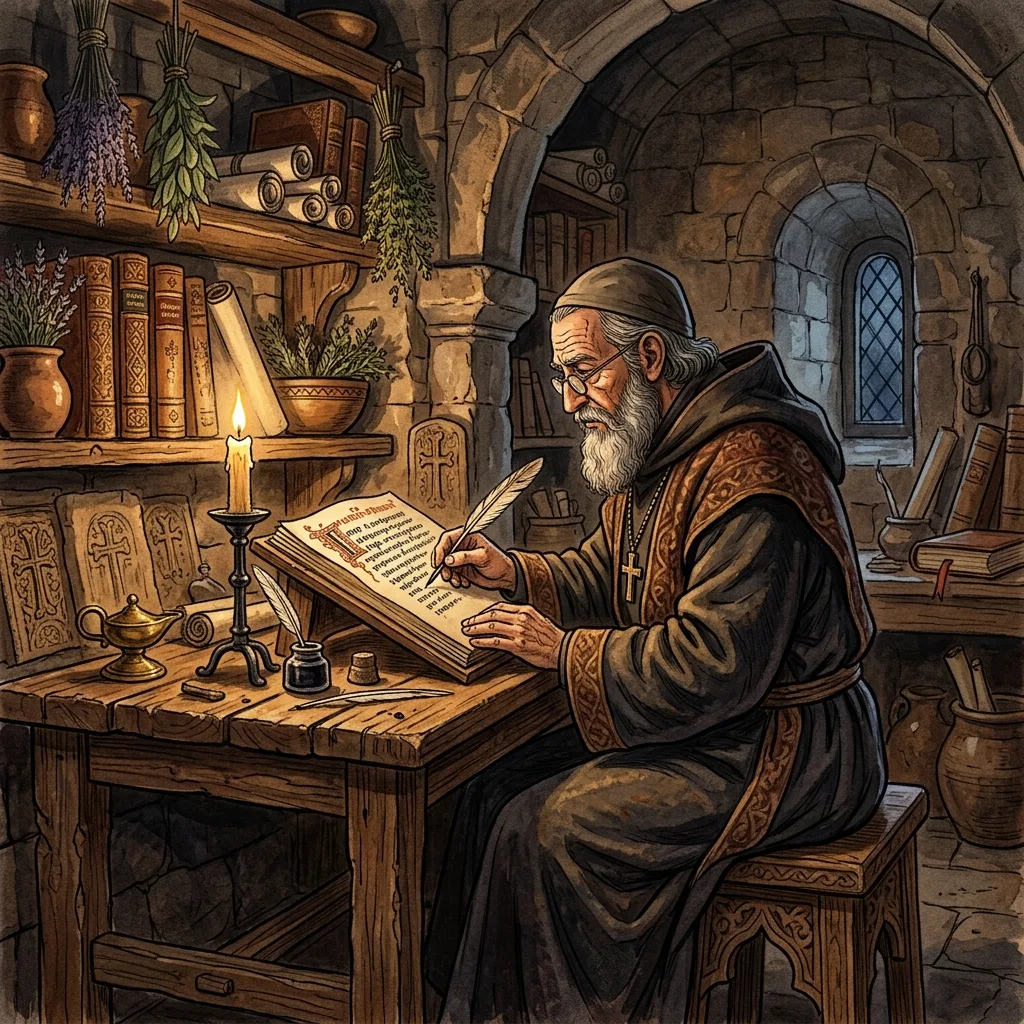
Who was Mkhitar Heratsi?
Born around 1120 in the city of Her in the Parskahayk region (now Khoy, Iran) — hence his nickname. In his youth, he moved to Cilician Armenia, where he received a professional education.
He carried out his scientific and medical activities in the capital, Sis, and in the residence of the Catholicos—the fortress of Romkla, first under the patronage of Nerses Shnorhali, and then Grigor IV Tgha. He was fluent in Greek, Arabic, and Persian, which meant that all the major medical sources of the time—from Hippocrates and Galen to Ibn Sina—were open to him. In the 1160s, he already had a reputation as a great physician.
Nerses Shnorhali called him an "arch-physician and astronomer". He died in 1200 in Hromgla.
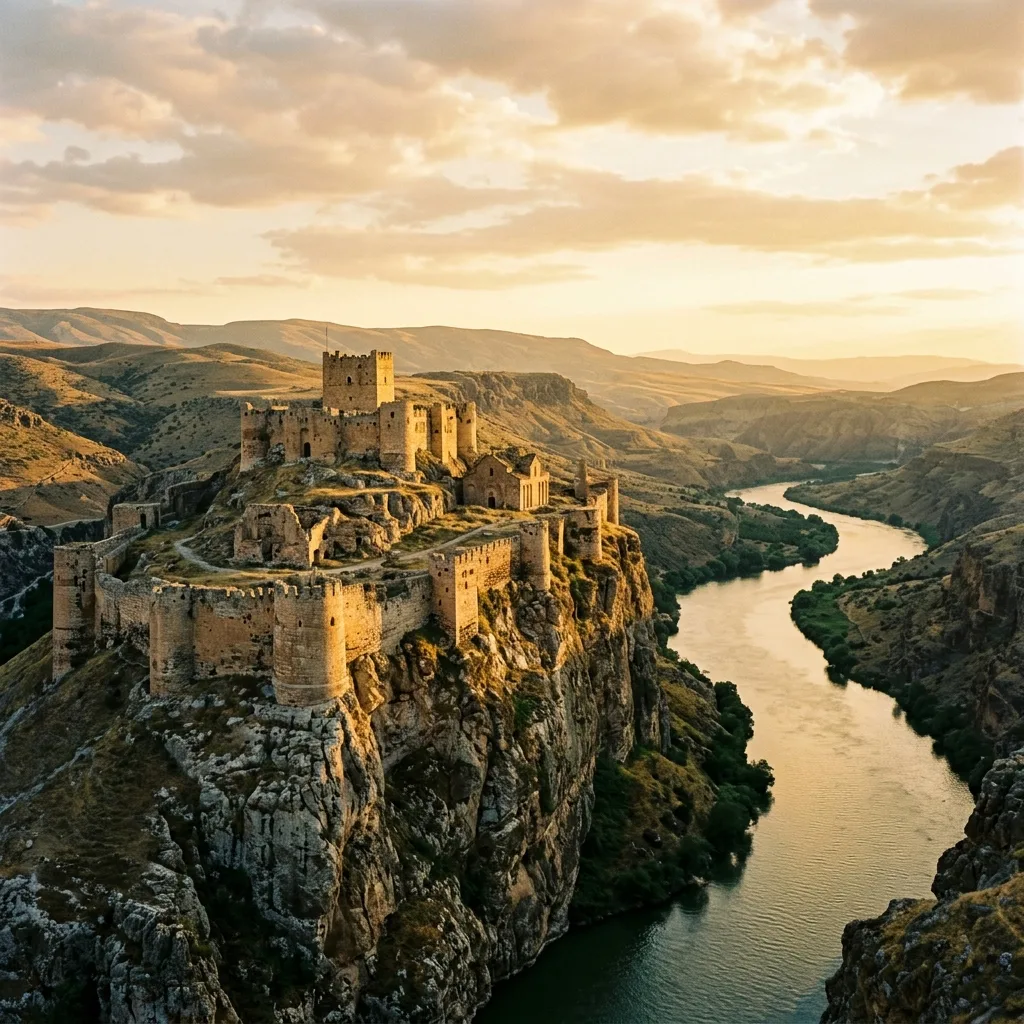
Consolation of Fevers
The book is dedicated to a specific problem — febrile illnesses widespread in the marshy areas of Plain Cilicia. According to modern views, this refers primarily to malaria. Heratsi views this as an "earthly pathology" — a disease associated with the locality, and addresses the issues of classification, etiology, pathogenesis, clinical presentation, prevention, and treatment.
An important detail that is often overlooked: Heratsi wrote the book not in Grabar, but in Middle Armenian — the spoken language of the time. It was not a scholarly manuscript for a monastery library, but a tool in the hands of practicing physicians.
Based on pathological characteristics, he distinguished three types of fever: “one-day”, “moldy”, and “exhausting” (hectic). And it is precisely in the explanation of the second group that his most interesting step lies.
What was the "mold"?
Ancient and medieval medicine relied on the humoral theory: human health was determined by the balance of four fluids — blood, phlegm, yellow and black bile. Fevers were explained by the putrefaction of these fluids — an internal disorder.
Heratsi did not refute the humoral theory. But he explained the origin of “moldy” fevers differently—by a “moldy” factor penetrating from the outside into the blood, bile, and mucus.
The difference is fundamental. In the classical scheme, the cause of disease lies within the organism: fluids spoil on their own. With Geraci, an external factor emerges that penetrates inside and multiplies. It is this shift — from an internal disorder to an external penetrating cause — that would later become the foundation of microbiology.
We must be honest here, and it is this honesty that makes Geraci's achievement even more impressive, no less.
- Heratsi did not prove the existence of microbes. He did not have a microscope, did not conduct experiments, and did not see microbes.
- He was a medieval physician, not a premature microbiologist. For example, following the ancient pneumatic theory, he associated "one-day" fever with the affliction of the spirit (pneuma).
- “Mold” was not a bacterium in the modern sense, but a model built by analogy with decay, fermentation, and molding.
But the very fact that, without any instruments, solely through observation and logic, he formulated the idea of a "factor penetrating from the outside" is an exceptional case of intuition. Louis Pasteur would prove the role of microbes experimentally in the 1860s — about 680 years after Heratsi's book.
And one more important clarification: it is incorrect to say that "in Europe the disease was considered a curse." European scientific medicine of the 12th century—the Salerno School—was also Galenic-humoral. And the idea of contagion was already circulating in Arabic medicine—with Ibn Sina, whom Heratsi read. Heratsi advanced in this common field, rather than making a discovery in a vacuum.
Method of treatment
What is practical in Geraci's book is no less remarkable.
Phytotherapy: In medicinal therapy, he assigned the main place to plants. His complex prescriptions include water lily, violet, iris, mullein, wormwood, plantain, licorice, elecampane, mint, thyme, and dozens of other medicinal plants.
Nutrition: For patients with fever, he proposed a special diet, giving a prominent place to greens, vegetables, fresh and dried fruits, their juices and jams.
Care and the environment. Heratsi paid special attention to clinical medicine — the care of bedridden patients. He is credited with the idea that a disease should not be sought only in the patient's body — it may be the result of the influence of the external environment.
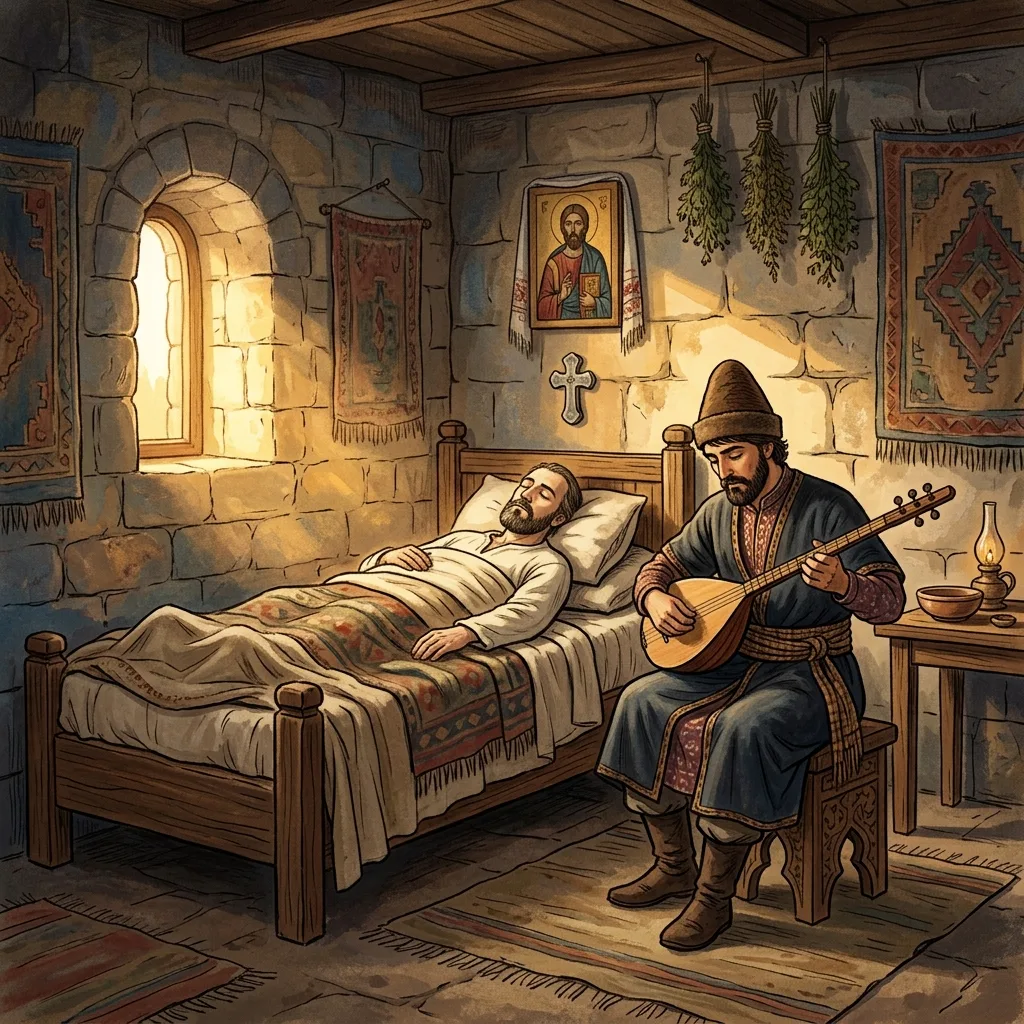
Music. And finally, the most unexpected. Heratsi recommended that the patient listen as much as possible to the singing of gusans, the sound of strings, and pleasant melodies. The idea of healing with music was not new: this tradition existed from the Pythagoreans to al-Farabi and Ibn Sina. But for Heratsi, this was not a philosophical observation, but a medical prescription written next to the treatment recipe.
Cilician school of medicine
Heratsi was not an isolated phenomenon. He founded an entire tradition — the Cilician medical school, which in the 12th–14th centuries became the center of medieval Armenian medicine.
His contemporary or immediate follower, Grigoris, wrote a voluminous medical book, 'Study of the Nature of Man and His Ailments' — a unique monument of general pathology, in which the clinical picture of the diseases known at that time is described in detail.
Heratsi's teachings on the eye — clinical descriptions and prescriptions for the treatment of corneal inflammation, trachoma, and glaucoma — were further developed by the greatest Armenian physician of the 15th century, Amirdovlat Amasiatsi.
Unfortunately, not all of Heratsi's legacy has come down to us. His famous work "Akhrapatin", which summarized the experience of Armenian folk and classical medicine in the field of pharmacology and pharmacy, has been lost. "Consolation of Fevers" was published in print in 1832.
Legacy
In 1989, the Yerevan State Medical Institute — now the Yerevan State Medical University — was named after Mkhitar Heratsi. The best students of YSMU are still awarded the Heratsi Scholarship.
But the true legacy is not the name, but the method. At a time when medicine relied on authority—'so wrote Galen'—Heratsi looked at the swamps of Cilicia, looked at the sick, and formulated an explanation that was not in any book.
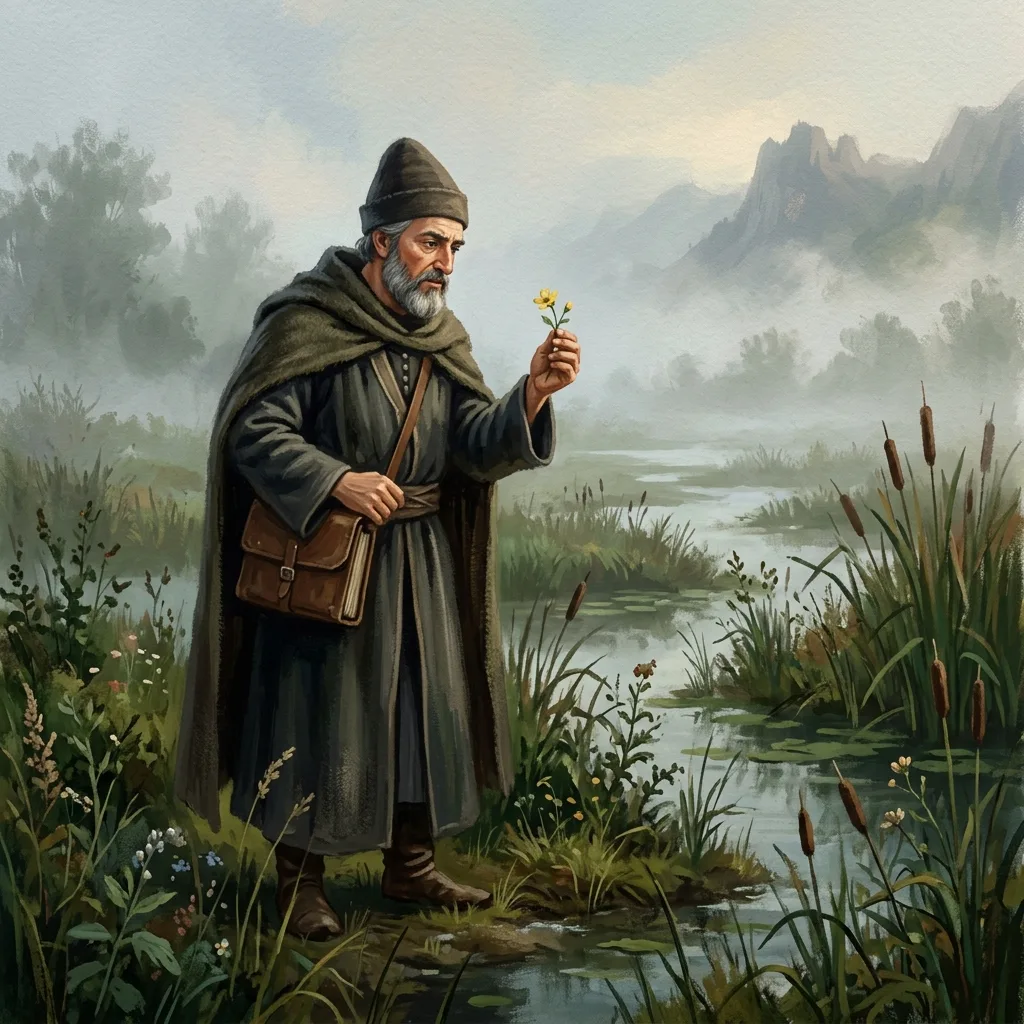
Seven centuries later, the microscope showed that he was not mistaken in his direction.
Sources and literature for reading
- Mkhitar Heratsi, “Consolation of Fevers”, printed edition — 1832
- Grigoris, "Analysis of the Nature of Man and His Diseases"
- Armenian Encyclopedia, article “Mkhitar Heratsi”
- Studies by St. Malkhasyants and E. Gabrielyan on Armenian medieval medicine



💬CommentsClick to read and leave a comment⌄
No comments yet. Be the first!